
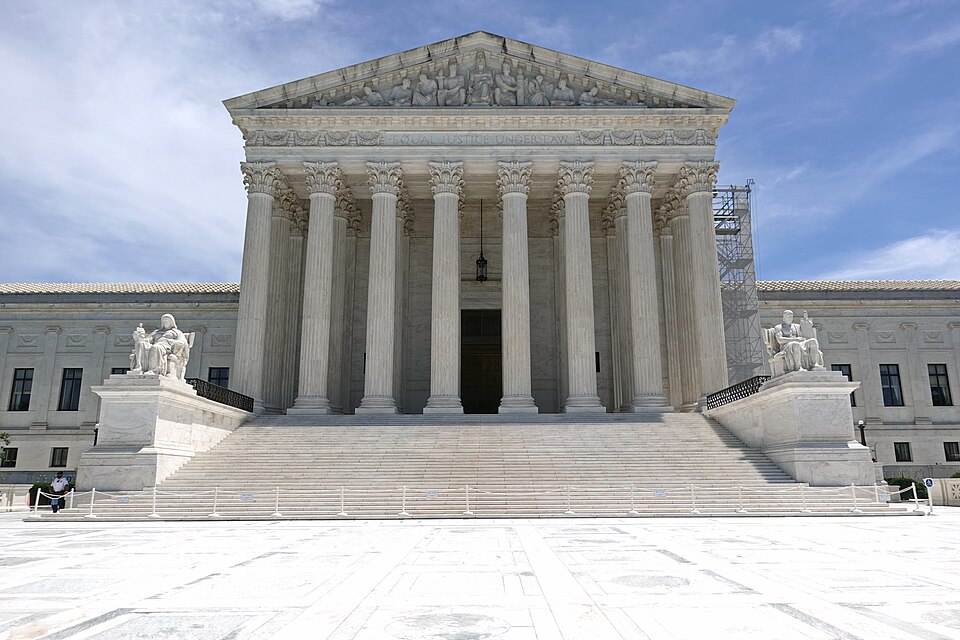
Supreme Court Unanimously Lets Faith-Based Pregnancy Center Challenge New Jersey Subpoena
On Wednesday, April 29, 2026, the U.S. Supreme Court unanimously allowed First Choice Women's Resource Centers to sue in federal court over a New Jersey subpoena seeking donor records.[1]
The narrow, procedural win lets the group press its First Amendment claims before any subpoena enforcement. State investigators are probing whether First Choice misled people to discourage abortions, including by suggesting it offers abortions, and the American Civil Liberties Union backed the center's concerns about forced disclosure of donor lists. The Justice Department in the prior administration filed at the high court on the center's side, saying any broad ruling should be limited to similar claims.[1][1][1]
The episode traces back to the Supreme Court's Dobbs decision in 2022, which shifted abortion regulation to the states and prompted New Jersey to step up scrutiny of crisis pregnancy centers. In November 2023 the New Jersey attorney general issued a broad subpoena seeking 28 categories of documents, including donor names, phone numbers, addresses and employment details dating from January 1, 2021.[1]
Conservative outlets framed the ruling as a rebuke of blue-state targeting of pro-life groups, with Fox News calling it a "slap down." Social media posts from legal and religious advocates hailed the unanimous opinion as protecting donor privacy and associational rights, noting the court found the subpoena itself could cause a present injury to those rights.
Conservative commentators have framed the Supreme Court's ruling as a significant victory for pro-life organizations, emphasizing its role in safeguarding donor privacy and First Amendment rights. Social media reactions from legal and religious advocates, such as @esbax from the Becket Fund and @Tyler2ONeil, highlight the unanimous decision as a critical protection against what they perceive as overreach by the New Jersey Attorney General. They argue that the ruling affirms the right of crisis pregnancy centers to challenge subpoenas that could chill their operations and infringe on their religious missions.
However, this ruling also underscores the ongoing cultural polarization surrounding abortion rights. Analysts like Erin C. Cassese and Heather L. Ondercin suggest that the intensity of preferences among minority groups is increasingly influencing policy outcomes, despite broader public support for legal abortion. This dynamic may lead to further legal battles as states navigate the complex intersection of reproductive rights and religious freedoms, a trend noted by Alexandra Rodriguez in her examination of the rise in legal conflicts over these issues.
Show source details & analysis (2 sources)
📊 Relevant Data
The New Jersey Attorney General's 2023 subpoena to First Choice Women's Resource Centers demanded 28 categories of documents, including names, phone numbers, addresses, and employment details of donors who contributed via methods other than one specific webpage, from January 1, 2021, onward.
First Choice Women's Resource Centers, Inc. v. Platkin — Supreme Court of the United States
The subpoena was issued after the creation of New Jersey's Reproductive Rights Strike Force in 2022 and a related consumer alert about crisis pregnancy centers, but no public complaints about First Choice were received.
First Choice Women's Resource Centers, Inc. v. Platkin — Supreme Court of the United States
As of 2024, 2,633 crisis pregnancy centers operated in the United States, representing a 3.3% increase from 2021.
Crisis Pregnancy Centers in the United States: Post-Dobbs Changes and Implications for Public Health Practice — American Journal of Public Health
📌 Key Facts
- On Wednesday, April 29, 2026, the Supreme Court issued a unanimous ruling that was a procedural victory for First Choice Women's Resource Centers, allowing the group to sue in federal court over New Jersey's subpoena.
- The case centers on New Jersey's investigation into whether First Choice misled people to discourage abortions, including allegations it may have implied it offers abortions.
- The American Civil Liberties Union backed First Choice's First Amendment concerns, arguing disclosure of donor lists could implicate associational privacy.
- New Jersey maintained that the subpoena could not have threatened First Amendment rights because no information had yet been produced, a court order would be required to enforce the subpoena, and the state judge had so far ordered only that the parties negotiate, according to the report by PBS News.
- The Trump administration filed in support of First Choice at the Supreme Court, with the Justice Department arguing any ruling would be limited to groups asserting similar First Amendment claims.
📰 Source Timeline (2)
Follow how coverage of this story developed over time
- On Wednesday, April 29, 2026, the Supreme Court issued a unanimous ruling that is a procedural victory for First Choice Women's Resource Centers, allowing it to sue over New Jersey's subpoena in federal court.
- The article specifies that the case concerns an investigation into whether First Choice misled people to discourage abortions, including by potentially implying it offers abortions.
- The story highlights that the American Civil Liberties Union, which supports abortion rights, backed First Choice's First Amendment concerns regarding donor lists and associational privacy.
- New Jersey argued that the subpoena could not have threatened First Amendment rights because no information had yet been produced and a court order is required to enforce the subpoena, with the state judge so far only ordering the parties to negotiate.
- The Trump administration filed in support of First Choice at the Supreme Court, with the Justice Department arguing that the ruling's impact would be limited to groups with similar First Amendment claims.