
Senate Republicans Dismiss Kaine Resolution To End Trump Cuba Energy Blockade
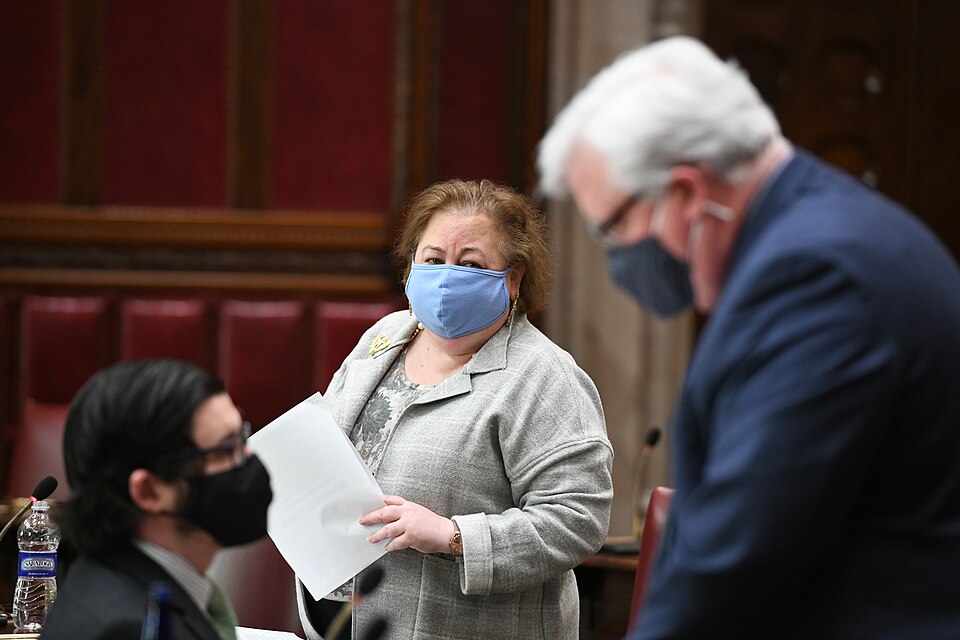
Senate Republicans dismissed Sen. Tim Kaine's resolution to end President Trump's energy blockade of Cuba and to limit military action on Tuesday, April 28, 2026, in the U.S. Senate.
A 51-47 Senate vote dismissed the measure, with Sen. John Fetterman the only Democrat joining GOP senators to kill it, and Sens. Susan Collins and Rand Paul voting against dismissal. Senate Republicans argued the United States is not engaged in "outright hostilities" with Cuba, and Sen. Rick Scott urged the motion be blocked as "moot." Kaine said the U.S. oil blockade already amounts to "hostilities" and warned the resolution was needed to prevent unilateral military action.
The episode traces back to Kaine's March resolution, which would have barred the president from launching attacks on Cuba without prior congressional authorization, a move presented as a classic war-powers check. Reporting noted the measure was prompted by recent presidential rhetoric about Cuba after the January capture of Venezuela's Nicolás Maduro and by remarks at a Turning Point USA event that action against Cuba was "on the table." A senior State Department delegation flew to Cuba earlier in April, the first U.S. government plane to land there since 2016, even as administration officials signaled openness to diplomacy while warning against a security collapse on the island.
Coverage of the fight shifted over hours. Early accounts framed the outcome chiefly as a procedural, partisan defeat for a war-powers curb, while later reporting pushed the humanitarian stakes into view, detailing water and power outages, strained medical care and rising food prices tied to the blockade. Other coverage highlighted the administration's wider messaging on regime change and the State Department trip to Havana as part of the broader context.
Show source details & analysis (4 sources)
📌 Key Facts
- On Tuesday, April 28, 2026, Senate Democrats mounted a procedural effort to force a vote on Sen. Tim Kaine's March war-powers resolution to bar President Trump from launching military attacks on Cuba without congressional authorization, but Senate Republicans voted 51-47 to dismiss it (vote 51-47) vote 51-47.
- Most Republicans backed dismissal while Democrats largely supported limiting the president’s war powers; Sen. John Fetterman of Pennsylvania was the only Democrat to vote to dismiss, and Republican Sens. Susan Collins and Rand Paul voted against dismissal Sen. John Fetterman.
- Republicans argued the measure was procedurally out of order because the U.S. is not engaged in “outright hostilities” with Cuba, and Sen. Rick Scott called the matter “moot” on the Senate floor Sen. Rick Scott.
- Sen. Tim Kaine argued on April 28 that the existing U.S. oil blockade of Cuba already amounts to “hostilities,” saying the U.S. would view a similar blockade as an act of war if the roles were reversed, and he cited humanitarian harms including water and power outages, disrupted medical care, lack of clean water for millions and spiking food prices U.S. oil blockade of Cuba.
- Reporting highlighted recent Trump rhetoric about Cuba — since the January 2026 capture of Nicolás Maduro Trump has said he would have “the honor of taking Cuba,” declared “Cuba’s going to be next,” kept action “on the table” in April, and pledged “a new dawn for Cuba” at a Turning Point USA event while saying he would turn to Cuba after the war with Iran Trump.
- A senior State Department delegation flew to Cuba earlier in April 2026 — the first U.S. government plane to land there since Barack Obama’s 2016 visit — and a State Department official said the administration is open to diplomacy but “will not let the island collapse into a major national security threat,” while Secretary of State Marco Rubio had earlier testified in January that the administration “would love to see” regime change in Cuba a senior State Department delegation.
- Axios framed the April 28 action as the Senate rejecting a war-powers curb on President Trump, reinforcing that the failed resolution would have barred the president from attacking Cuba without prior congressional authorization and that the vote was largely along party lines Axios.
📰 Source Timeline (4)
Follow how coverage of this story developed over time
- On Tuesday, April 28, 2026, Senate Republicans voted 51-47 to dismiss Sen. Tim Kaine's war powers resolution tied to Trump's Cuba policy.
- Sen. John Fetterman of Pennsylvania was the only Democrat to vote to dismiss, while Republican Sens. Susan Collins of Maine and Rand Paul of Kentucky voted against dismissal.
- Republicans argued the resolution was out of order because the U.S. is not engaged in "outright hostilities" with Cuba, and used that argument as the procedural basis to kill the measure.
- The article describes Cuba's ongoing humanitarian conditions under the U.S. energy blockade, including water and power outages, disrupted medical care, lack of clean water for millions, and spiking food prices as cited by Kaine.
- Trump recently pledged "a new dawn for Cuba" at a Turning Point USA event and has said that after the war with Iran he will turn his attention to Cuba.
- Sen. Rick Scott framed Trump's actions as efforts to "bring back freedom and democracy all across Latin America," while Sen. Peter Welch said the U.S. and Cuba must "find a way to peacefully coexist."
- On Tuesday, April 28, 2026, Senate Democrats attempted a procedural move to force a vote on Sen. Tim Kaine's March resolution to bar President Trump from launching military attacks on Cuba without congressional authorization.
- Senate Republicans blocked the motion, with GOP Sen. Rick Scott arguing on the floor that the U.S. is not engaged in hostilities with Cuba and calling the issue "moot."
- The article details Trump’s recent rhetoric about Cuba, including statements since the January 2026 capture of Venezuelan President Nicolás Maduro that he would have "the honor of taking Cuba" and that "Cuba's going to be next," and his comment earlier in April that action against Cuba remains "on the table."
- Secretary of State Marco Rubio is quoted from January testimony that the administration "would love to see" regime change in Cuba and that such change would be of "great benefit" to the U.S.
- Kaine argued on April 28 that the existing U.S. oil blockade of Cuba already constitutes "hostilities" and said the U.S. would consider such a blockade an act of war if the roles were reversed.
- The article reports that a senior State Department delegation flew to Cuba earlier in April 2026, the first U.S. government plane to land there since Barack Obama's 2016 visit, and that a State Department official says Trump is open to diplomacy but "will not let the island collapse into a major national security threat."
- Axios reports on the April 28, 2026 Senate vote rejecting Sen. Tim Kaine’s effort to restrict President Trump’s ability to conduct military action against Cuba, framing it as a war-powers curb that failed.
- The article emphasizes the political dynamics in which most Republicans backed dismissal while Democrats largely supported limiting Trump’s war powers, consistent with but independently confirming the 51-47 outcome already reported.
- Axios’ account reinforces that the resolution would have barred the president from launching attacks on Cuba without prior congressional authorization, underscoring the war-powers angle of the failed measure.