U.S. Maritime Strike Campaign Has Killed 183 Suspected Narco-Traffickers Since September
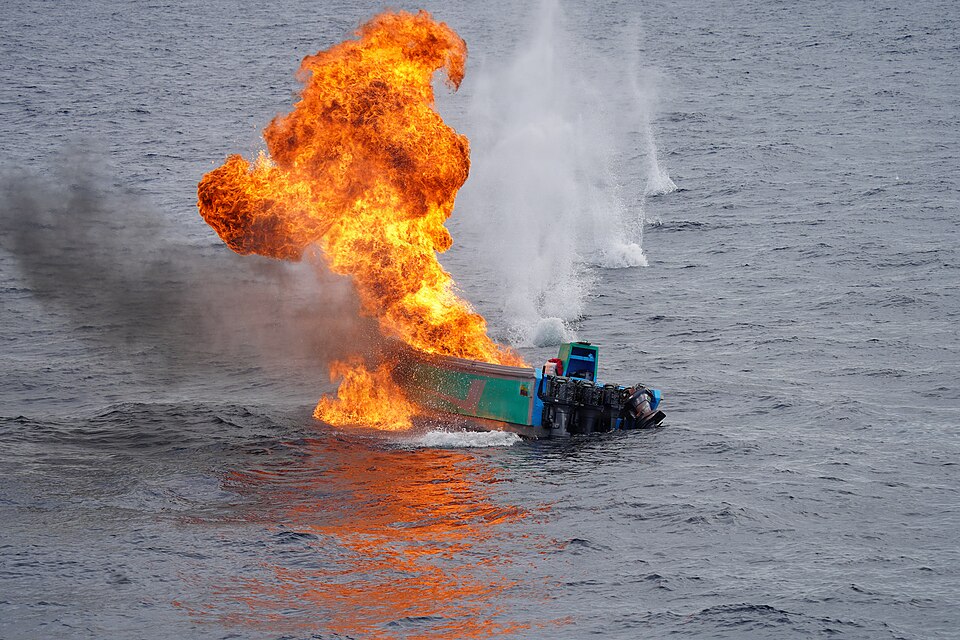
U.S. forces struck an alleged drug-trafficking vessel in the eastern Pacific on Friday, killing two people and suffering no U.S. casualties, military officials said.
The strike is the latest action in a campaign of maritime strikes in Latin American waters that U.S. officials say targets cartel-linked smuggling vessels. U.S. reporting says the campaign has killed at least 183 suspected narco-traffickers since September. The military has not publicly shared evidence that the vessels hit were carrying drugs. President Trump has described the operations as an "armed conflict" with cartels, a framing that officials say provides legal cover but has drawn sharp criticism.
The episode traces back to Donald Trump's 2024 campaign promise to use military force against Mexican cartels and to seek terrorist designations to justify strikes. After taking office in January 2025 he ordered the Pentagon to draw up options and a naval buildup began in the Caribbean in August 2025 amid tensions with Venezuela. On November 14, 2025 Defense Secretary Pete Hegseth announced Operation Southern Spear, authorizing kinetic strikes against suspected narco-trafficking vessels in the Caribbean and eastern Pacific. The operation began striking boats in late 2025 and has produced multiple lethal engagements in the months since. But U.S. interdiction has seized only a small fraction of the cocaine moving through Central America; annual flows exceed 1,000 metric tons while 2021 seizures were about 35 metric tons. U.S. assessments show increased interdiction has not reduced the overall flow of cocaine into the United States.
Early official accounts framed the strikes as precise blows against cartel networks and stressed there were no U.S. casualties. Recent reporting and rights groups have highlighted civilian deaths, the absence of disclosed evidence of drugs, and questions about the strikes' legal basis. Social media has split between praise from pro-strike users who call the operations life-saving and criticism from human rights advocates who call them unlawful. Pentagon officials and Senator Jim Risch add that the operations comply with U.S. and international law, but public debate is growing as the death toll mounts.
📊 Relevant Data
U.S. interdiction efforts in Central America and the Caribbean have seized only a small fraction of the estimated cocaine flow, with total annual cocaine movement through Central America exceeding 1,000 metric tons while seizures in 2021 were 35 metric tons, representing about 3 percent.
Reliable drug war data: The Consolidated Counterdrug Database and cocaine interdiction in the Transit Zone — ResearchGate
U.S. government assessments indicate that increased interdiction efforts have not reduced the overall flow of cocaine into the United States.
Drug Control: Increased Interdiction and Its Contribution to the Decline in Drug Use — GAO
📌 Key Facts
- A U.S. strike on an alleged drug boat in the eastern Pacific on Friday killed two people; there were no reported U.S. casualties.
- The Trump administration's broader campaign of striking and blowing up alleged drug‑trafficking vessels in Latin American waters has killed at least 183 people since September.
- The U.S. military has not provided evidence that any of the targeted vessels were actually carrying drugs.
- President Trump has described the situation as an "armed conflict" with cartels, a characterization the administration cites to frame the legal basis for the strikes.
- Critics are questioning the overall legality of the boat‑strike campaign.
📰 Source Timeline (2)
Follow how coverage of this story developed over time
- Confirms a specific new strike on an alleged drug boat in the eastern Pacific on Friday that killed two people and caused no U.S. casualties.
- States that the Trump administration's broader campaign of blowing up alleged drug-trafficking vessels in Latin American waters has killed at least 183 people since September.
- Notes that the U.S. military has not provided evidence that any of the targeted vessels were actually carrying drugs.
- Reports President Trump has described the situation as an 'armed conflict' with cartels in Latin America, framing the legal basis for the strikes.
- Highlights that critics are questioning the overall legality of the boat-strike campaign.