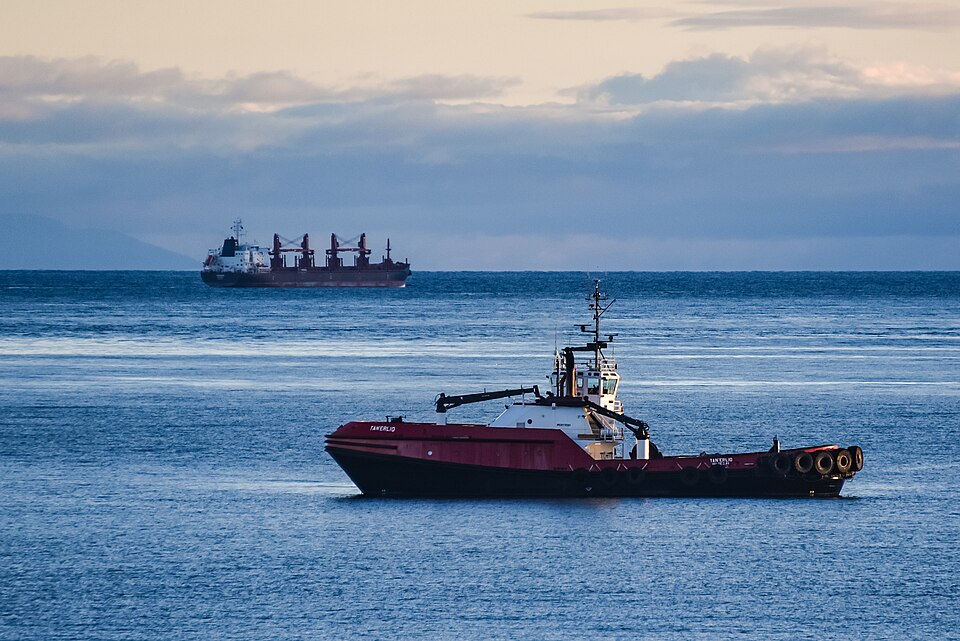
U.S. Sanctions Chinese Refinery And 19 Tankers In Iran Oil Crackdown
The U.S. Treasury on April 25, 2026, announced sanctions on a Chinese refinery and 19 tankers accused of transporting Iranian crude, aiming to cut Tehran's oil revenues and disrupt its "shadow fleet."
Officials named Hengli Petrochemical among the targets and blacklisted 19 tankers and associated shipping firms. The action also froze cryptocurrency wallets and other assets the Treasury said funded Iran's military operations.
The move follows an intensified U.S. campaign to squeeze Iran's oil income after months of regional conflict and economic pressure that escalated into open war. The sanctions were announced as U.S. and Iranian delegations prepared to meet in Pakistan, a pairing that frames pressure and diplomacy as simultaneous levers.
The announcement came alongside a 90-day extension of a Jones Act waiver and a near blockade of the Strait of Hormuz, where daily transits plunged from roughly 140 to as few as seven ships. Market watchers and social media noted some Chinese refiners are still importing Iranian oil, making enforcement of the blacklist the next key test.
📊 Relevant Data
In 2022, total petroleum and other liquids transit volumes through the Strait of Hormuz averaged about 21 million barrels per day, equivalent to about 21% of global petroleum and other liquids consumption.
The Strait of Hormuz is the world's most important oil transit chokepoint — U.S. Energy Information Administration (EIA)
As of early April 2026, shipping traffic through the Strait of Hormuz has dropped to a virtual standstill, with just seven ships passing through in a 24-hour period compared to about 140 normally.
Hormuz at near standstill as Iran warns ships to keep to its waters — Reuters
The Jones Act waiver, extended for 90 days on April 24, 2026, allows foreign-flagged vessels to transport oil and natural gas between U.S. ports, with about 40 such vessels utilizing the waiver in recent weeks.
Trump Administration Extends Jones Act Waiver for Energy Shipments — The Maritime Executive
📌 Key Facts
- On April 24, 2026, the Trump administration announced an additional round of economic sanctions targeting Iran and Chinese companies accused of transporting Iranian oil.
- The announced sanctions specifically focus on Chinese firms involved in moving Iranian crude, part of a broader U.S. effort to restrict Iran’s oil revenues.
- Officials explicitly framed the new sanctions as part of an ongoing economic squeeze on Iran while diplomatic talks between the U.S. and Iran are being prepared.
- The sanctions announcement was timed alongside a Jones Act waiver extension and comes amid a continued U.S. naval presence enforcing a blockade in the Strait of Hormuz.
- The announcement coincides with renewed diplomacy: U.S. and Iranian delegations are heading to Pakistan, raising hopes for negotiations to help end the conflict.
📰 Source Timeline (2)
Follow how coverage of this story developed over time
- The Trump administration announces an additional round of economic sanctions on Iran and Chinese companies accused of transporting Iranian oil, in tandem with renewed cease-fire diplomacy.
- These new sanctions are explicitly framed as part of the ongoing squeeze on Iran’s economy while U.S.-Iran talks are being prepared in Pakistan.
- The sanctions announcement is temporally linked with the Jones Act waiver extension and the continued U.S. naval blockade of the Strait of Hormuz.