
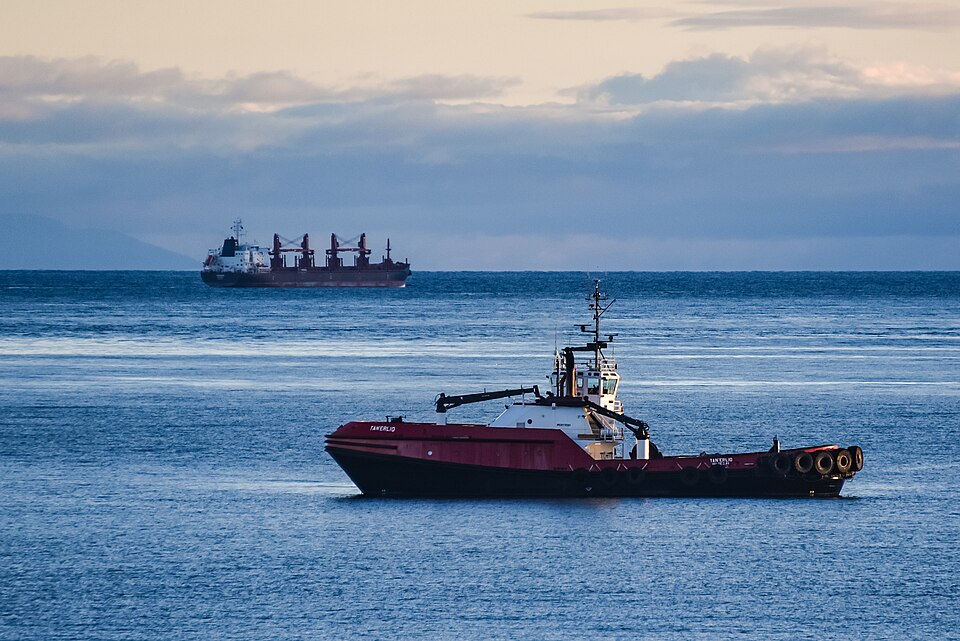
U.S. Sanctions Chinese Refinery And 19 Tankers In Iran Oil Crackdown
The U.S. Treasury on Tuesday sanctioned a Chinese refinery and 19 tankers tied to Iranian oil shipments, increasing pressure on Tehran by freezing access to export revenue. (link: Chinese refinery to Fox)
The measures target a so-called "shadow fleet" that masks Iranian exports and include bans on associated shipping companies and finance networks, U.S. officials said.[1] The action comes as U.S. and Iranian delegations prepare to meet in Pakistan, a diplomatic track Washington says runs alongside economic pressure.[2]
The episode traces back to months of escalating violence across the region that intensified after the Twelve-Day War in June 2025. Widespread anti-regime protests erupted in Iran on December 28, 2025, and coordinated U.S.-Israeli strikes on February 28, 2026, killed Iran's supreme leader and hit military sites. In April 2026 the U.S. launched the "Economic Fury" campaign to choke Iran's oil revenues, and these sanctions are part of that effort.
Shipping and market effects are already visible. A Jones Act waiver extended April 24, 2026, lets foreign-flagged vessels move U.S. oil between ports and has been used to reroute flows amid a near halt of traffic through the Strait of Hormuz.[2] Social media accounts and traders named specific Chinese refiners and shipping lines as targets and posted figures including dozens of shippers and roughly $344 million in frozen cryptocurrency tied to Iran's networks.
The Wall Street Journal's opinion piece emphasizes that China's involvement in Iran's economy is critical, arguing that U.S. sanctions and maritime interdictions are necessary to disrupt Iran's financial lifelines, despite potential diplomatic complications. The piece suggests that the U.S. must not only apply pressure on Chinese networks aiding Iran but also maintain diplomatic avenues to leverage negotiations effectively. This perspective aligns with the views circulating on social media, where users like @no_itsmyturn and @ifaiyani highlight the significance of targeting Chinese firms, particularly Hengli Petrochemical, as part of a broader strategy to undermine Tehran's financial resources.
Conversely, some social media commentators, such as @IAnupamaa, caution that despite these sanctions, China's independent refiners are still importing Iranian oil, indicating that enforcement may face challenges. This divergence reflects a broader concern about the effectiveness of sanctions in achieving U.S. objectives, especially as shipping traffic through the Strait of Hormuz has plummeted, with only seven vessels reported in a 24-hour period, compared to the usual 140, according to Reuters. The ongoing geopolitical tensions are likely to complicate both market dynamics and diplomatic efforts in the region.
Show source details & analysis (2 sources)
📊 Relevant Data
In 2022, total petroleum and other liquids transit volumes through the Strait of Hormuz averaged about 21 million barrels per day, equivalent to about 21% of global petroleum and other liquids consumption.
The Strait of Hormuz is the world's most important oil transit chokepoint — U.S. Energy Information Administration (EIA)
As of early April 2026, shipping traffic through the Strait of Hormuz has dropped to a virtual standstill, with just seven ships passing through in a 24-hour period compared to about 140 normally.
Hormuz at near standstill as Iran warns ships to keep to its waters — Reuters
The Jones Act waiver, extended for 90 days on April 24, 2026, allows foreign-flagged vessels to transport oil and natural gas between U.S. ports, with about 40 such vessels utilizing the waiver in recent weeks.
Trump Administration Extends Jones Act Waiver for Energy Shipments — The Maritime Executive
📌 Key Facts
- The Trump administration announced an additional round of economic sanctions targeting Iran and Chinese companies accused of transporting Iranian oil.
- PBS News reported the new sanctions are explicitly framed as part of an ongoing squeeze on Iran’s economy even as diplomatic talks are being prepared.
- The sanctions announcement was made in tandem with renewed cease-fire diplomacy, according to the PBS News report U.S., Iranian delegations head to Pakistan, renewing hopes for diplomatic end to war.
- PBS linked the sanctions announcement to an extension of a Jones Act waiver as part of the broader U.S. policy actions.
- The report also tied the timing of the sanctions to the continued U.S. naval blockade of the Strait of Hormuz, indicating coordinated economic and military pressure.
📊 Analysis & Commentary (2)
"The WSJ opinion piece (an interview with Seth Jones) argues that China’s commercial and shipping links are materially sustaining Iran’s war effort and that the U.S. should press China-linked refineries and tankers with sanctions and maritime enforcement — a position that endorses tougher economic pressure while acknowledging diplomatic and market risks."
"The author argues that President Trump’s Iran policy—sanctions, diplomatic efforts and military pressure—should be seen as consistent with longstanding American foreign‑policy traditions rather than an unprecedented departure, countering critics who label his approach aberrant."
📰 Source Timeline (2)
Follow how coverage of this story developed over time
- The Trump administration announces an additional round of economic sanctions on Iran and Chinese companies accused of transporting Iranian oil, in tandem with renewed cease-fire diplomacy.
- These new sanctions are explicitly framed as part of the ongoing squeeze on Iran’s economy while U.S.-Iran talks are being prepared in Pakistan.
- The sanctions announcement is temporally linked with the Jones Act waiver extension and the continued U.S. naval blockade of the Strait of Hormuz.