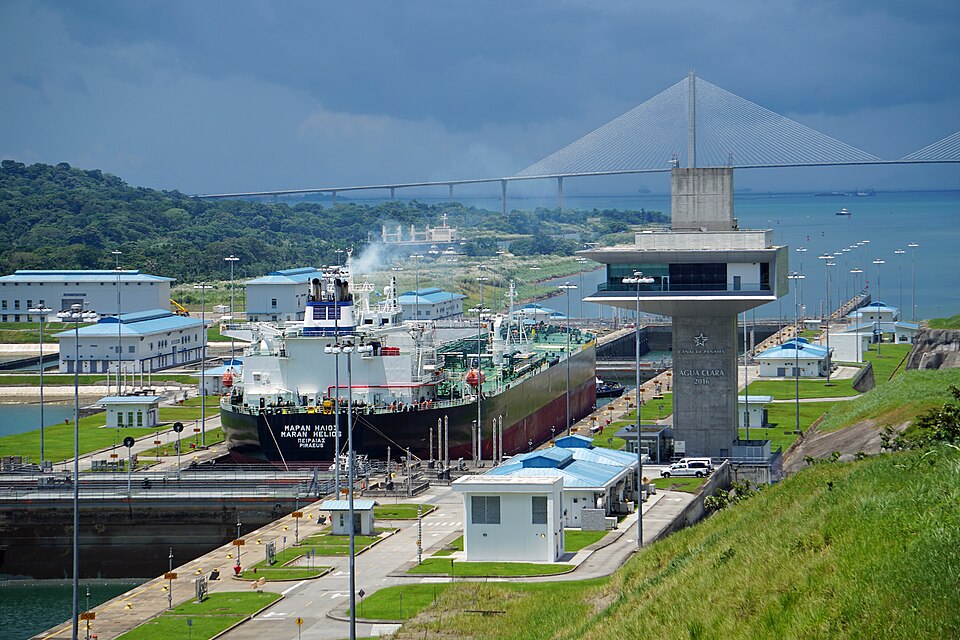
Panama Canal Auction Fees Soar As Hormuz Closure Reroutes Global Shipping
Shipping companies are paying record sums in Panama Canal slot auctions this week as the Strait of Hormuz has effectively closed, forcing many vessels to detour across the Americas and raising shipping costs.
Bidders have pushed transit slots into the millions, with some auction prices reported near $4 million for priority passage, and carriers accepting steep premiums to avoid longer routes and delays. The canal's lock system restricts tankers to Panamax sizes of roughly 50,000 to 80,000 deadweight tons, so very large crude carriers that normally haul Middle East oil cannot use the shortcut. Panama Canal slot auctions are also driving congested anchorages and extra transshipment costs as fleets reconfigure schedules.
The episode traces back to the wider Middle East war that began with the October 7, 2023 attacks and escalated over years into strikes on Iran. After February 28, 2026 airstrikes on Iranian targets, Iran launched Operation Epic Fury and crossfire and threats effectively closed the Strait of Hormuz. About 21 million barrels of oil and petroleum products a day once flowed through Hormuz, roughly 21 percent of seaborne traded oil, and a prolonged shutdown could lift prices well above $150 a barrel. Alternative pipelines can carry some Gulf oil past Hormuz — Saudi Arabia's East-West pipeline moves up to 5 million barrels daily and the UAE's Habshan-Fujairah line about 1.5 million — but these do not replace the volume usually shipped by very large crude carriers.
The narrative has shifted from regional fighting to global commerce. Observers report Iran charging roughly $2 million per tanker and accepting Chinese yuan or cryptocurrency, while investors are buying ports and terminal capacity near Panama to capture rerouted volumes. Commentators warn that control of Hormuz and tolling practices could alter long-standing norms of free navigation and push shipping costs higher as companies pay for scarce canal slots and longer transit times. PBS News coverage highlights the immediate commercial strain on carriers and supply chains.
Show source details & analysis
📊 Relevant Data
Approximately 21 million barrels of oil and petroleum products per day passed through the Strait of Hormuz in 2022, accounting for about 21% of global seaborne traded oil. ([U.S. Energy Information Administration (EIA)](https://www.eia.gov/international/analysis/special-topics/World_Oil_Transit_Chokepoints)) ([U.S. Energy Information Administration (EIA)](https://www.eia.gov/international/analysis/special-topics/World_Oil_Transit_Chokepoints)) ([U.S. Energy Information Administration (EIA)](https://www.eia.gov/international/analysis/special-topics/World_Oil_Transit_Chokepoints)) ([U.S. Energy Information Administration (EIA)](https://www.eia.gov/international/analysis/special-topics/World_Oil_Transit_Chokepoints))
World Oil Transit Chokepoints — U.S. Energy Information Administration (EIA)
Saudi Arabia's East-West pipeline can transport up to 5 million barrels per day of crude oil to the Red Sea, bypassing the Strait of Hormuz, while the UAE's Habshan-Fujairah pipeline has a capacity of 1.5 million barrels per day to the Gulf of Oman. ([CNBC](https://www.cnbc.com/2026/04/23/strait-hormuz-closure-alternative-routes-middle-east-oil-gas-pipelines.html)) ([CNBC](https://www.cnbc.com/2026/04/23/strait-hormuz-closure-alternative-routes-middle-east-oil-gas-pipelines.html)) ([CNBC](https://www.cnbc.com/2026/04/23/strait-hormuz-closure-alternative-routes-middle-east-oil-gas-pipelines.html)) ([CNBC](https://www.cnbc.com/2026/04/23/strait-hormuz-closure-alternative-routes-middle-east-oil-gas-pipelines.html))
The Strait of Hormuz: Alternative routes for oil exporters — CNBC
A prolonged closure of the Strait of Hormuz could drive oil prices above $150 per barrel, according to economic forecasts. ([CBS News](https://www.cbsnews.com/news/iran-war-strait-of-hormuz-closed-oil-gas-price)) ([CBS News](https://www.cbsnews.com/news/iran-war-strait-of-hormuz-closed-oil-gas-price)) ([CBS News](https://www.cbsnews.com/news/iran-war-strait-of-hormuz-closed-oil-gas-price)) ([CBS News](https://www.cbsnews.com/news/iran-war-strait-of-hormuz-closed-oil-gas-price))
How high could oil and gas prices go if the Strait of Hormuz is closed? — CBS News
The Panama Canal's locks limit tanker sizes to Panamax vessels with capacities of approximately 50,000 to 80,000 deadweight tons, while very large crude carriers (VLCCs) that typically transport oil through the Strait of Hormuz exceed 200,000 deadweight tons and cannot transit the canal. ([U.S. Energy Information Administration (EIA)](https://www.eia.gov/todayinenergy/detail.php?id=26792)) ([U.S. Energy Information Administration (EIA)](https://www.eia.gov/todayinenergy/detail.php?id=26792)) ([U.S. Energy Information Administration (EIA)](https://www.eia.gov/todayinenergy/detail.php?id=26792)) ([U.S. Energy Information Administration (EIA)](https://www.eia.gov/todayinenergy/detail.php?id=26792))
Panama Canal expansion unlikely to significantly change crude oil and petroleum product flows — U.S. Energy Information Administration (EIA)
📌 Key Facts
- Panama Canal Authority reports last‑minute auction premiums have reached as high as $4 million per vessel in recent weeks.
- Standard canal transit fees average $300,000 to $400,000, with typical pre‑crisis auction add‑ons of $250,000 to $300,000 now averaging about $425,000 extra.
- Canal administrator says a fuel ship redirected from Europe to Singapore paid a $4 million premium because Singapore was running short on fuel amid the Hormuz disruption.
- Rerouted cargoes driven by the Iran war’s effective closure of the Strait of Hormuz are increasing demand for canal slots, even though Panama normally carries about 6% of global trade and cannot handle the largest crude tankers.
📰 Source Timeline (1)
Follow how coverage of this story developed over time