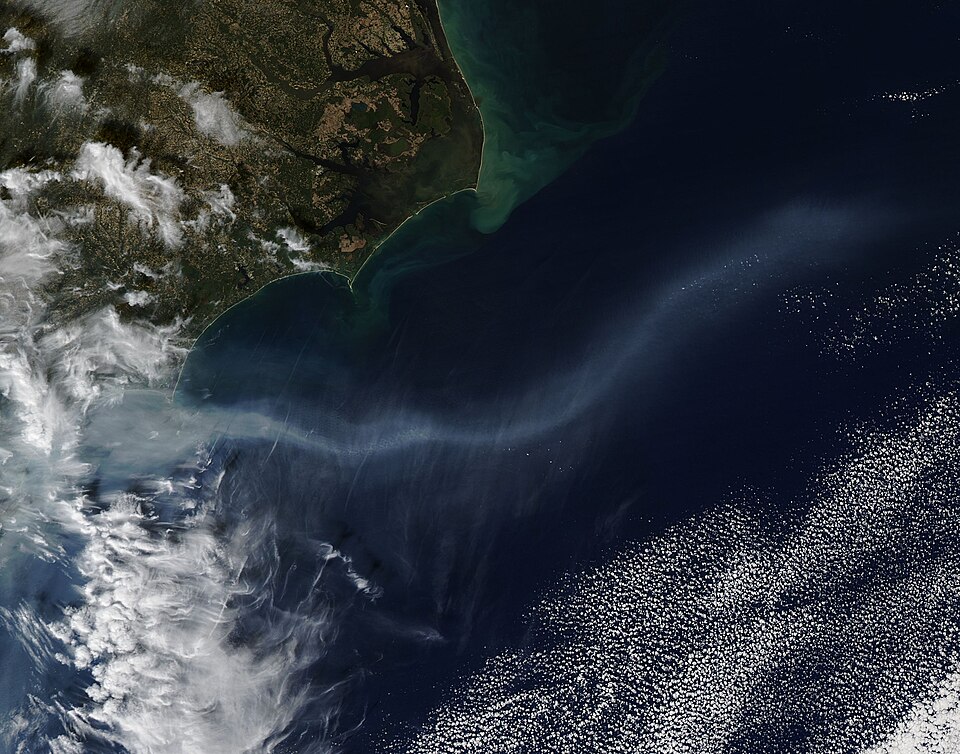
Southern Georgia And North Florida Wildfires Destroy Homes And Force More Evacuations
An unusually long dry spell set the stage for the current crisis. The bottom half of Georgia and northern Florida have been in drought for roughly 18 months, leaving forests, grasses and yards tinder-dry. Strong winds and low humidity then turned small blazes into fast-moving wildfires.
Fires ignited across rural southeast Georgia and spread into northern Florida, fueled by those extreme dryness conditions. The Brantley County blaze grew to roughly 5,000 acres and the Pineland Road Fire in Clinch County expanded into the tens of thousands of acres, with local estimates ranging from about 16,500 to nearly 29,000 acres. Georgia's two largest fires have burned more than 31 square miles combined, while Florida is fighting more than 130 mostly smaller blazes that together have charred roughly 34 square miles.
Coverage of the disaster evolved as reporters and agencies gathered more field data. Early accounts emphasized roughly 47 homes lost and localized destruction in Brantley County. Later reports broadened the picture, updating home-loss estimates to about 50 or slightly more, documenting hundreds to nearly 1,000 evacuations, noting unhealthy air quality, and highlighting cross-border impacts into northern Florida. Broadcast segments and follow-up reporting from PBS, ABC and CBS pushed many of those larger updates into the public record.
The current toll is severe and still shifting. Nearly 50 homes have been destroyed in Brantley County with statewide losses tallied at roughly 50 or a little more, hundreds of homes remain threatened, and officials say roughly 800 to 1,000 people have been evacuated. At least five emergency shelters opened, containment on the biggest fires is around 10 to 15 percent, and smoke has reduced visibility to about one-half mile in some southeastern Georgia counties. The governor declared a state of emergency and a burn ban covering 91 counties, anti-price gouging rules were included, and state and federal resources have been mobilized. Video and on-the-ground accounts show whole streets and neighborhoods reduced to ashes, leaving many residents unsure whether their homes still stand.
📌 Key Facts
- Wildfires have scorched parts of southern Georgia and spread impacts into northern Florida, with the hardest-hit Georgia counties including Brantley and Clinch.
- Roughly 50 or more homes have been destroyed in rural southern Georgia; Brantley County officials reported about 47–50 homes lost there.
- Officials say the two largest Georgia fires have burned tens of thousands of acres — reporting varies, with total estimates cited in the roughly 27,000–29,000+ acre range and PBS describing the two biggest blazes as covering about 31 square miles; the Pineland Road Fire was reported as having grown to more than 29,000 acres in some updates.
- Containment remains limited: the Brantley County wildfire was about 15% contained and remained stable overnight, while the Pineland Road Fire has been reported at roughly 10% containment; nearly 100 firefighters were working on the Pineland blaze.
- Large-scale evacuations and threats to homes: at least 800 people were evacuated in Brantley County, five shelters opened, and reports place the number of additional homes threatened from hundreds up to about 1,000.
- Smoke and drought are worsening impacts — visibility has fallen to about a half mile in parts of southeastern Georgia (notably Clinch and Echols counties), air quality in parts of south Georgia has reached unhealthy levels, and the bottom half of Georgia and northern Florida are under extreme drought conditions (Florida cited as 18 months in drought).
- Florida is simultaneously battling more than 130 mostly smaller wildfires, concentrated in the northern half of the state, a situation officials have called one of the worst fire seasons in 30–40 years.
- State and federal responses have been activated: Georgia Governor Brian Kemp declared a state of emergency and instituted a burn ban across 91 counties (including anti–price-gouging provisions), and state agencies plus FEMA resources have been mobilized to support local response.
- The destruction is widespread and visual — entire residential streets and neighborhoods have been reduced to ashes, hundreds of residents fled on short notice, and some local schools in affected Georgia areas have closed.
📰 Source Timeline (10)
Follow how coverage of this story developed over time
- PBS/AP now report that the two biggest fires in southern Georgia have destroyed more than 50 homes in rural areas.
- Brantley County wildfire is about 15% contained and remained stable overnight, according to the sheriff's office.
- National Weather Service warns visibility in parts of southeastern Georgia could fall to one-half mile due to wildfire smoke, especially in Clinch and Echols counties near the Pineland Road fire.
- Florida is battling more than 130 wildfires, mostly in the northern half of the state, though they are smaller than the major Georgia blazes.
- Reporting reiterates that the bottom half of Georgia and northern Florida are under extreme drought conditions fueling the fires.
- Brantley County fire is about 15% contained and remained stable overnight, according to the sheriff's office.
- National Weather Service reports visibility down to about one-half mile in parts of southeastern Georgia due to smoke, especially in Clinch and Echols counties.
- Article confirms more than 50 homes destroyed in rural areas, with hundreds of residents evacuating on short notice.
- Bottom half of Georgia and northern Florida are described as extremely dry, with Florida firefighters battling more than 130 mostly smaller wildfires in the state's northern half.
- Schools in affected Georgia areas have closed because of the growing threat.
- CBS reports the Pineland Road Fire in southeast Georgia has exploded to more than 29,000 acres.
- Nearly 100 firefighters are battling the Pineland Road Fire.
- CBS says more than 50 homes have been lost in Brantley County and about 1,000 additional homes are threatened.
- CBS frames the situation as wildfires 'slamming' parts of Southeast Georgia and Northern Florida, explicitly highlighting cross-border impact into northern Florida.
- The segment emphasizes the role of strong winds together with dry conditions in accelerating the spread of the current fires.
- CBS Evening News segment reiterates that entire residential streets in Georgia have been reduced to ashes by the wildfires.
- It visually reinforces earlier reports of widespread structural loss and displacement in southeastern Georgia communities.
- Governor Brian Kemp has declared a state of emergency and issued a burn ban covering 91 Georgia counties, including anti–price gouging provisions.
- Brantley County officials now say about 50 homes have been destroyed and roughly 1,000 remain under threat from a 5,000-acre fire that is about 10% contained.
- The separate Pineland Road Fire in Clinch County has grown to about 16,500 acres with 10% containment, contributing to at least 27,000 acres burning across the region.
- Residents in metro Atlanta are reporting heavy smoke and reduced visibility tied to the southern Georgia fires, affecting air quality far from the fire lines.
- State agencies and FEMA resources are being mobilized under Kemp's order to support local fire response.
- CBS video report visually documents Southeast Georgia streets 'reduced to ashes' with fiery orange skies, reinforcing the scale of destruction in burned neighborhoods.
- Segment emphasizes that entire neighborhoods and streets, not just scattered structures, have been burned out by the wildfires.
- Forecast component from Rob Marciano signals continued fire weather concerns but does not add specific new acreage, home counts, or evacuation numbers beyond existing print reporting.
- Confirms that 47 homes were destroyed by the Brantley County fire, with nearly 50 homes lost statewide in Georgia.
- Reports that Georgia's two biggest wildfires have burned more than 31 square miles, with at least four additional smaller fires in the state.
- Details that at least 800 evacuations have taken place in Brantley County, five shelters have opened, and roughly 300 additional homes are threatened, per FEMA.
- Adds that Florida is battling 131 wildfires burning 34 square miles, mostly in the northern half of the state, during what officials call one of its worst fire seasons in 30 to 40 years.
- Notes that Florida has been in drought for 18 months across the state and that smoke has pushed air quality in parts of south Georgia into the unhealthy category.
- Provides new official quotes from Brantley County officials, the Georgia Forestry Association, and Florida Agriculture Commissioner Wilton Simpson on the severity and evolution of the fires.
- More precise location details inside Georgia about which towns and counties saw the worst damage.
- Updated counts or descriptions of homes destroyed and neighborhoods under evacuation orders.
- Additional context on smoke impacts, including air quality alerts and highway disruptions in Georgia.