Supreme Court Allows Wounded Soldier's Lawsuit Against Afghanistan Base Contractor To Proceed
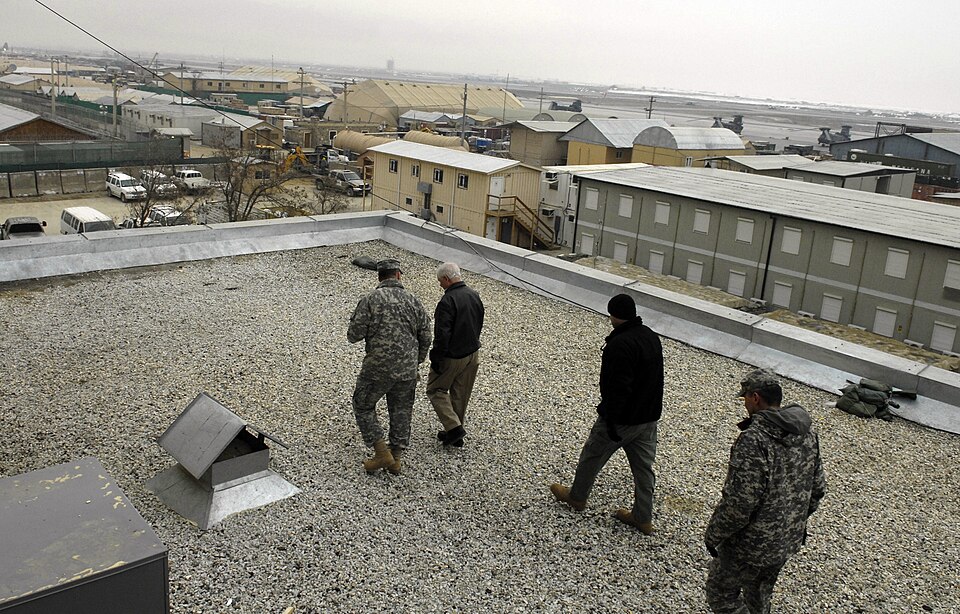
The Supreme Court ruled that a wounded U.S. soldier may sue a private contractor over a 2016 suicide bombing at Bagram Airfield. The soldier, identified in reporting as former Army Specialist Winston Tyler Hencely, says a Taliban suicide bomber who worked for contractor Fluor fractured his skull and left him permanently disabled. Hencely's suit brings state-law tort claims alleging negligent retention and supervision of the attacker rather than federal wartime causes of action. The case was sent back to lower courts so those claims can proceed under state law.
In an opinion written by Justice Clarence Thomas, the Court held that federal law does not automatically shield the contractor from suit and rejected a broad "battlefield preemption" theory that would bar such claims. The opinion was joined by Justices Sotomayor, Kagan, Gorsuch, Barrett and Jackson; Chief Justice Roberts and Justices Alito and Kavanaugh dissented. The decision overturns the Fourth Circuit's dismissal and clears the way for state-law negligence claims to be litigated against Fluor.
Coverage has shifted from treating contractor immunity as broadly protective to emphasizing limits on that immunity. Earlier coverage and lower-court rulings often treated wartime contractors as effectively immune from tort suits, while newer reporting highlights the Court's narrower view and its willingness to allow state-law claims to proceed. The New York Times focused on the Court's legal reasoning and how the justices interpreted those limits, Fox News supplied identifying details about Hencely, the attacker, and Fluor, and ABC framed the outcome as reviving the veteran's lawsuit.
📌 Key Facts
- The Supreme Court ruled that a soldier injured in a Taliban suicide bombing can sue a contractor, holding that federal law does not automatically shield the contractor from suit; the Court vacated the Fourth Circuit’s judgment and remanded the case to lower courts.
- The Court expressly rejected a broad “battlefield preemption” theory as a blanket shield for contractors operating in war zones.
- The plaintiff is former U.S. Army Specialist Winston Tyler Hencely, who was wounded in a 2016 Taliban suicide bombing at Bagram Airfield that fractured his skull and left him permanently disabled.
- The defendant is Fluor Corporation; reporting describes the suicide bomber as having worked for Fluor.
- Hencely’s claims are state-law tort claims alleging negligent retention and negligent supervision of the attacker.
- The majority opinion was written by Justice Clarence Thomas and joined by Justices Sotomayor, Kagan, Gorsuch, Barrett and Jackson; Justices Alito, Roberts and Kavanaugh dissented.
- Reporting adds detail on the Court’s legal reasoning and how it interpreted limits on contractor immunity in war zones.
📰 Source Timeline (3)
Follow how coverage of this story developed over time
- Identifies the plaintiff as former U.S. Army Specialist Winston Tyler Hencely.
- Names the contractor defendant as Fluor Corporation and describes the bomber as working for Fluor.
- Specifies the 2016 Taliban suicide bombing at Bagram Airfield that fractured Hencely’s skull and caused permanent disability.
- Clarifies that Hencely’s claims are state-law tort claims for negligent retention and supervision of the attacker.
- Details that the majority opinion is written by Justice Clarence Thomas and joined by Sotomayor, Kagan, Gorsuch, Barrett and Jackson, with Alito, Roberts and Kavanaugh dissenting.
- States explicitly that the Court rejected a broad 'battlefield preemption' theory and vacated the Fourth Circuit’s judgment, remanding the case.
- New York Times specifies the case caption and some factual background of the attack (suicide bomber at a U.S. base in Afghanistan injuring the plaintiff).
- Article confirms the Supreme Court held that federal law does not automatically shield the contractor from suit in this context, sending the case back to lower courts.
- Reporting adds some detail on the legal reasoning and the justices' alignment, clarifying how the Court interpreted limits on contractor immunity in war zones.