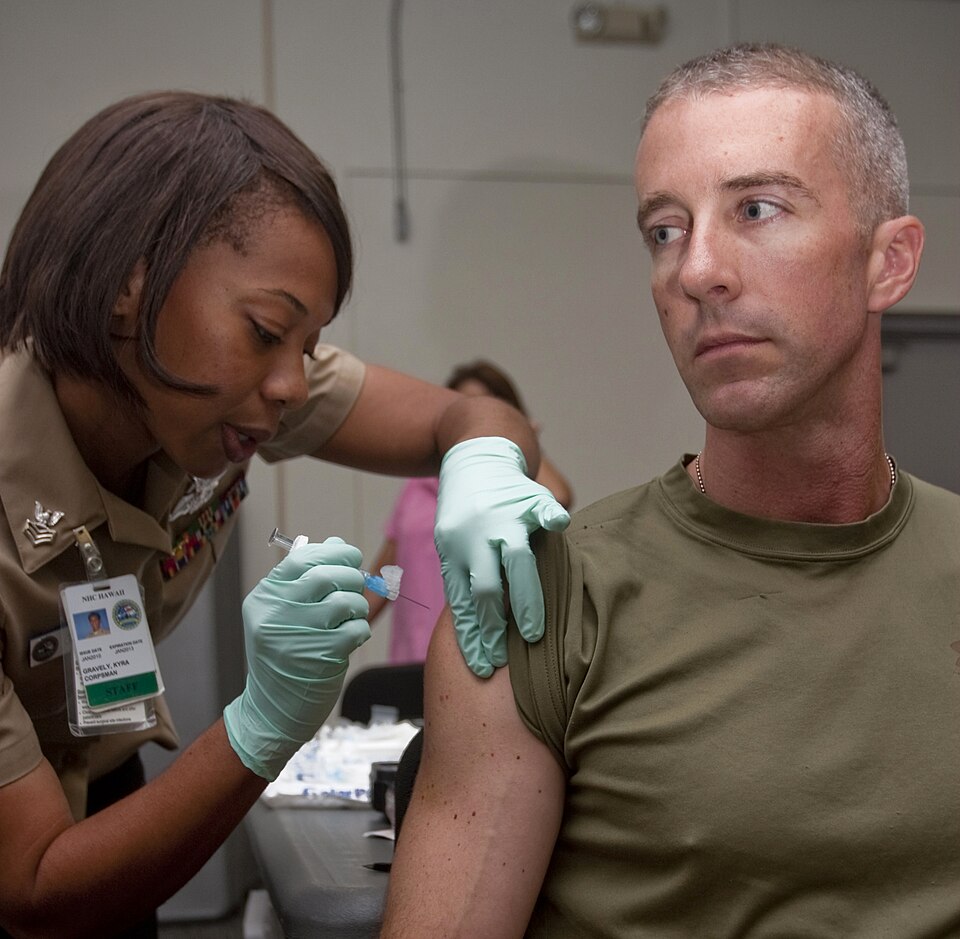
Hegseth Formally Ends Mandatory Flu Shots For U.S. Troops In Policy Shift
Defense Secretary Jared Hegseth formally ended the Pentagon's mandatory flu vaccination policy for U.S. troops and Defense Department civilians Monday. A memorandum signed Monday makes the annual influenza vaccine voluntary for all Active and Reserve Component service members and Defense Department civilians, effective immediately. Hegseth gave each military service 15 days to request keeping a requirement, and he said the mandate infringed on medical autonomy and religious freedom. In public remarks and a video on X he called a blanket flu-vaccine mandate "overly broad and not rational" and described previous policy as "absurd, overreaching."
The move follows an earlier May 29, 2025 memo from Deputy Defense Secretary Steve Feinberg that had already narrowed the mandate to certain activated reservists and ended pay for some vaccine recipients. Public health officials warn the change could harm readiness; the Navy and Marine Corps Force Health Protection Command said flu outbreaks can rapidly degrade mission execution. Health agencies still recommend annual flu shots for everyone six months and older after a particularly severe season, and the vaccine will remain available to service members who want it. The decision also follows the COVID-19 vaccine dispute that led about 8,700 troops to leave the military, a later count showed, and only around 13 service members had been reinstated as of last summer. The Pentagon has extended the deadline for reinstatement applications and now sets an April 1, 2027 cutoff, part of broader steps to accommodate vaccine-refusal cases.
Early reports framed Hegseth's action chiefly as restoring individual medical autonomy and religious freedom while making the flu shot voluntary. Fox, CBS and ABC emphasized the memo's immediate effect, the 15-day window for services, and Hegseth's public video on X explaining his rationale. Subsequent reporting from the New York Times and outlets like MS NOW and Politico recast the move as part of a broader pattern of culture-war interventions at the Pentagon and flagged internal public-health dissent. Those later pieces stressed that readiness was the original justification for mandates and quoted military health officials warning of rapid degradation of readiness if outbreaks occur, shifting coverage from a rights-centered story to one about operational risk and institutional conflict.
📌 Key Facts
- Defense Secretary Hegseth signed a memorandum making the annual influenza vaccine voluntary for all Active and Reserve Component service members and Defense Department civilians, effective immediately.
- The memorandum gives each military service 15 days to request that it keep a flu-vaccine mandate in place.
- Hegseth publicly defended the change in a video on X and other statements, framing it as a protection of medical autonomy and religious freedom and calling a universal flu mandate “overly broad,” “absurd, overreaching,” and saying “your body, your faith and your convictions are not negotiable.”
- The flu vaccine will remain available to service members who want it; public health officials still recommend annual flu shots for everyone 6 months and older, and the decision follows a particularly severe U.S. flu season.
- This decision follows an earlier May 29, 2025 memo from Deputy Defense Secretary Steve Feinberg that had already narrowed the mandate to reservists activated for at least 30 days and ended pay for reservists and Guard members getting shots on their own.
- Military public-health officials — including the Navy and Marine Corps Force Health Protection Command — warned that flu outbreaks can rapidly degrade readiness and mission execution, signaling internal dissent over removing the mandate.
- Reporters and analysts place the move in a broader pattern of rolling back vaccine requirements: the COVID-19 vaccine mandate was rescinded, roughly 8,700 troops left over the COVID mandate and only about 13 had been reinstated as of last summer; Hegseth recently extended the reinstatement application deadline (now April 1, 2027).
- The flu shot had been one of eight vaccines mandatory for troops with established processes for religious exemptions; outlets note Politico first reported the memo and some commentators characterize the change as part of Hegseth’s broader culture‑war interventions at the Pentagon.
📰 Source Timeline (5)
Follow how coverage of this story developed over time
- Politico is cited as the outlet that first reported the memo ending mandatory flu shots for service members and Defense Department civilians.
- The MS NOW piece frames the move explicitly as part of Hegseth's broader pattern of culture-war interventions at the Pentagon, but adds no new concrete policy details beyond those already reported.
- The article reinforces that the change is effective immediately and characterizes it as a 'sweeping reversal of a longstanding health policy,' echoing but not expanding prior reporting.
- New York Times directly quotes Hegseth calling the flu shot mandate an "absurd, overreaching" policy and saying "your body, your faith and your convictions are not negotiable."
- Article reiterates that the flu vaccine will remain available to service members who want it, underscoring it is now voluntary rather than eliminated.
- Story refreshes context that the flu mandate was originally justified on readiness grounds and notes Hegseth's public dismissal of that medical perspective.
- Piece restates and slightly updates context around the COVID vaccine fallout, including that roughly 8,700 troops left over the mandate and only 13 had been reinstated as of last summer, and that the reinstatement application deadline is now April 1, 2027.
- Article notes that Hegseth recently extended that reinstatement deadline in March, situating the flu decision within a pattern of moves catering to vaccine-refusal cases.
- Confirms Hegseth’s memo formally ends the universal flu vaccine requirement for U.S. troops and gives each service 15 days to request keeping a mandate.
- Adds explicit rationale language from Hegseth emphasizing 'medical autonomy' and religious freedom and calling a blanket mandate 'overly broad and not rational.'
- Places the move in a broader Trump administration pattern of dialing back vaccine recommendations, including dropping universal flu and other vaccine recommendations for all children.
- Recaps Congressional Research Service detail that the flu shot was one of eight mandatory vaccines for troops, with structured processes for religious exemptions.
- Notes the change comes after a particularly severe U.S. flu season in which public health officials still recommend annual flu shots for everyone 6 months and older.
- Hegseth signed a memorandum on Monday declaring the annual influenza vaccine voluntary for all Active and Reserve Component service members and Defense Department civilians, effective immediately.
- Hegseth publicly justified the move in a video on X, calling a universal flu-vaccine mandate "overly broad and not rational" and framing it as part of an effort to "restore freedom and strength" to the joint force.
- The article details a May 29, 2025 memo from Deputy Defense Secretary Steve Feinberg that had already narrowed the mandate to reserve troops activated for at least 30 days and ended pay for reservists and Guard members getting shots on their own.
- The Navy and Marine Corps Force Health Protection Command is quoted warning that flu outbreaks can rapidly degrade readiness and mission execution, underscoring internal dissent from public health officials within the services.
- The piece situates the change alongside the now-rescinded COVID-19 vaccine mandate, noting about 8,700 troops left over COVID refusal and that a Trump second-term order has produced fewer than two dozen reinstatements so far.