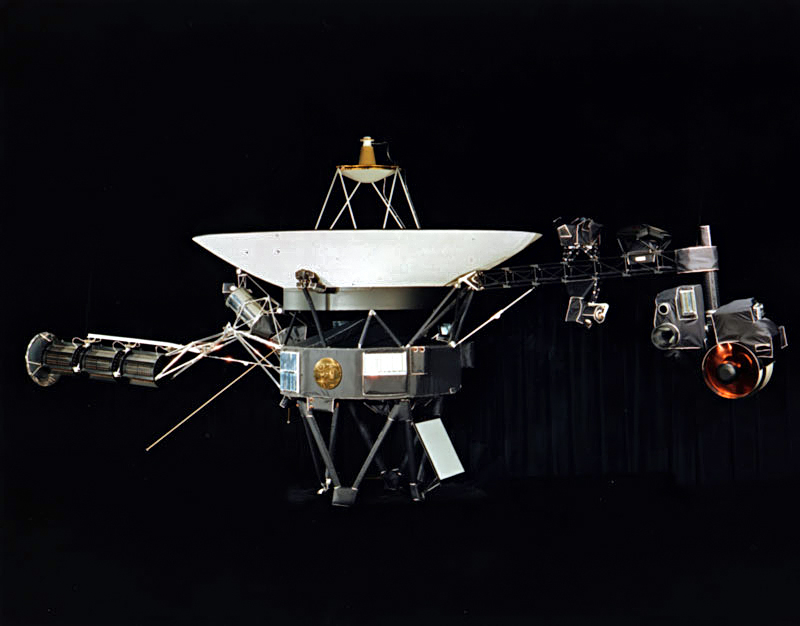
NASA Shuts Voyager 1 Particle Detector To Conserve Power In Deep Space
NASA turned off Voyager 1's particle detector to conserve power about 15 billion miles from Earth. The agency made the change recently as part of efforts to extend the probe's operating life. Voyager 1 is an aging spacecraft whose limited power supply forces mission teams to prioritize instruments.
Launched in 1977, Voyager 1 now operates in interstellar space and has steadily had systems turned off to preserve power. Turning off the particle detector reduces immediate science returns but helps keep core communications and other key instruments running longer. NASA has periodically disabled instruments on both Voyager probes as their radioisotope power sources gradually produce less electricity.
📌 Key Facts
- NASA shut down Voyager 1's Low-Energy Charged Particles instrument via commands sent Friday.
- Voyager 1 is nearly 49 years into its mission and more than 15 billion miles from Earth, losing about 4 watts of power per year.
- The probe retains two active science instruments and NASA is designing a broader 'Big Bang' power reconfiguration to extend operations.
📰 Source Timeline (1)
Follow how coverage of this story developed over time