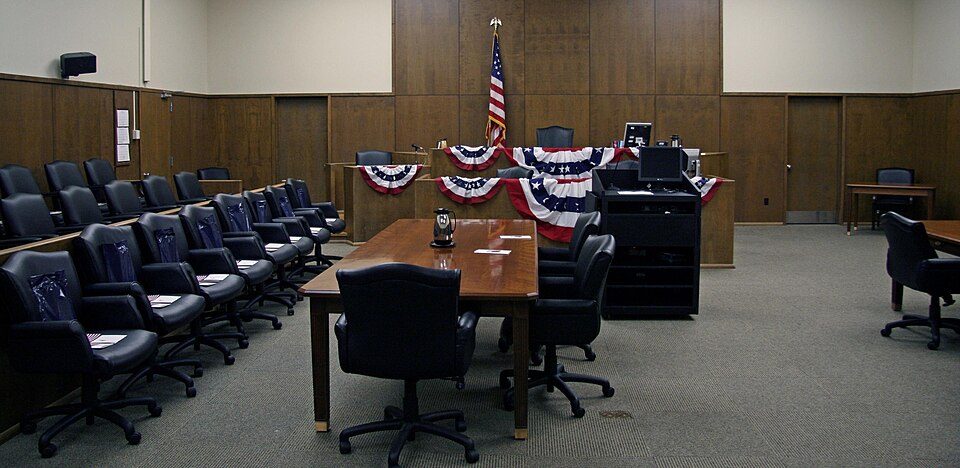
Federal Judge Halts Nexstar Tegna Takeover With Preliminary Injunction
A federal judge has blocked Nexstar's takeover of Tegna pending resolution of an antitrust lawsuit. Chief Judge Troy Nunley of the U.S. District Court for the Eastern District of California issued a preliminary injunction on Friday, following an earlier temporary restraining order. The court found plaintiffs showed a prima facie case that the merger creates a reasonable probability of anticompetitive effect.
Nexstar already closed the $6.2 billion deal and absorbed 65 Tegna stations, but the ruling forces the company to operate them separately while the trial goes forward. If Nexstar loses at trial, the company could be forced to unwind the entire transaction. Post-deal Nexstar now controls 265 stations in 44 states plus Washington, D.C., reaching roughly 80 percent of U.S. households, a footprint critics say far exceeds traditional federal ownership caps. Tegna journalists, speaking anonymously to NPR, said staff expect layoffs in markets where Nexstar would own two big-four affiliates as the company seeks about $300 million in annual synergies. Eight Democratic state attorneys general and DirecTV have filed related antitrust suits with different legal theories about local news consolidation and retransmission leverage. Nexstar plans to appeal the injunction to the Ninth Circuit Court of Appeals.
Earlier coverage emphasized regulatory approvals and an unusual public push for the deal, including endorsements from former President Donald Trump and Federal Communications Commission Chair Brendan Carr. Newer reporting, led by outlets including NPR, has shifted the focus to legal risks and potential market harm as courts weigh whether the merger will reduce competition.
📌 Key Facts
- Chief Judge Troy Nunley of the U.S. District Court for the Eastern District of California issued a preliminary injunction Friday — following an earlier temporary restraining order — halting Nexstar’s takeover of Tegna until trial.
- Nexstar already closed the $6.2 billion acquisition and absorbed 65 Tegna stations, but the company must operate those stations separately while the case proceeds and could be forced to unwind the entire deal if it loses at trial.
- Judge Nunley found that plaintiffs demonstrated a prima facie case that the merger creates a 'reasonable probability of anticompetitive effect.'
- Nexstar plans to appeal the preliminary injunction to the Ninth Circuit Court of Appeals.
- Post‑deal, Nexstar’s footprint would total 265 stations in 44 states plus Washington, D.C., reaching roughly 80% of U.S. households — a level described as far above traditional federal ownership caps.
- Tegna journalists, speaking anonymously to NPR, said staff expect layoffs in markets where Nexstar would own two 'big four' affiliates as the buyer targets about $300 million in annual 'synergies.'
- Eight Democratic state attorneys general and DirecTV filed separate but now‑parallel antitrust lawsuits challenging the transaction, pursuing somewhat distinct theories (local news consolidation vs. retransmission leverage).
- The coverage notes that President Trump and FCC Chair Brendan Carr publicly endorsed the deal prior to FCC and DOJ approvals, an unusually public political push for a specific media merger.
📰 Source Timeline (2)
Follow how coverage of this story developed over time
- The Friday ruling is a preliminary injunction by Chief Judge Troy Nunley of the Eastern District of California, following an earlier temporary restraining order.
- Nexstar has already consummated the $6.2 billion acquisition, absorbing 65 Tegna stations, but must now operate them separately while the trial proceeds.
- If Nexstar ultimately loses at trial, the company could be forced to unwind the entire $6.2 billion deal.
- Judge Nunley held that plaintiffs demonstrated a prima facie case that the merger creates a 'reasonable probability of anticompetitive effect.'
- Nexstar plans to appeal the injunction to the Ninth Circuit Court of Appeals.
- The article quantifies Nexstar’s post-deal footprint: 265 stations in 44 states plus Washington, D.C., reaching 80% of U.S. households, far above traditional federal ownership caps.
- Tegna journalists told NPR, under anonymity, that staff expect layoffs at stations in markets where Nexstar owns two 'big four' affiliates, reflecting anticipated $300 million in annual 'synergies.'
- The story details that eight Democratic attorneys general and DirecTV filed separate but now-parallel antitrust suits, with somewhat distinct theories (local news consolidation vs. retransmission leverage).
- The piece reiterates that President Trump and FCC Chair Brendan Carr publicly endorsed the deal before FCC and DOJ approvals, an unusual political push for a specific media merger.