
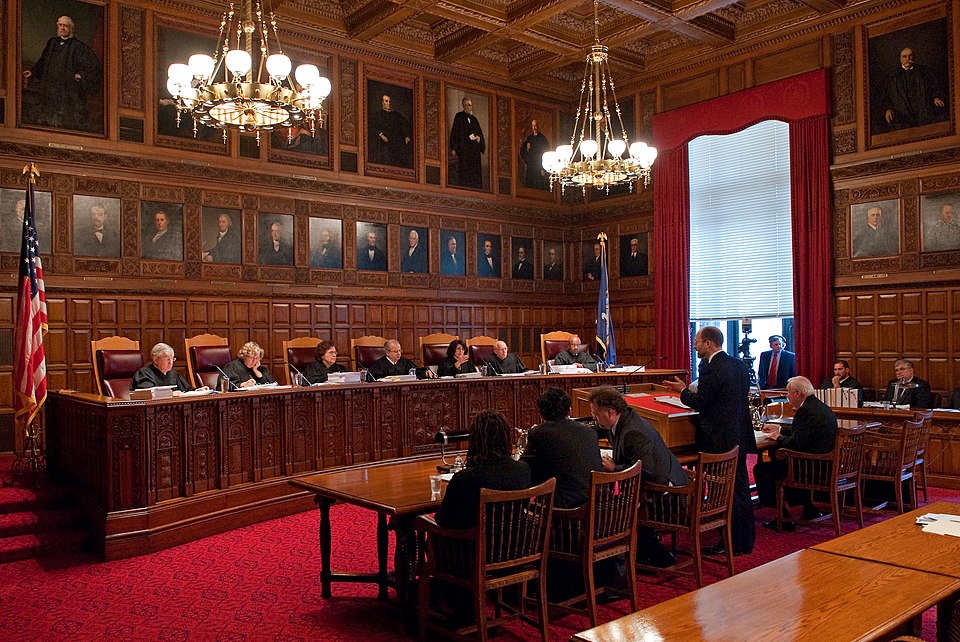
Supreme Court 8-0 Lets Chevron Move Louisiana Coastal-Damage Case To Federal Court
The Supreme Court held 8-0 that Chevron can move a Louisiana coastal-damage case to federal court. Justice Samuel Alito recused himself because of financial ties to ConocoPhillips. The decision reverses a lower-court ruling and shifts the venue for the long-running dispute to the federal system.
The suit traces to a Plaquemines Parish jury verdict that ordered Chevron, as Texaco's successor, to pay more than $740 million for coastal cleanup. Oil and gas companies argued they acted as U.S. contractors during World War II, a point backed by briefs supported by the Trump administration. Those federal-contractor arguments drive the venue fight but do not decide whether companies are liable for the damage. The U.S. Geological Survey links oil and gas infrastructure to over 2,000 square miles of Louisiana coastal land loss, and state officials warn the state could lose another 3,000 square miles in coming decades if trends continue.
Early coverage emphasized the dramatic local jury award and the scale of environmental harm. More recent reporting has shifted to procedural questions about federal venue and the federal-contractor defense. PBS highlighted the recusal and published the scientific and state-agency data that reframed the dispute. The Supreme Court's move changes where the case will be litigated but leaves the underlying liability claims to be decided in federal court.
The Supreme Court's unanimous decision has been interpreted by The Wall Street Journal's editorial board as a significant victory for Chevron and other federal contractors, arguing that it effectively curtails the ability of state courts to adjudicate claims against them for actions taken under government contracts. They assert that the ruling protects businesses from what they describe as a 'shakedown' strategy by the plaintiff bar, particularly in cases like that of Plaquemines Parish, which they claim lacks legal and factual merit due to the primary causes of coastal erosion being storms and geography rather than historical fuel production.
This perspective underscores a broader tension in environmental litigation, where the implications of federal versus state jurisdiction are hotly debated. While the decision shifts the venue to federal court, it does not resolve the fundamental questions of liability that remain contentious. Critics of the ruling may argue that it undermines local accountability for environmental damage, particularly in regions like Louisiana that face severe ecological threats linked to industrial activities. Thus, while the ruling may provide clarity for contractors, it raises ongoing concerns about the environmental and economic impacts on affected communities.
Show source details & analysis (2 sources)
📌 Key Facts
- The Supreme Court ruled 8-0 to let Chevron and other oil and gas companies move a Louisiana coastal-damage lawsuit to federal court; Justice Samuel Alito recused due to financial ties to ConocoPhillips.
- A Plaquemines Parish jury had ordered Chevron (as Texaco’s successor) to pay upward of $740 million for coastal-damage cleanup.
- Oil and gas companies, backed by the Trump administration, argued they acted as U.S. contractors during World War II to justify federal jurisdiction.
- The U.S. Geological Survey identifies oil and gas infrastructure as a significant cause of Louisiana’s coastal land loss, estimating more than 2,000 square miles lost.
- Louisiana’s coastal protection agency warns the state could lose an additional 3,000 square miles in coming decades.
📊 Analysis & Commentary (1)
"A Wall Street Journal editorial praises the Supreme Court’s unanimous Chevron ruling as a win for the rule of law and the economy, arguing it blocks a plaintiff‑bar effort to haul federal contractors into state court over dubious WWII‑era coastal erosion claims."
📰 Source Timeline (2)
Follow how coverage of this story developed over time
- The Supreme Court’s decision was 8-0, with Justice Samuel Alito recused due to financial ties to ConocoPhillips.
- The underlying Plaquemines Parish jury verdict ordered Chevron (as Texaco’s successor) to pay upward of $740 million for coastal damage cleanup.
- Oil and gas companies, backed by the Trump administration, argued they acted as U.S. contractors during World War II, justifying federal jurisdiction.
- U.S. Geological Survey has identified oil and gas infrastructure as a significant cause of Louisiana’s coastal land loss, estimated at over 2,000 square miles.
- Louisiana’s coastal protection agency warns the state could lose an additional 3,000 square miles in coming decades.