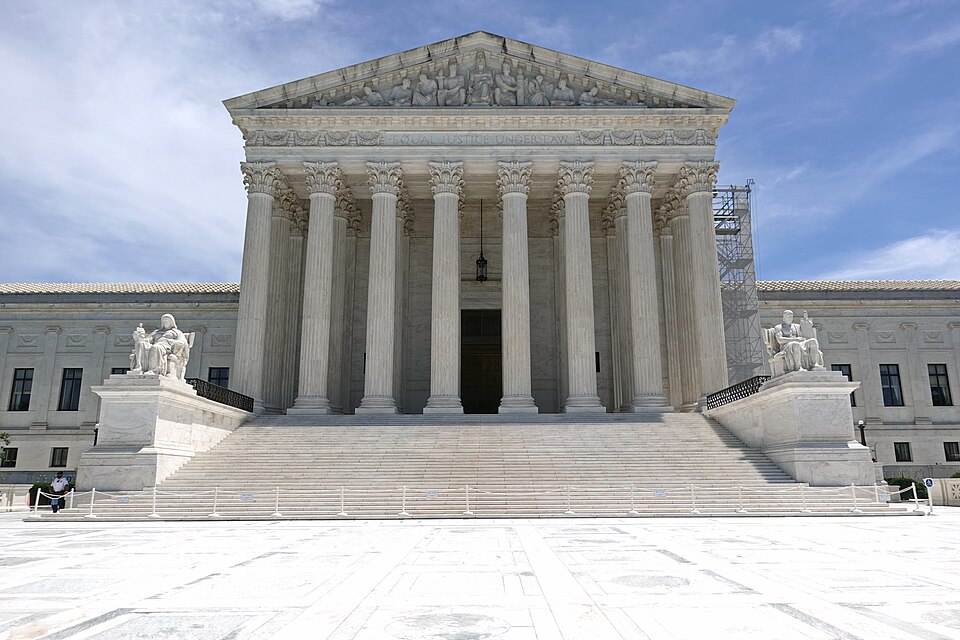
Justices Jackson and Sotomayor Publicly Question Supreme Court’s Pro‑Trump Emergency Orders
Two of the Supreme Court’s liberal justices publicly questioned the court’s recent use of emergency orders that have enabled parts of the Trump administration’s immigration and other policies. At Yale Law School, Justice Ketanji Brown Jackson delivered an hour‑long critique of conservative justices’ emergency stays, calling many such orders “back‑of‑the‑envelope, first‑blush impressions” and “scratch‑paper musings” that the Court then expects lower courts to follow; she warned the Court has become “noticeably less restrained,” argued that a president is not harmed by being blocked from attempting something illegal, and said she raised the matter internally before speaking publicly to be a “catalyst for change.” Separately, Justice Sonia Sotomayor apologized after remarks at a University of Kansas School of Law event that criticized a colleague’s concurrence in a September 2025 order that allowed ICE to resume broad immigration sweeps in Los Angeles; she called her comments “inappropriate,” “hurtful,” and said, “I have apologized to my colleague.” That concurrence had said ethnicity could be a relevant factor and described the stops as a “brief encounter,” language that prompted Sotomayor’s sharp earlier critique about the author’s background.
The dispute intersects with concrete policy effects and local demographics: the September order targeted Los Angeles, a jurisdiction in a state where foreign‑born residents make up roughly 28% of the population, the highest share of any state. Reporting and supplementary research also note that aggressive immigration enforcement and long‑term detention cascade into financial insecurity for individuals and households and remove millions of dollars from local economies, underscoring the human stakes Jackson said the Court’s emergency practice has sometimes failed to grapple with. Public reaction cut across political lines on social media, with some users praising Jackson for what they framed as a defense of constitutional protections and immigrant rights and others accusing her of attacking the law or applauding Trump’s lawyers for rebutting her constitutional arguments; commentators also highlighted the strategic value of aligning legal arguments with broader public debate.
Mainstream coverage has shifted from routine reporting of high‑court emergency rulings to more explicit coverage of intra‑court tensions and public rebukes. Early accounts focused largely on the substance of emergency stays and their immediate legal effects; more recent reporting, led by outlets covering Jackson’s Yale remarks and Sotomayor’s apology and context, has emphasized public criticism by sitting justices and the personal and institutional fallout from those critiques. PBS’s detailed account of Jackson’s speech and CBS’s reporting on Sotomayor’s comments and apology pushed the narrative toward a public airing of disagreement over the Court’s emergency practices, rather than keeping such disputes within private internal deliberations.
📊 Relevant Data
In California, 28% of the population is foreign-born, the highest share of any state, more than double the national average.
Immigrants in California — Public Policy Institute of California
Long-term immigration detention produces financial insecurity at individual and household levels, removing millions of dollars from local economies.
The Economic Impacts of Long-Term Immigration Detention in Southern California — UCLA Institute for Research on Labor and Employment
Root causes of migration from Central America include socioeconomic factors, violence, and corruption, addressed by U.S. strategies like the prior U.S. Strategy for Engagement in Central America, which received over $3.7 billion in appropriations.
Central American Migration: Root Causes and U.S. Policy — Congressional Research Service
The Immigration and Nationality Act of 1965 replaced the national origins quota system with a preference system focused on family reunification and attracting skilled immigrants, significantly increasing immigration from Latin America and Asia.
Historical Overview of Immigration Policy — Center for Immigration Studies
📌 Key Facts
- Justice Ketanji Brown Jackson delivered a nearly hour‑long speech at Yale Law School criticizing conservative justices’ use of emergency orders that allowed President Trump to implement controversial policies after lower courts found them likely illegal.
- Jackson described those emergency orders as "back‑of‑the‑envelope, first‑blush impressions" and "scratch‑paper musings," saying they often fail to grapple with harms to real people.
- She argued that the president is not harmed if blocked from doing something illegal and said the Court has become "noticeably less restrained" in granting emergency stays.
- Jackson said she had discussed the issue internally but chose to speak publicly in hopes of being a "catalyst for change."
- Justice Sonia Sotomayor issued a written apology saying her remarks were "inappropriate," "hurtful" and, "I have apologized to my colleague."
- Sotomayor’s controversial comments originated at a University of Kansas School of Law event, where she referenced a prior immigration‑case concurrence without naming the concurrence’s author.
- The underlying September 2025 order allowed ICE to resume broad sweeps in Los Angeles; Justice Kavanaugh’s concurrence said ethnicity can be a relevant factor and called the stops a "brief encounter," and Sotomayor had earlier criticized the concurrence’s author with wording that he came from parents who were "professionals" and "probably doesn't really know any person who works by the hour."
📰 Source Timeline (3)
Follow how coverage of this story developed over time
- Justice Ketanji Brown Jackson gave a nearly hour‑long speech at Yale Law School criticizing conservative justices’ use of emergency orders that allowed President Trump to implement controversial policies after lower courts found them likely illegal.
- Jackson described these orders as 'back‑of‑the‑envelope, first‑blush impressions' and 'scratch‑paper musings' that the Court then expects lower courts to follow, and said they often fail to grapple with harms to real people.
- She argued that the president is not harmed if blocked from doing something illegal, and said the Court has become 'noticeably less restrained' in granting emergency stays in controversial cases.
- Jackson said she has discussed the issue internally but chose to speak publicly in hopes of being a 'catalyst for change.'
- Direct quote from Sotomayor’s written statement: she called her remarks 'inappropriate,' 'hurtful' and said, 'I have apologized to my colleague.'
- Concrete description that the controversial comments came at a University of Kansas School of Law event, where she referenced a prior immigration case concurrence without naming Kavanaugh.
- Detailed recap of the underlying September 2025 order allowing ICE to resume broad sweeps in Los Angeles and Kavanaugh’s concurrence stating ethnicity can be a relevant factor and calling the stops a 'brief encounter.'
- Specific wording of Sotomayor’s prior criticism: that the author of the concurrence came from parents who were 'professionals' and 'probably doesn't really know any person who works by the hour.'