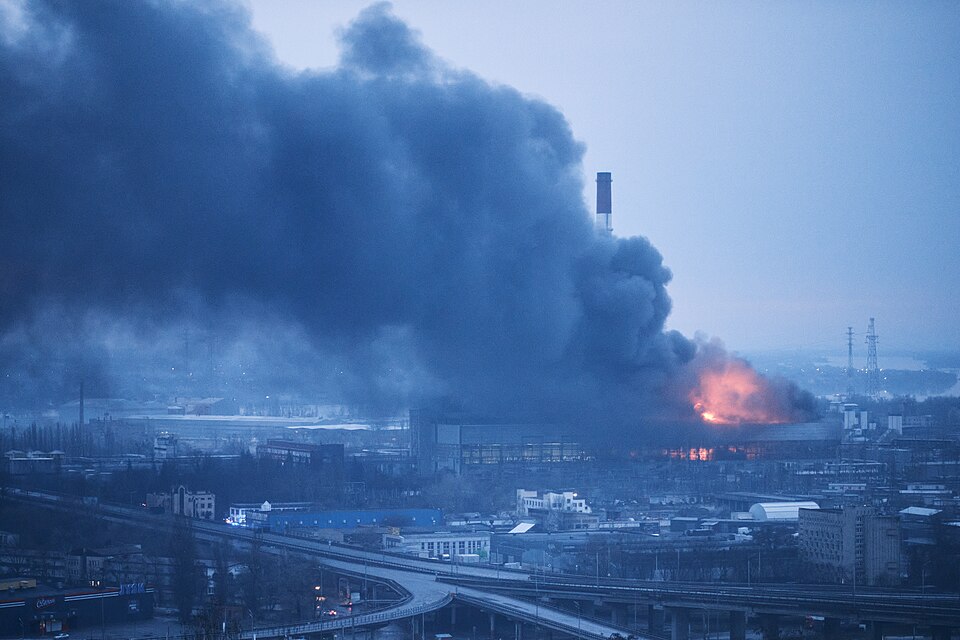
Russia Launches Massive Drone and Missile Barrage Across Ukraine
Russian forces launched a massive, hourslong barrage of missiles and drones across Ukraine, striking multiple regions and reportedly aiming at energy infrastructure and weapons-production sites. The attack, reported by NPR as an extended bombardment, comes amid a long-running conflict in which Moscow has sustained large-scale operations—backed by roughly $270 million a day in oil export revenue and a planned 2026 defense budget of about 12.9 trillion rubles—while recruiting thousands of foreign fighters (about 27,407 from 44 countries as of March 2026) to bolster its ranks.
Open-source analysts and social-media observers quickly circulated technical details and assessments: some accounts catalogued the mix of weapons used, including Kh-101 cruise missiles and various Iskander variants, and others claimed Ukraine’s air defenses intercepted the vast majority of the salvoes (one widely shared post put drone interceptions at about 96.5% and missile interceptions at about 70.5%). Those defenses appear to have blunted much of the barrage, though the strike still caused damage in parts of the country. Public reaction was mixed—critics accused some mainstream outlets of downplaying the event’s prominence, while analysts warned of wider economic and market repercussions, including potential oil-price and inflation effects tied to renewed escalation. Social-media posts also highlighted cross-border consequences, with unverified reports of civilian casualties in Russia’s Tuapse tied to a retaliatory Ukrainian drone strike.
Reporting on these mass strikes has shifted in tone and focus since earlier phases of the war. Initial coverage tended to treat large Russian raids primarily as demonstrations of destructive capacity; more recent coverage—driven by on-the-ground reporting, open-source technical analysis, and social-media documentation—has emphasized Ukraine’s defensive performance and the logistical and financial underpinnings that let Moscow mount repeated barrages. That reframing complicates a simple narrative of overwhelming offensive power by underlining both Kyiv’s resilience and the economic and recruitment mechanisms that sustain Russia’s campaign.
📊 Relevant Data
Russia earns approximately $270 million per day from oil exports, which enables the recruitment of more fighters and sustains its economy amid the war in Ukraine.
How oil jackpot and sanctions failure are funding Russia's war — Kyiv Independent
Russia's defense budget for 2026 is 12.9 trillion rubles (approximately $157.4 billion), with oil price surges contributing significantly to revenue that supports military spending.
Russia Drops Budget Cut Plans as Oil Price Surge Boosts Revenues — The Moscow Times
As of March 2026, Russia has recruited 27,407 foreign nationals from 44 countries to fight in its war against Ukraine, an increase from 18,000 in November 2025.
Foreign fighters in Russian ranks rise to 27,407, Ukraine says — Kyiv Independent
Over 1,000 Kenyans have been recruited to fight for Russia in Ukraine as of February 2026, with 89 on the frontline, 39 hospitalized, and 28 missing in action.
Over 1000 Kenyans recruited to fight for Russia in Ukraine, report says — Reuters
Combined Russian and Ukrainian military and civilian casualties may reach up to 1.8 million as of early 2026, with estimates of 250,000-300,000 Ukrainian military casualties (killed and wounded).
Russia's Grinding War in Ukraine — Center for Strategic and International Studies (CSIS)
📌 Key Facts
- Russia launched nearly 700 drones and dozens of missiles on April 16, 2026, in its biggest aerial attack on Ukraine in almost two weeks.
- At least 16 people were killed and more than 80 injured, including four dead and over 50 wounded in Kyiv alone.
- Ukraine’s air force says it shot down or disabled 667 of 703 targets, including 636 Shahed-type drones, while 20 drones and 12 missiles hit 26 locations.
- The strikes followed President Zelenskyy’s trip to Germany, Norway and Italy to secure air defenses, and he publicly argued against a U.S. temporary waiver on Russian oil sanctions.
📰 Source Timeline (1)
Follow how coverage of this story developed over time