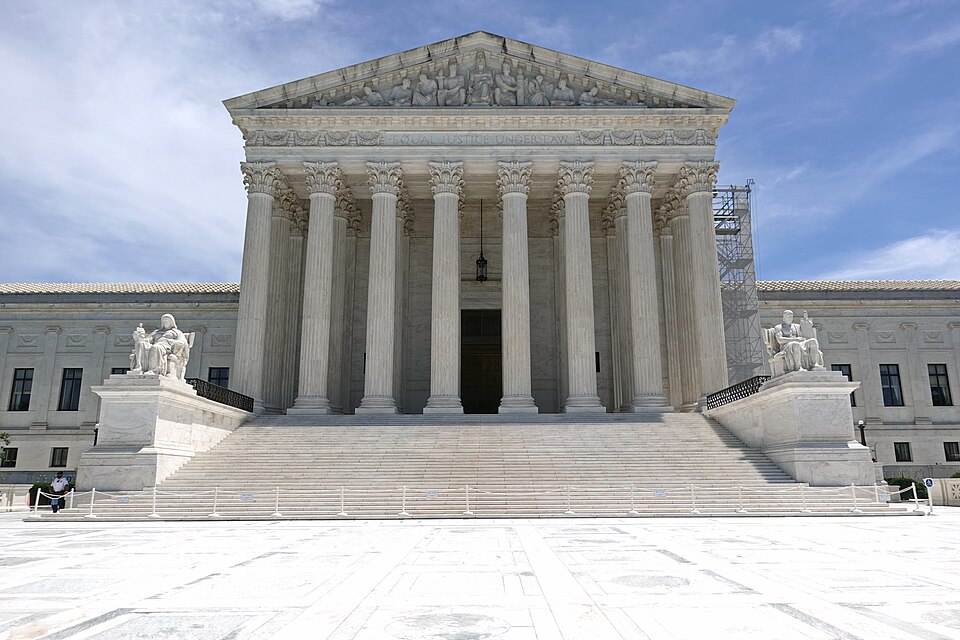
Justices Jackson and Sotomayor Publicly Question Supreme Court's Pro-Trump Emergency Orders
Two Supreme Court justices publicly questioned the Court's recent willingness to grant emergency orders that favored the Trump administration, drawing attention both to interpersonal tensions on the bench and to broader institutional concerns. Justice Sonia Sotomayor apologized this week for remarks she made at a University of Kansas School of Law event that criticized a colleague's concurrence in a September 2025 order allowing ICE to resume broad sweeps in Los Angeles; in a written statement she called her comments "inappropriate," "hurtful" and said, "I have apologized to my colleague." That concurrence — written by Justice Brett Kavanaugh — had suggested ethnicity could be a relevant factor in stops and described the encounters as "brief," language that prompted Sotomayor's initial rebuke about perceived insensitivity to day laborers. Separately, Justice Ketanji Brown Jackson used a nearly hour-long speech at Yale Law School to challenge the Court's increasing readiness to issue emergency stays, calling many such orders "back-of-the-envelope" rulings that fail to grapple with harms to real people and arguing the president is not harmed by being blocked from doing something illegal.
Those harms are not abstract: long-term data from Los Angeles County underscore the stakes for people targeted by aggressive immigration enforcement. Between 2001 and 2021, removal orders were issued for fewer than 20% of detainees who had legal representation, compared with 71% for those without counsel — a disparity that experts say magnifies the human cost of broad enforcement sweeps and reinforces Justice Jackson's point that emergency interventions can produce outsized consequences for vulnerable communities. Public reaction has been mixed and pointed: social posts praised Jackson for forcefully challenging administration policies and hailed her handling of related high-profile cases, while responses to Sotomayor's apology ranged from calls that it was unnecessary to insistence that her original words were reckless; some commentators also debated the historical and evidentiary lines Jackson drew in oral argument contexts.
Coverage of the episode has shifted over the past day: early reporting emphasized Sotomayor's apology and the workplace-decorum angle — focusing on whether her comments about a colleague were appropriate — while later pieces, notably the PBS account of Justice Jackson's Yale remarks, reframed the story as a systemic critique of how the Court handles emergency applications that affect administration policy. Outlets such as MS NOW and CBS noted the connection between Sotomayor's comments and Kavanaugh's September 2025 concurrence, but it was Jackson's public call for change that broadened the debate from a personal spat to questions about institutional restraint, legal reasoning in emergency orders, and the real-world consequences those decisions impose.
📊 Relevant Data
In Los Angeles County, removal orders in deportation proceedings were under 20% for those with legal representation compared to 71% for those without, from 2001-2021.
State of Immigrants in LOS ANGELES County — USC Dornsife Equity Research Institute
📌 Key Facts
- Justice Ketanji Brown Jackson gave a nearly hour-long speech at Yale Law School criticizing conservative justices' use of emergency orders that have allowed President Trump to implement controversial policies after lower courts found them likely illegal.
- In that speech Jackson described the Court's emergency orders as 'back-of-the-envelope, first-blush impressions' and 'scratch-paper musings,' saying they often fail to grapple with harms to real people and that the Court has become 'noticeably less restrained' in granting emergency stays.
- Jackson said the president is not harmed if blocked from doing something illegal, has discussed the issue internally with colleagues, and chose to speak publicly in hopes of being a 'catalyst for change.'
- The controversy centers on a September 2025 Supreme Court order that allowed ICE to resume broad sweeps in Los Angeles; Justice Brett Kavanaugh wrote a concurrence saying ethnicity can be a relevant factor and characterizing the stops as a 'brief encounter.'
- Justice Sonia Sotomayor criticized that concurrence at a University of Kansas School of Law event, suggesting the concurrence's author came from parents who were 'professionals' and 'probably doesn't really know any person who works by the hour.'
- Sotomayor publicly apologized on Wednesday for those remarks, calling them 'inappropriate' and 'hurtful' and saying, 'I have apologized to my colleague.'
📰 Source Timeline (4)
Follow how coverage of this story developed over time
- Notes that Justice Sonia Sotomayor publicly apologized on Wednesday for remarks suggesting Justice Brett Kavanaugh’s sheltered upbringing made him insensitive to day laborers targeted by immigration sweeps.
- Reinforces that those comments were tied to his concurrence in a September 2025 order allowing aggressive ICE actions in Los Angeles.
- Justice Ketanji Brown Jackson gave a nearly hour‑long speech at Yale Law School criticizing conservative justices’ use of emergency orders that allowed President Trump to implement controversial policies after lower courts found them likely illegal.
- Jackson described these orders as 'back‑of‑the‑envelope, first‑blush impressions' and 'scratch‑paper musings' that the Court then expects lower courts to follow, and said they often fail to grapple with harms to real people.
- She argued that the president is not harmed if blocked from doing something illegal, and said the Court has become 'noticeably less restrained' in granting emergency stays in controversial cases.
- Jackson said she has discussed the issue internally but chose to speak publicly in hopes of being a 'catalyst for change.'
- Direct quote from Sotomayor’s written statement: she called her remarks 'inappropriate,' 'hurtful' and said, 'I have apologized to my colleague.'
- Concrete description that the controversial comments came at a University of Kansas School of Law event, where she referenced a prior immigration case concurrence without naming Kavanaugh.
- Detailed recap of the underlying September 2025 order allowing ICE to resume broad sweeps in Los Angeles and Kavanaugh’s concurrence stating ethnicity can be a relevant factor and calling the stops a 'brief encounter.'
- Specific wording of Sotomayor’s prior criticism: that the author of the concurrence came from parents who were 'professionals' and 'probably doesn't really know any person who works by the hour.'