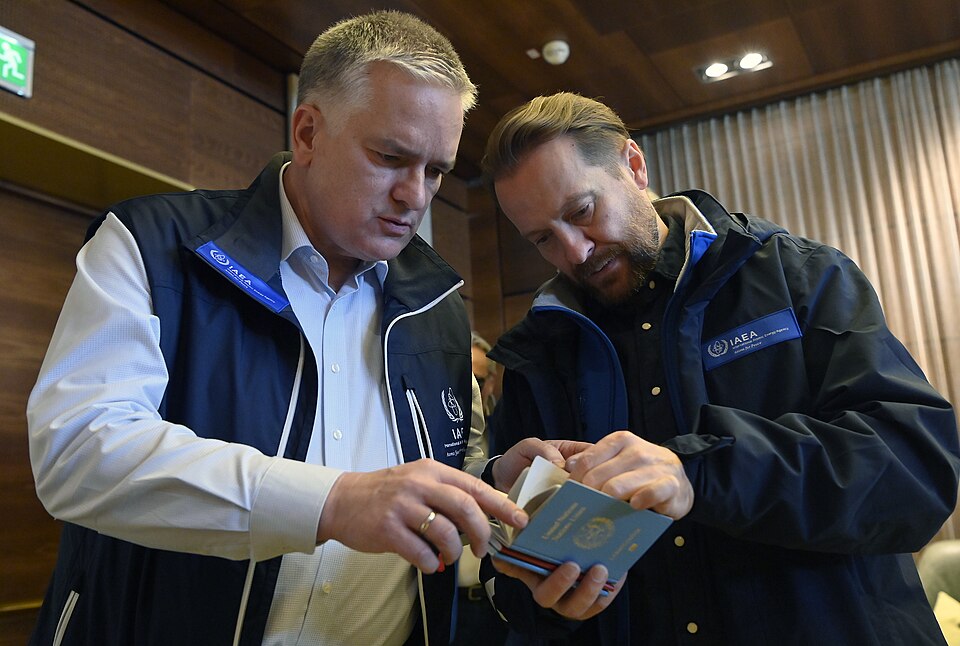
IAEA Chief Demands ‘Very Detailed’ Iran Nuclear Checks in Any U.S. War-Ending Deal
IAEA Director General Rafael Grossi has insisted that any U.S.-brokered deal to end the Iran war must include “very detailed” and enforceable inspections, pressing Tehran for immediate and full access to its nuclear sites to verify limits on enrichment and materials. Grossi warned that Iran’s restrictions on IAEA access are a major concern even while the agency has not found evidence of a structured weapons program; his intervention comes as diplomatic efforts — including stalled talks in Islamabad after Iran rejected U.S. demands to give up enrichment — seek to end the conflict that has already disrupted global energy flows and regional stability.
Those energy and strategic stakes help explain why verification is so central: by June 2025 Iran’s enriched uranium stockpile totaled 9,874.9 kg, and the 2026 war has suspended nearly a fifth of global crude and natural gas supply, pushing Brent crude above $120 a barrel after the Strait of Hormuz was effectively closed. Washington under President Trump has drawn a hard line demanding no enrichment and removal of existing enriched material — a position publicly opposed by Russia’s Sergey Lavrov, who called enrichment for civilian use “inalienable” and said many countries reject U.S. zero-enrichment demands — while Moscow continues to provide Iran with technical and selective intelligence support that complicates verification and alters the conflict’s balance.
Public reaction and commentary reflect both technical and political fault lines: social media users flagged Grossi’s emphasis on access and verification (@AJEnglish, @Megatron_ron), others reiterated the IAEA’s finding of no clear bomb-making program despite worries about higher‑grade material (@MyLordBebo), and geopolitical outlets noted that Russia’s backing for Iran undercuts U.S. pressure. Domestic politics add pressure on negotiators—an April 2026 poll found 62% of Americans thought President Trump lacks a clear plan for the Iran war—so reporting has shifted from early focus on high‑stakes bargaining and presidential red lines to a steadier emphasis on technical verification, multilateral buy‑in and the IAEA’s central role, a shift driven by coverage from diplomatic and international outlets highlighting Grossi’s warnings and by reporting of Russia’s public rejection of U.S. zero‑enrichment demands.
📊 Relevant Data
As of June 2025, Iran's total enriched uranium stockpile was 9874.9 kg, including 9040.5 kg in the form of UF6 and 834.4 kg in other forms.
NPT Safeguards Agreement with the Islamic Republic of Iran — IAEA
In a March 2026 poll, 62% of Americans said President Trump does not have a clear plan for the Iran war, while 38% said he does, reflecting public skepticism amid ongoing negotiations.
New Poll Finds Most Americans Unhappy With Iran Conflict, Trump's Plan — AOL
The 2026 Iran war led to the suspension of almost a fifth of global crude oil and natural gas supply, causing Brent Crude prices to surge past $120 per barrel following the closure of the Strait of Hormuz.
Economic impact of the 2026 Iran war — Wikipedia
Russia provides technical assistance, operational lessons, and selective intelligence support to Iran, raising the costs of the conflict for Iran's adversaries while benefiting from heightened oil prices and countering U.S. influence.
In Iran's War, Russia Serves as Backstage Partner — Russia Matters
📌 Key Facts
- During an April 2026 visit to Beijing, Russia’s foreign minister Sergey Lavrov said Iran has an 'inalienable' right to enrich uranium for civilian purposes and rejected the U.S. approach demanding zero enrichment and full removal of Iran’s enriched stockpile.
- The U.S. stance, voiced by President Trump (in an April 8 Truth Social post) and reiterated by Vice President JD Vance, demands no enrichment and the removal of Iran's existing enriched uranium, with the United States taking possession to prevent future access.
- U.S.–Iran talks in Islamabad stalled because Iran refused to completely give up its nuclear program under the U.S. terms.
- Nonproliferation analyst Andrea Stricker praised the U.S. negotiating team for walking away once it became clear Iran would not accept Washington’s core nuclear demands.
- Fox News reported these developments on April 15, 2026 in an article titled "Russia's Lavrov says Iran has 'inalienable' right to enrich uranium, openly defying Trump's demands."
📰 Source Timeline (2)
Follow how coverage of this story developed over time
- Russia’s foreign minister Sergey Lavrov, during an April 2026 visit to Beijing, publicly declared that Iran has an 'inalienable' right to enrich uranium for civilian purposes.
- Lavrov stated that neither Russia nor China nor 'the majority of countries throughout the world' can accept the U.S. approach that demands zero enrichment and full removal of Iran’s enriched stockpile.
- President Trump, in an April 8 Truth Social post, drew a hard red line of 'There will be no enrichment of Uranium' and said the U.S. would work with Iran to dig up all remaining nuclear material so the Islamic Republic has no access to any uranium.
- Vice President JD Vance told Fox News that the U.S. position is that Iran’s existing enriched uranium must be removed from the country, with the United States taking possession of it, so future presidents are not 'worrying about this program.'
- The article reports that U.S.–Iran talks in Islamabad stalled because Iran refused to completely give up its nuclear program under these terms.
- Nonproliferation analyst Andrea Stricker is quoted praising the U.S. team for walking away once it became clear Iran would not accept Washington’s core nuclear demands.