Ex‑Inspector General Warns Congress AI‑Driven ID Theft Fuels Massive Benefit Fraud
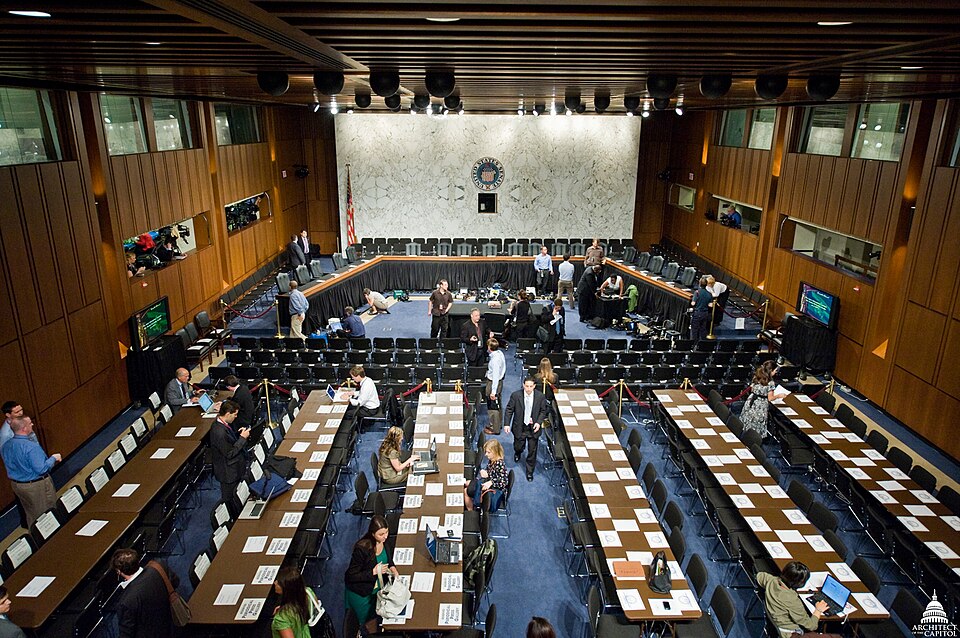
A former inspector general recently told members of Congress that AI-enabled identity theft is fueling large-scale fraud in federal and state benefit programs, warning that criminals are now able to file fraudulent claims and siphon benefits across jurisdictions with unprecedented speed and sophistication. The official’s testimony framed the problem as both technological and systemic: stolen personally identifiable information bought cheaply on the dark web gives fraudsters the raw material to impersonate beneficiaries, while generative AI produces convincing text, images and voice clones used to bypass verification and socially engineer staff or automated systems.
The scale and mechanisms described in the hearing align with broader data: basic PII can be purchased for as little as $5 on illicit markets, synthetic identity fraud tied to government benefits has been estimated as a roughly $283 million annual risk (about 0.08% of such transactions), and cyber-enabled crimes — many now aided by AI-generated content — defrauded Americans of nearly $21 billion in 2025. Investigators and auditors have also pointed to traditional methods persisting alongside the new tools: millions in SNAP benefits were lost to card skimming, bots and deceptive account-takeover schemes in recent years. Social media has amplified alarm and policy pressure, with users warning about deepfakes and urging verification safeguards, others citing dramatic spikes in food-stamp fraud in states like Michigan, and some calling for a centralized federal response — proposals such as a large task force to tackle cross-state schemes have been suggested publicly.
Reporting on benefit fraud has shifted from treating incidents as localized thefts to framing them as systemic, technology-driven threats. Earlier coverage emphasized skimming rings, local misuse and administrative errors; more recent stories and oversight testimony — including high-profile congressional warnings — highlight how inexpensive stolen data plus generative AI enable large-scale synthetic identity and social-engineering campaigns that cross state lines. That evolution in focus has pushed policy conversations toward federal coordination, stronger identity verification practices, and targeted investigations of cross-jurisdictional networks rather than solely state-level enforcement.
📊 Relevant Data
Stolen personal identifiable information (PII) can be purchased on the dark web starting at $5, providing criminals with the data needed to access bank accounts or file fraudulent benefit claims.
How Prices are Set on the Dark Web — LevelBlue
Synthetic identity fraud, often facilitated by AI, exposes an estimated $283 million annual risk in US government benefit transactions, representing 0.08% of such transactions.
Synthetic Identity Fraud Statistics 2026: Hard Numbers, Big Threats — BIIA
In 2025, cyber-enabled crimes including AI-facilitated scams defrauded Americans of nearly $21 billion, with AI used to generate believable content for fraud schemes.
Cryptocurrency and AI Scams Bilk Americans of Billions — FBI
Criminals leverage generative AI to create text, images, and voice clones for social engineering, phishing, and financial fraud targeting government benefit programs.
Criminals Use Generative Artificial Intelligence to Facilitate Fraud Schemes — Internet Crime Complaint Center (IC3)
Millions in SNAP benefits were lost to card skimming and other fraud in recent years, with scammers using bots and deceptive methods to steal from vulnerable recipients.
Millions in SNAP benefits lost through card skimmers, other fraud — InvestigateTV
📌 Key Facts
- Retired inspector general Bob Westbrooks testified to the House Oversight Committee that stolen identities can be purchased online for “the price of a Happy Meal” and used with AI tools to file fraudulent benefit claims from anywhere in the world.
- Federal watchdogs estimate more than $100 billion in pandemic-era unemployment benefits may have been lost to fraud due largely to weak identity verification and oversight gaps.
- White House Anti‑Fraud Task Force vice chair Andrew Ferguson says the task force has identified $6.3 billion in potential fraudulent federal contracts, while President Trump has appointed Vice President J.D. Vance as a national “fraud czar” focused on benefit and contract fraud.
- Recent fraud cases cited at the hearing include the $250 million Feeding Our Future scheme in Minnesota and an approximately $100 million welfare scandal in Mississippi.
📰 Source Timeline (1)
Follow how coverage of this story developed over time