Trump Tells MS NOW Iran Leadership Is Confused As Ceasefire Extension Stalls Talks
Former president Trump told MS NOW that Iran's leadership is "confused" after U.S. strikes and that three levels of leadership were removed. He said he extended a two-week ceasefire to give Iran time to present a unified proposal while the U.S. keeps a naval blockade in place. At a Pentagon briefing, Defense Secretary Pete Hegseth warned Iranian leaders to "choose wisely" and said U.S. forces are "locked and loaded", threatening strikes on Iran's energy and power infrastructure if talks fail.
Congressional resistance has grown as the GOP-led House rejected a war-powers resolution 213-214. Rep. Thomas Massie was the only Republican to support it, and Rep. Jared Golden was the only Democrat to oppose it. U.S. Central Command says between 10 and 13 vessels have complied with turn-around orders and that about 16 U.S. warships are operating in the region to enforce the blockade. Despite the announced ceasefire extension, Iran reportedly fired on at least three ships in the Strait of Hormuz and has accused the blockade of breaching the truce.
Early reporting and Trump's statements portrayed Iran as decapitated and disoriented, with claims its navy and air force were "wiped out." Later coverage from PBS, CBS and internal U.S. assessments pushed back, saying Iran retains substantial capabilities. Those assessments estimate Iran still holds about half its ballistic missiles, two-thirds of its air force and a majority of its Islamic Revolutionary Guard Corps naval arm, and analysts say Iran's command structure appears intact. Social media reflected sharp divides: Fox correspondent Chad Pergram highlighted the razor-thin House vote, pro-Trump accounts cheered Hegseth's posture, and PBS pointed to an AP-NORC poll showing nearly 60% of Americans view U.S. action in Iran as excessive.
📌 Key Facts
- A two‑week ceasefire that began April 8 was publicly extended by President Trump to give Iran time to present a unified proposal (Trump said he acted at Pakistan’s request), but a senior U.S. official said the U.S. has not formally agreed to an extension and the White House has not set a firm deadline; Trump ordered the U.S. naval blockade of Iranian ports to continue while remaining "ready and able" to attack.
- Trump told MS NOW and other outlets that Iran’s leadership is confused or leaderless after U.S. strikes (saying "three levels" of leadership were taken out) and repeatedly asserted Iran’s navy and air force were "wiped out;" Iran experts and reporting (including Vali Nasr and the NYT) call that depiction false, noting Mojtaba Khamenei and hard‑line military figures remain in control and that divisions focus on whether Trump is serious, not on regime collapse.
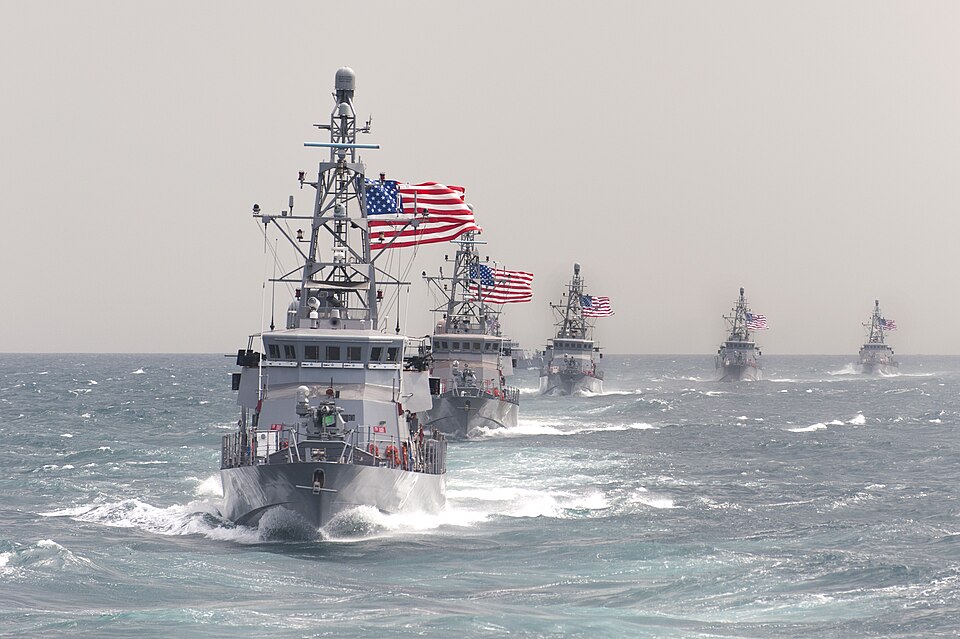
- At a Pentagon briefing, Defense Secretary Pete Hegseth and Joint Chiefs Chair Gen. Dan Caine warned Iran to "choose wisely," said U.S. forces are "locked and loaded," and threatened strikes on Iran’s dual‑use infrastructure and energy sector; U.S. officials described the naval effort as an "ironclad" blockade with roughly 16 warships in the region, more than 10,000 personnel enforcing the cordon, and CENTCOM reporting at least 10–13 vessels have been turned around after warnings.
- Despite the ceasefire extension, Iran fired on or attacked at least three commercial vessels in the Strait of Hormuz; Iran says the U.S. blockade violates the ceasefire, and its foreign minister denounced the blockade as an "act of war," accusing the U.S. of striking a commercial vessel and taking its crew.
- Diplomatic talks continue: Iran has said it will send a negotiating team to Islamabad for a second round of talks; Trump has alternated between optimistic claims (saying Iran "agreed to everything" on some terms) and warnings (saying "lots of bombs start going off" if the ceasefire expires), while Iran publicly rejected key U.S. claims such as surrendering enriched uranium — and U.S. and White House messaging about delegation timing has been contradictory.
- U.S. internal intelligence assessments cited by outlets indicate Iran still retains significant capabilities — roughly half its ballistic missiles, about two‑thirds of its air force and a majority of its IRGC naval arm — highlighting a gap between those assessments and some of the administration's public statements that Iran has been "knocked out."
- Congressional pushback has repeatedly failed: the House rejected Rep. Gregory Meeks’s Iran War Powers withdrawal resolution 213–214, the Senate recently defeated a motion to discharge Sen. Tammy Baldwin’s resolution (vote 46–51), and Democrats vow weekly War Powers votes while some GOP senators say they would not support extending hostilities beyond the War Powers 60‑day threshold.
- Trump has made additional contested public claims tied to the pressure campaign — that the blockade is costing Iran roughly $500 million per day and "starving" the regime, and that Iran agreed not to execute eight women after his appeal — but Iran’s judiciary denied the execution claims and disputed details of the human‑rights assertions.
📊 Analysis & Commentary (2)
"The WSJ opinion connects newly visible 2019‑impeachment documents to the current Iran war, arguing that Trump’s disruptive politics—and the opposition he faced—helped accelerate strategic outcomes in U.S. policy toward Iran."
"The WSJ opinion uses Pakistan’s role in hosting U.S.–Iran talks (Islamabad) as the prompt to argue that Islamabad’s entrenched hostility to Israel exemplifies a pan‑Islamist fixation that undermines its national development and must be reformed if Pakistan is to become a reliable long‑term partner."
📰 Source Timeline (25)
Follow how coverage of this story developed over time
- Trump tells MS NOW that Iran has 'no idea who their leader is' and claims three levels of leadership were taken out, leaving no one able to 'speak for the country.'
- He again asserts that Iran's navy and air force are 'wiped out' and that Iran is 'no longer the bully of the Middle East.'
- Trump confirms he extended the precarious ceasefire to give Iran time to form a 'unified proposal' to end the war, while the U.S. continues blocking ships entering and leaving Iranian ports.
- Iran experts, including Vali Nasr and reporting in the New York Times, say Trump's depiction of a leaderless, divided regime is false, noting Mojtaba Khamenei is recognized as supreme leader and hard-line military figures are firmly in control.
- Analysts say Trump's erratic and factually disputed claims are complicating negotiations, with Iranian factions divided not over regime control but over whether Trump is serious or trustworthy in Islamabad talks.
- Sen. Lindsey Graham said on X he expects the U.S. blockade of Iran to stay in place until Iran changes behavior and that it could expand to a global blockade soon.
- Graham said he spoke the same morning with President Trump and War Secretary Pete Hegseth about the 'way forward' on Iran and praised Trump's decision to keep the blockade in place.
- CENTCOM posted that American forces are 'operating and enforcing the blockade across the Middle East and beyond,' underscoring global reach.
- Trump's Truth Social statement extended the ceasefire while explicitly ordering the military to continue the blockade and stay ready for an attack pending a unified Iranian proposal.
- Rep. Adam Smith, the top Democrat on the House Armed Services Committee, told MSNOW that President Trump 'does not tell the truth' and 'just lies' about Iran negotiations.
- Smith said that based on recent events, Iran's public statements about the status of negotiations have been 'a lot closer to the truth than anything coming out of the White House.'
- He argued that negotiations are 'very, very far apart,' noting the U.S. demands that Iran end its nuclear program, terrorism support, and ballistic missile program and reopen the Strait of Hormuz, while Iran seeks $270 billion in war-compensation.
- The Republican National Committee highlighted and condemned Smith's remarks, accusing him of appeasing a 'pro-terrorism wing of the Democrat party.'
- Confirms the specific Senate vote tally on the latest War Powers effort as 46-51.
- Identifies Sen. John Fetterman as the lone Democrat voting with Republicans against the motion to discharge the resolution.
- Identifies Sen. Rand Paul as the sole Republican voting with Democrats in favor.
- Specifies that the failed action was a motion to discharge Sen. Tammy Baldwin's War Powers resolution from committee.
- Details Baldwin's resolution language directing removal of U.S. forces from hostilities within or against Iran absent a declaration of war or specific authorization.
- Reports Trump has extended a two-week ceasefire with Iran and threatened renewed attacks if Iran did not accept his terms.
- Adds fresh quotes from Sen. Chuck Schumer vowing weekly War Powers votes and arguing Republicans would be 'doing Donald Trump a favor' by backing them.
- Includes Sen. John Thune's current stance that Republicans feel 'pretty good' about results in Iran and his comment that the president can extend hostilities by 30 days unilaterally under War Powers.
- Senate Republicans defeated a fifth Democratic effort to end Trump’s Iran war through a war powers resolution, on the 54th day of the conflict.
- President Trump extended the fragile ceasefire for 'the next several days' saying Iran’s government is 'seriously fractured.'
- Democrats have at least six more war powers resolutions queued up, and Schumer says they will keep forcing votes.
- Sen. Lisa Murkowski is working on a background Authorization for Use of Military Force proposal to give Congress a say in what comes next in Iran.
- At least three GOP senators—Susan Collins, Thom Tillis, and John Curtis—say they would not support extending the war beyond 60 days and question the administration’s objectives.
- Collins publicly stated it is 'very likely' she will not vote to extend hostilities beyond the War Powers Resolution’s 60-day threshold.
- Trump publicly claimed on Truth Social that Iran agreed not to execute eight women tied to anti-regime protests after he requested their release.
- He said four women would be released immediately and four would have their sentences reduced to one-month prison terms.
- Iran's judiciary, through its Mizan Online site, denied that the women had ever been facing execution and said some had already been released while others faced only potential imprisonment.
- White House press secretary Karoline Leavitt said Trump has not set a firm deadline for receiving an Iranian proposal to extend the ceasefire.
- Leavitt said the timeline for talks 'would be dictated by the commander in chief and the president of the United States.'
- Leavitt said Trump is 'satisfied with the naval blockade' and believes Iran is in a 'very weak position' with 'the cards in President Trump's hands.'
- CBS segment reiterates that Iran has attacked at least three commercial vessels in the Strait of Hormuz during an announced ceasefire.
- Iran is explicitly framing the ongoing U.S. naval blockade of Iranian ports as a breach of the ceasefire terms.
- The piece positions these ship attacks and Iran's ceasefire-violation claim as the key 'latest' development in the Middle East standoff.
- CBS reports Iran attacked or fired on at least three ships in the Strait of Hormuz after President Trump announced an indefinite ceasefire extension.
- The attacks are explicitly said to occur despite the ceasefire extension, underscoring a gap between political announcements and behavior at sea.
- Security analyst Robert Murrett of Syracuse University's Institute for Security Policy and Law is brought in to discuss implications for the ceasefire and shipping security.
- Trump publicly extended the Iran ceasefire deadline in a Truth Social post, saying he was acting at the request of Pakistan's Field Marshal Asim Munir and Prime Minister Shehbaz Sharif so Iran's 'seriously fractured' leadership could present a unified proposal.
- Trump ordered the U.S. military to continue the naval blockade of Iranian ports during the extended ceasefire while remaining 'ready and able' to attack Iran.
- Trump claimed Iran is 'starving for cash,' 'collapsing financially,' and losing $500 million per day in oil revenue because of the U.S. blockade, and asserted that Iranian military and police are complaining they are not being paid.
- Iranian Foreign Minister Seyed Abbas Araghchi publicly denounced the blockade on X as an 'act of war' and accused the U.S. of violating the ceasefire by striking a commercial vessel and taking its crew 'hostage.'
- The article notes Iran reportedly fired on three ships in the Strait of Hormuz on Wednesday, a specific follow-on escalation tied to the blockade and ceasefire dispute.
- Provides internal U.S. estimates that Iran retains about half its ballistic missiles, two‑thirds of its air force, and a majority of its IRGC naval arm, indicating Iran remains far from the 'knocked out' force suggested in some prior public threats.
- Highlights the gap between President Trump's past claims that U.S. and allied strikes had 'taken out' Iran's navy and air force and internal intelligence assessments that still rate Iran as capable of inflicting significant damage.
- WSJ reports Trump has warned that if Iran does not make a deal, U.S. strikes would knock out Iran's bridges and power plants.
- The new threat is issued as Iran prepares to attend a second round of talks in Islamabad, adding pressure ahead of negotiations.
- The article confirms that Iran will send a negotiating team to Pakistan, altering the context in which Trump's latest threat lands.
- CBS segment specifically pins the timeline of Trump's 'agreed to everything' remarks to Friday and his 'lots of bombs start going off' warning to Monday.
- The piece reinforces that Trump accused Iran of violating the ceasefire by Monday, framing the tougher rhetoric as a direct response to that alleged violation.
- Reporter Ed O'Keefe is the on-air correspondent, adding CBS attribution but not substantially new factual claims beyond wording already captured in the existing story.
- On Friday afternoon April 17, in a phone interview with CBS's Weijia Jiang, Trump said Iran had 'agreed to everything,' including letting the U.S. 'take' its enriched uranium and stopping support for Hezbollah and Hamas.
- Within hours, Iran's Foreign Ministry publicly rejected that claim, stating in translation that enriched uranium is 'as sacred to us as Iranian soil' and would not be transferred anywhere under any circumstances.
- Friday evening in Phoenix, Trump told reporters he did not think there were 'too many significant differences' with Iran, despite Iran saying major gaps remained.
- The article documents that on Saturday Trump largely avoided Iran questions, telling reporters to 'get out' when asked about Iran's Revolutionary Guard firing on ships, then spending the afternoon at his Virginia golf club.
- Early Sunday April 19, Trump told Fox's Trey Yingst that if Iran does not sign the deal 'the whole country is getting blown up' and called talks in Pakistan Iran's 'last chance.'
- CBS highlights contradictory White House messaging on the Islamabad delegation's timing: Trump told the New York Post the delegation would arrive Monday night, while a White House official later said it had not yet left and only 'plans to travel... soon.'
- The piece explicitly ties Friday's optimistic comments to a brief market rally and oil-price drop after Iran declared the Strait of Hormuz open, then contrasts that with Iran's hard public rejection of uranium transfer.
- Trump tells PBS News that if the ceasefire with Iran expires Tuesday evening, 'then lots of bombs start going off.'
- He reiterates that the U.S. negotiating objective in Islamabad is that 'Iran cannot have a nuclear weapon' and frames it as the sole issue.
- Trump personally defends Jared Kushner's role on the Islamabad negotiating team despite Kushner's Middle East business ties, calling him part of his 'A-Team.'
- Trump publicly disputes Secretary Chris Wright's CNN comment that gas may not drop below $3 until later in the year, asserting prices will 'come roaring down' if the war ends on his terms.
- Sen. John Fetterman told Fox News he is prepared to be the 'last man standing' in the Democratic Party in support of Israel.
- Fetterman said 'No, absolutely, absolutely not' when asked if Israel had done anything wrong in recent weeks, adding 'Israel's done what was necessary.'
- He praised President Trump’s Operation Epic Fury and said eliminating Iranian leadership is a 'strong development' that has 'made the world safer.'
- Fetterman criticized continued Democratic efforts to pass an Iran War Powers Resolution more than 45 days into the conflict, questioning why they would 'be voting every day' when Trump says the war is close to ending.
- He framed both America and Israel as 'the force of good' and urged people with large platforms to direct criticism toward Iran instead.
- Fox article foregrounds that several Democratic lawmakers with military backgrounds had previously urged service members to "refuse illegal orders" in general terms (Slotkin, Kelly, Deluzio, Goodlander, Houlahan, Crow) and are now silent on applying that to Trump’s Iran war.
- Quotes fresh member reactions framing the Iran conflict as an "illegal war" (Blumenthal) while explicitly saying troops are not to blame and are "following orders" (Soto).
- Names Rep. Jonathan Jackson calling the Iran conflict "a war" rather than an "excursion" and directly disputing Trump’s characterization.
- Adds Sen. John Fetterman’s on‑record defense that "none of this has been illegal" and that he is "the only Democrat" supporting Operation Epic Fury, sharpening the intra‑party split on legality.
- Reiterates that the House Iran War Powers withdrawal resolution failed 213‑214 and notes backers cite the 60‑day War Powers clock, while opponents say operations have not yet crossed that mark.
- Confirms the House vote tally on the Iran War Powers resolution as 213–214, with the measure failing by one vote.
- Identifies Rep. Gregory Meeks as the sponsor/lead advocate of the House resolution and quotes his warning that Congress is 'standing at the edge of a cliff.'
- Names Rep. Thomas Massie as the only Republican voting for the withdrawal resolution and Rep. Jared Golden as the only Democrat voting against it.
- Specifies GOP messaging comparing Trump’s Iran war powers fight to Biden’s 2024 strikes on Iran-backed Houthis in Yemen, with Rep. Brian Mast calling Democrats hypocritical.
- Notes Democrats’ plan to continue bringing additional War Powers votes in coming weeks and reiterates that the 60‑day War Powers clock on the Iran conflict expires at the end of April, with a possible 30‑day extension.
- Confirms that on April 16, 2026 the GOP‑led House again rejected a war‑powers resolution to curtail Trump’s Iran war authority by a 213–214 vote.
- Notes this was the second failed war‑powers attempt in roughly six weeks since Trump launched the attack on Iran, with an even tighter margin than the prior vote.
- House rejected a Gregory Meeks war‑powers resolution 213–214, with one member voting present.
- Only one Republican backed the resolution (Rep. Thomas Massie), while Rep. Warren Davidson voted present.
- Three Democrats who had opposed an earlier March war‑powers measure (Henry Cuellar, Greg Landsman, Juan Vargas) switched to support this latest effort.
- A parallel Democratic‑led war‑powers resolution in the Senate also failed earlier in the week with just one Republican vote.
- Some Republicans signal they may reconsider their votes if the conflict goes beyond the War Powers Resolution’s 60‑day limit on May 1.
- House defeats Rep. Gregory Meeks’s war powers resolution to end hostilities with Iran without congressional approval on a 213–214 vote.
- Rep. Jared Golden is the only Democrat to oppose the resolution; Rep. Thomas Massie is the only Republican to back it; Rep. Warren Davidson votes present.
- Article reports CENTCOM has turned back 13 vessels from Iranian ports under the blockade, adding a specific operational tally to prior descriptions of the ‘ironclad’ blockade.
- Describes Democrats’ earlier failed attempt to pass a war powers measure by unanimous consent during a pro forma House session and notes continuing weekly war‑powers push in the Senate.
- Trump tells FOX Business the conflict is ‘very close to over’ as the U.S. maintains a two‑week ceasefire and floats a second round of U.S.–Iran peace talks.
- Hegseth claimed at the Pentagon that Americans 'see the success' of the Iran war and accused the press of only seeking the negative, while PBS immediately contrasted this with an AP‑NORC poll showing nearly 60% of Americans think U.S. action in Iran has been excessive and 45% are extremely or very worried about affording gas.
- Hegseth asserted Iran is moving its military assets but 'cannot rebuild' and 'no longer have a viable defense industry' almost seven weeks into the war, warning the U.S. is 'locked and loaded' on Iran’s dual‑use infrastructure, power generation and energy industry.
- He said the Navy is using 'less than 10% of America's naval power' to enforce the blockade, specifying there are currently 16 warships in the Middle East (11 destroyers, three amphibious assault ships, one aircraft carrier and a littoral combat ship) out of roughly 300 total warships.
- Joint Chiefs Chair Gen. Dan Caine likened blockade operations to 'driving a sports car through a supermarket parking lot on a payday weekend' with 'thousands of kids' present, said more than 10,000 sailors, marines and airmen are enforcing the cordon, and reported that 13 ships have turned around after warnings and that no vessels have yet been boarded.
- Caine publicly warned that U.S. forces 'will actively pursue any Iranian flagged vessel or any vessel attempting to provide material support to Iran' anywhere in the world and told such ships to 'turn around or prepare' for consequences.
- At a Thursday Pentagon press briefing, War Secretary Pete Hegseth warned Iranian leaders to 'choose wisely' on accepting a peace deal with the U.S.
- Hegseth stated that the U.S. military is 'locked and loaded' and specifically threatened strikes on Iran’s energy, power and other infrastructure if Iran 'chooses poorly.'
- He asserted that Iran is 'digging out of bombed out and devastated facilities,' has 'no defense industry' and 'no ability to replenish' missiles or launchers, while the U.S. can fully reconstitute its capabilities.
- Hegseth framed U.S. naval operations as an 'ironclad blockade' and said CENTCOM Commander Adm. Brad Cooper is postured to restart combat operations quickly if Iran rejects a deal.
- Defense Secretary Pete Hegseth and Joint Chiefs Chair Gen. Dan Caine are holding a live Pentagon news conference early Thursday specifically on the Iran war.
- The briefing occurs about eight days into a two‑week ceasefire that began April 8 and as negotiations to extend it are unresolved.
- A senior U.S. official told CBS that the U.S. has not formally agreed to extend the ceasefire, though discussions with Iran and intermediaries continue.
- U.S. Central Command reports that 10 ships attempting to evade the U.S. blockade of Iranian ports have complied with turn‑around orders; the blockade is being enforced in the Gulf of Oman.
- Trump has publicly said the conflict is 'very close to over' and has suggested a new round of direct U.S.–Iran peace talks could be imminent.
- Trump also claimed on social media that Israeli and Lebanese leaders will speak Thursday, against a backdrop of Israeli operations in southern Lebanon that have killed more than 2,100 people, according to Lebanon’s health ministry.