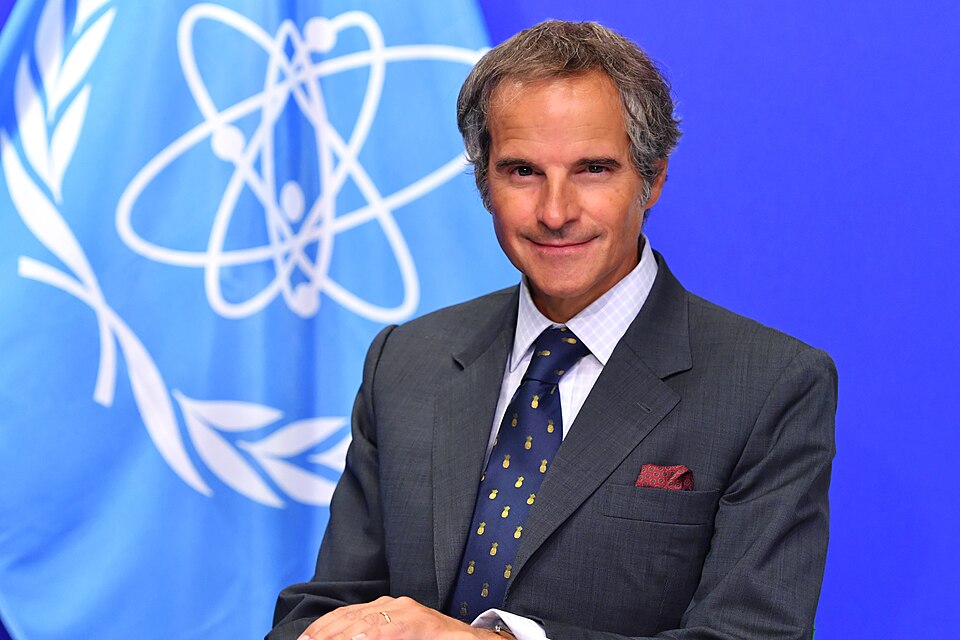
Lavrov Backs Iran Civilian Enrichment, Rejects Trump’s Zero‑Uranium Demand
Russian Foreign Minister Sergey Lavrov has publicly backed Iran’s “inalienable” right to enrich uranium for civilian purposes and rejected calls for Tehran to renounce enrichment entirely — a position framed as incompatible with the Nuclear Non‑Proliferation Treaty and offered in direct contrast to former U.S. President Donald Trump’s stated demand for zero enrichment. The comments came amid ongoing diplomatic contacts between Moscow and Tehran, including a reported call between Lavrov and Iranian Foreign Minister Araghchi in which they discussed measures to protect civil nuclear infrastructure such as the Bushehr plant while pursuing a diplomatic solution.
The technical context helps explain why the dispute is fraught: the 2015 JCPOA permitted enrichment only up to 3.67% U‑235 with a stockpile cap of 300 kg of low‑enriched uranium, but Iran has since increased enrichment levels well beyond those limits. As of November 2024 Tehran held about 182 kg of uranium enriched to 60% U‑235, a level that dramatically shortens the separative work remaining to reach roughly 90% weapons‑grade material; estimates in mid‑2024 put Iran’s breakout time to produce enough weapons‑grade uranium for one bomb at roughly 1–2 weeks. Those facts have become central to debates over whether insistence on a permanent, zero‑enrichment demand is realistic or strategically effective.
Public reaction has been polarized. Some observers and Russian commentary argued Lavrov’s stance simply reaffirmed Iran’s legal rights under the NPT, while critics pointed to the consequences of the U.S. withdrawal from the JCPOA — arguing that scrapping the deal pushed Tehran to higher enrichment levels. Voices on social media reflected that split: commentators highlighted the legal argument against zero‑enrichment demands, former U.S. officials blamed past U.S. policy for Iran’s enrichment advances, and hard‑line critics rejected any compromise that allows Iran to keep enriching. Reporting itself has shifted as the technical realities of Iran’s enrichment and reduced breakout time became clearer; earlier coverage that centered on diplomatic posturing and maximalist U.S. demands has increasingly incorporated the nuclear‑technical constraints and competing legal interpretations that now shape how policymakers and regional actors discuss any future deal.
📊 Relevant Data
Under the 2015 Joint Comprehensive Plan of Action (JCPOA), Iran was permitted to enrich uranium up to 3.67% U-235 for civilian purposes, with a stockpile limit of 300 kg of low-enriched uranium hexafluoride.
Fact Sheet: The Iran Deal, Then and Now — Center for Arms Control and Non-Proliferation
As of November 2024, Iran's stockpile includes 182 kilograms of uranium enriched to 60% U-235, which is significantly beyond JCPOA limits and close to the 90% needed for weapons-grade material.
The Status of Iran's Nuclear Program — Arms Control Association
Iran's nuclear breakout time, the period needed to produce enough weapons-grade uranium for one bomb, is estimated at 1-2 weeks as of July 2024.
Blinken says Iran's nuclear weapon breakout time is probably down to 1-2 weeks — CNN
Enrichment to 60% U-235 provides a shorter pathway to 90% weapons-grade uranium compared to lower levels, as most separative work is done by that point.
Iran's Nuclear Timetable: The Weapon Potential — Iran Watch
📌 Key Facts
- Lavrov in Beijing said 'the right to enrich uranium for civilian purposes is an inalienable right of the Islamic Republic of Iran' and that Russia, China and most countries reject the U.S. approach.
- On April 8, 2026, Trump posted that 'There will be no enrichment of Uranium' and that the U.S. would help dig up and remove all nuclear material from Iran so it has no access to any uranium.
- Vice President JD Vance told Fox News the U.S. wants Iran’s existing enriched uranium taken out of the country and placed under U.S. control, and said talks in Islamabad stalled when Iran refused to fully abandon its nuclear program.
📰 Source Timeline (1)
Follow how coverage of this story developed over time