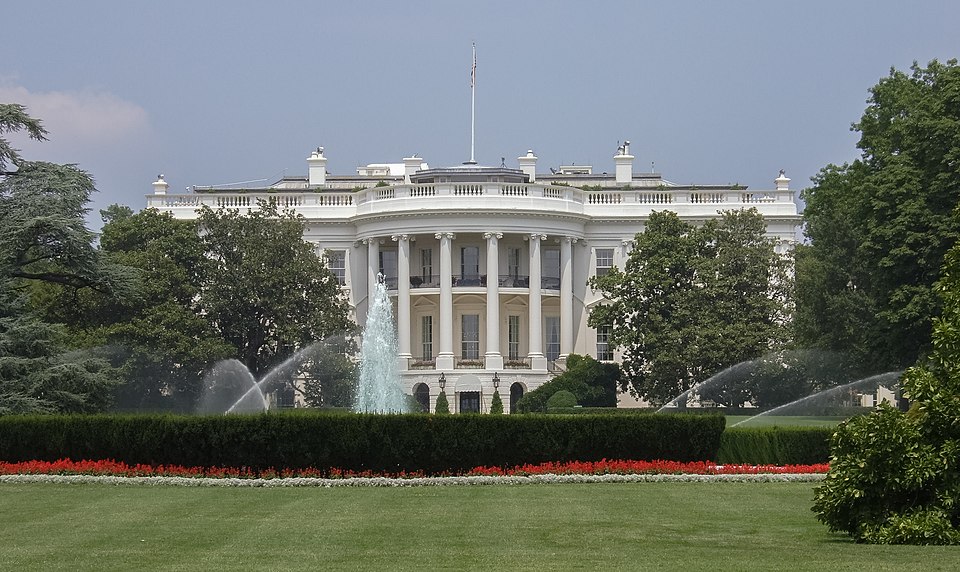
Federal Fine Arts Commission Takes Up Trump's 250-Foot Triumphal Arch, Eisenhower Building Repaint, and White House Visitor Screening Center
The U.S. Commission of Fine Arts took up President Trump's proposal for a 250-foot "triumphal" arch, a plan to repaint the Eisenhower Executive Office Building white, and designs for a 33,000-square-foot underground White House visitor screening center at its monthly meeting on April 16, 2026. The proposed arch would sit on the grassy traffic circle on Columbia Island at the foot of Memorial Bridge and is presented as a 250th-anniversary marker; lead architect Nicolas Charbonneau said the height references 250 years of U.S. history. Commissioners voted to move ahead with preliminary approval of the design, while also pressing for changes — including suggestions to lower the height, enlarge openings, and reconsider an underground access tunnel — and noting the action was not a final construction green light. The visitor screening center under Sherman Park is planned with seven screening lanes and a targeted operational date of July 2028, and the White House's repainting proposal of the Eisenhower building was put before the commission for the first time.
The arch's design details — a monumental form resembling the Arc de Triomphe but nearly 100 feet taller, gilded figures (a torch-bearing Lady Liberty-type statue or winged crowned figure and two eagles), gold lettering of phrases such as "One Nation Under God," lions at the base, an observation deck and protective bollards — have intensified scrutiny. Roughly 1,000 public comments were filed with the commission, and nearly every one opposed the project; preservationists and a group of Vietnam veterans and a historian have already filed a federal lawsuit arguing the structure would disrupt the sightline between the Lincoln Memorial and Arlington House, a visual link long understood to symbolize post-Civil War reconciliation. Commissioners referenced historical precedent — the McMillan Plan's never-built 166-foot columns for Columbia Island, which were themselves contentious and unconstructed due to scale and funding debates — when some members recommended lowering the arch closer to that earlier proposal.
Reporting on the project shifted noticeably over a short span: initial coverage emphasized the high-profile federal review and the administration's framing of the monument as a marquee anniversary project, while later stories highlighted organized backlash, detailed aesthetic critiques, and sharper accounts of the commission's internal debate. That evolution in tone was driven in part by The New York Times and corroborated by outlets such as NPR and CBS, which underscored that the commission's action was a preliminary approval accompanied by pointed objections from at least one key commissioner. The social media conversation mirrors that split: historians and architects have condemned the plan as inappropriate or oversized, some commentators raised procedural concerns about a commission whose members were appointed by Mr. Trump, while a number of supporters praise the neoclassical design as a fitting anniversary expression — all signaling that, despite the commission's procedural advance, the proposal faces considerable legal, political and public-opinion hurdles before it could be built.
📊 Relevant Data
The sightline between the Lincoln Memorial and Arlington National Cemetery symbolizes the reconciliation between the North and South after the Civil War, as it intentionally links the memorial to Abraham Lincoln with Arlington House, the former home of Confederate General Robert E. Lee.
StoryMap: Arlington Memorial Bridge — National Park Service
The McMillan Plan's proposed 166-foot columns for Columbia Island, intended to symbolize national reconciliation, were never constructed due to debates over design scale, funding constraints, and evolving urban planning priorities in the early 20th century.
Memorial Avenue Corridor Cultural Landscape — National Park Service
Approximately 1,000 public comments were submitted to the Commission of Fine Arts regarding the Triumphal Arch, with nearly every one expressing opposition to the project.
Commission of Fine Arts votes to move ahead with Trump's proposed victory arch — WVIA
📌 Key Facts
- On April 16, 2026 the U.S. Commission of Fine Arts (whose seven members were appointed by President Trump) gave preliminary design approval to President Trump’s proposed 250‑foot “triumphal” or “victory” arch after questioning — the action was a preliminary advance, not a final construction authorization, and included pointed debate and suggested modifications from at least one commissioner.
- Design details in renderings and plans show a 250‑foot arch that closely resembles Paris’s Arc de Triomphe but is nearly 100 feet taller, topped with a gold‑plated bronze Lady Liberty / torch‑bearing or winged crowned figure, two bald eagles, four gilded lions, gold inscriptions reading variations of “One Nation Under God” and “Liberty and Justice for All,” an elevator‑accessible observation deck and protective bollards; lead architect Nicolas Charbonneau said the 250‑foot height is meant to reference the nation’s 250th anniversary.
- The proposed site is the grassy traffic circle on Columbia Island at the foot of Memorial Bridge (a man‑made, National Park Service‑managed island on the Virginia side of the Potomac); renderings show the arch would dwarf the Lincoln Memorial, visually dominate Memorial Circle and obstruct the historic sightline between the Lincoln Memorial and Arlington National Cemetery.
- Public and expert opposition has been substantial: the Commission received roughly 1,000 public comments (nearly all opposing the project or its size), planners, preservationists and some conservatives criticized the design, scale and symbolism as derivative and politically charged, and a federal lawsuit by a group of veterans and a historian seeks to block the arch — arguing it would disrupt the Lincoln‑Arlington sightline and may require congressional approval.
- At the April 16 meeting commissioners proposed specific changes (for example, reducing the arch’s height to around 166 feet, enlarging openings or eliminating a proposed underground tunnel) while balancing McMillan Plan and historic‑preservation precedents against administration pressure to move the monument forward.
- The Commission also, for the first time, reviewed two related Trump administration proposals: repainting the Eisenhower Executive Office Building white and revisiting plans for a 33,000‑square‑foot underground White House visitor screening center beneath Sherman Park with seven screening lanes, which federal officials want operating by July 2028.
- Next steps include additional federal reviews (the National Capital Planning Commission is expected to receive the arch design), possible court action, and uncertainty about if or when construction will begin despite the preliminary CFA approval and White House advocacy.
📰 Source Timeline (7)
Follow how coverage of this story developed over time
- A key member of the Commission of Fine Arts publicly suggested specific modifications to Trump’s arch design at the approval meeting (e.g., reducing the height, altering openings, and/or revisiting contentious elements such as the tunnel).
- The NYT piece more sharply characterizes the internal commission debate, highlighting that the preliminary approval was not a blanket endorsement but came with pointed concerns from at least one commissioner.
- Additional color on how commissioners framed the McMillan Plan precedent and on how they balanced historic‑preservation objections with Trump administration pressure to move the monument forward.
- Confirms that the April 16, 2026 Commission of Fine Arts action was a preliminary design approval after questioning, not a final green light.
- Details specific design elements discussed at the meeting, including a 250-foot arch with a gold-plated bronze Lady Liberty and two bald eagles atop the structure, and two golden lions at the base.
- Names commissioner James McCrery’s suggested changes: shrinking the arch to about 166 feet, enlarging the doorway, and eliminating an underground access tunnel.
- Reports Interior Secretary Doug Burgum’s historical justification tying the two supporting columns (about 160 feet) to an early-20th-century plan for twin memorial columns on Columbia Island.
- Specifies the site as the grassy traffic circle on Columbia Island at the foot of Memorial Bridge, and notes the arch would be ringed with protective bollards and include an elevator-accessible observation deck.
- CFA secretary Thomas Luebke says about 1,000 public comments were received and that 100% of them opposed the project, with critics singling out its scale and association with a contemporary political figure.
- Notes an existing lawsuit by a group of Vietnam War veterans arguing the arch would obscure the visual connection between Arlington National Cemetery and the Lincoln Memorial, and that a judge has not yet intervened.
- The U.S. Commission of Fine Arts formally voted to move ahead with President Trump’s proposed 250‑foot 'victory arch' on the National Mall.
- Renderings and plans show the arch would obstruct the sightline between the Lincoln Memorial and Arlington National Cemetery and visually dominate Memorial Circle.
- Design specifics: the arch closely resembles Paris’ Arc de Triomphe but nearly 100 feet taller, topped with two eagles and a winged crowned figure; it is inscribed with 'One Nation Under God' and 'With Liberty and Justice for All.'
- Lead architect Nicolas Charbonneau of Harrison Design told the Commission that the 250‑foot height is meant to reference the 250th anniversary of the Declaration of Independence in 2026.
- The Commission noted that of roughly 1,000 public comments received before the vote, nearly all opposed the arch or its size; only one commenter submitted an alternate design rather than opposing it.
- The piece reiterates that a February lawsuit by Vietnam War veterans argues the project requires congressional approval and that it remains unclear when or whether construction will begin.
- The U.S. Commission of Fine Arts, whose seven members were appointed by President Trump, will review and possibly vote on the Triumphal Arch design at its monthly meeting on Thursday, April 16, 2026.
- The Commission will also, for the first time, review Trump’s proposal to paint the exterior of the Eisenhower Executive Office Building white and will revisit design plans for a 33,000‑square‑foot underground White House visitor screening center beneath Sherman Park.
- White House press secretary Karoline Leavitt said the arch’s 250‑foot height is intended to honor 250 years of U.S. history, and federal agencies want the underground screening facility operating by July 2028.
- The National Capital Planning Commission has already begun considering the underground visitor center and is expected to receive the arch design soon for its own review and approval.
- A federal lawsuit by a group of veterans and a historian seeks to block the arch, arguing it would disrupt the sightline between the Lincoln Memorial and Arlington House at Arlington National Cemetery, among other objections.
- Confirms that on April 16, 2026, the U.S. Commission of Fine Arts will review Trump’s Triumphal Arch design, a plan to paint the Eisenhower Executive Office Building white, and an underground White House visitor screening center, with the arch and repainting before the commission for the first time.
- Details specific design elements of the Triumphal Arch: 250 feet tall with a Lady Liberty‑like torch‑bearing figure, two eagles and four lions gilded, and the inscriptions “One Nation Under God” and “Liberty and Justice for All” in gold lettering.
- Specifies the proposed arch site as a man‑made island managed by the National Park Service on the Virginia side of the Potomac at the end of Memorial Bridge, noting it would dwarf the Lincoln Memorial and be nearly half the height of the Washington Monument.
- Reports that a group of veterans and a historian have already filed a federal lawsuit to block the arch, arguing it would disrupt the sightline between the Lincoln Memorial and Arlington House at Arlington National Cemetery.
- Provides operational details on the underground visitor screening center: a 33,000‑square‑foot facility beneath Sherman Park, with seven screening lanes, targeted to open by July 2028, six months before Trump’s term ends.
- Includes Trump’s own social‑media boast that the arch “will be the GREATEST and MOST BEAUTIFUL Triumphal Arch, anywhere in the World” and a 'wonderful addition' to the Washington area.
- Reports substantial organized backlash to the arch proposal, including criticism from an architectural expert who had previously proposed or promoted a version of the concept and is now distancing himself from the White House’s version.
- Details new lines of criticism regarding the arch’s design, scale and symbolism, including concerns that it is derivative of European triumphal arches and out of step with the existing monumental core of Washington.
- Describes fresh political and public reaction since the initial unveiling, including skepticism from planners, preservationists and some conservatives over cost, process, and the project’s ‘triumphal’ framing.
- Clarifies additional process hurdles or opposition signals within the design and planning community beyond the generic federal approvals noted in earlier coverage.