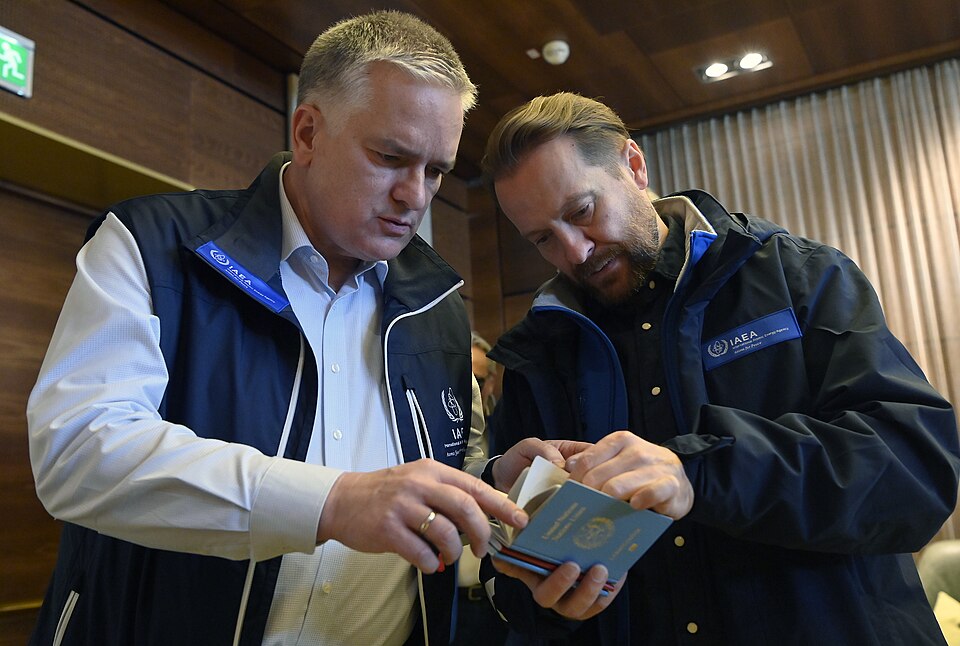
IAEA Chief Demands ‘Very Detailed’ Iran Nuclear Checks in Any U.S. War-Ending Deal
IAEA Director General Rafael Grossi has warned that any U.S. deal intended to help end the region’s fighting must include “very detailed” and immediate inspections of Iran’s nuclear program, saying thorough verification is a precondition for a credible agreement. Grossi’s comments, made publicly in recent days, underscore that technical monitoring by the U.N. nuclear watchdog cannot be an afterthought in diplomatic bargaining: without prompt and wide-ranging access to sites and records, he warned, a political deal risks being an illusion rather than a real rollback of proliferation risks.
That warning comes against a backdrop of significant changes in Iran’s nuclear profile since the 2015 JCPOA. Under the JCPOA Iran’s enrichment had been limited to 3.67% and its stockpile capped at 300 kg with continuous IAEA monitoring; after the U.S. withdrawal in 2018 Tehran stepped back from those limits. As of May 2024 the IAEA reported Iran held about 6,201.3 kg of enriched uranium, including roughly 142.1 kg at 60% purity, and was continuing production at sites where verification gaps exist. Technical estimates now put Iran’s breakout time to produce enough weapons‑grade uranium for a single device at under two weeks—down dramatically from about a year under the JCPOA—while Iran has for years restricted access to military sites and limited some inspections, heightening the watchdog’s call for exhaustive checks.
Social media reactions reflected the same mix of technical concern and political alarm: accounts ranging from @MOSSADil and @Conflictory_X stressed that without detailed verification any agreement would be hollow, @Megatron_ron amplified Grossi’s complaints about Iran denying inspections, and other posts — including @AJEnglish and @MyLordBebo — noted Grossi’s simultaneous assertion that the IAEA has not found evidence of a structured weapons program while nonetheless insisting that lack of transparency leaves crucial questions unanswered. Mainstream reporting has also shifted over time: early coverage around 2015 emphasized the JCPOA’s robust monitoring regime and a longer breakout timeline, but after the U.S. withdrawal in 2018 and subsequent IAEA reporting the narrative pivoted to focus on Iran’s expanded enrichment, growing stockpiles and inspection obstacles — a change driven largely by IAEA public reports and sustained coverage in international media. Grossi’s latest demand reinforces that any path to de-escalation will hinge on immediate, verifiable technical measures, not only political pledges.
📊 Relevant Data
Iran's nuclear program began in the 1950s under the Atoms for Peace program, with significant advancements in the 1970s, but faced interruptions after the 1979 Islamic Revolution; key milestones include signing the NPT in 1968, revelations of undeclared facilities in 2002, and the IAEA confirming a structured nuclear weapons program until 2003.
A simple timeline of Iran's nuclear program — Bulletin of the Atomic Scientists
The 2015 Joint Comprehensive Plan of Action (JCPOA) limited Iran's uranium enrichment to 3.67% purity, capped its stockpile at 300 kg, and required IAEA monitoring; the US withdrawal in 2018 led Iran to gradually violate these limits, increasing enrichment to 60% and expanding its stockpile significantly.
Fact Sheet: The Iran Deal, Then and Now — Center for Arms Control and Non-Proliferation
As of May 2024, Iran's total enriched uranium stockpile was 6201.3 kg, including 142.1 kg enriched to 60% purity, an increase from previous reports, with the IAEA noting ongoing production despite lack of verification at some sites.
Verification and monitoring in the Islamic Republic of Iran in light of United Nations Security Council resolution 2231 (2015) — International Atomic Energy Agency
As of 2024, Iran's breakout time to produce enough weapons-grade uranium for one nuclear weapon is estimated at less than two weeks, down from about one year under the JCPOA, due to advanced centrifuges and increased stockpiles.
The Status of Iran's Nuclear Program — Arms Control Association
Iran has historically restricted IAEA access, including denying inspections at military sites suspected of past nuclear work since 2019, and stopped implementing JCPOA commitments step-by-step from 2019, leading to gaps in monitoring enriched uranium production and stockpiles.
Verification and monitoring in the Islamic Republic of Iran in light of United Nations Security Council resolution 2231 (2015) — International Atomic Energy Agency
📌 Key Facts
- IAEA chief Rafael Grossi in Seoul said any U.S.–Iran war‑ending agreement must include “very detailed” verification measures over Iran’s nuclear program, or it will be merely an “illusion of an agreement.”
- Grossi cited a confidential February IAEA report saying Iran has not allowed inspectors access to nuclear facilities bombed by Israel and the U.S. and that the agency cannot verify suspension of enrichment or the size of Iran’s stockpile at those sites.
- The IAEA says Iran currently holds about 440.9 kg of uranium enriched up to 60% purity, which Grossi has previously said could yield as many as 10 nuclear bombs if weaponized, and notes such material should be verified monthly under its guidelines.
📰 Source Timeline (1)
Follow how coverage of this story developed over time