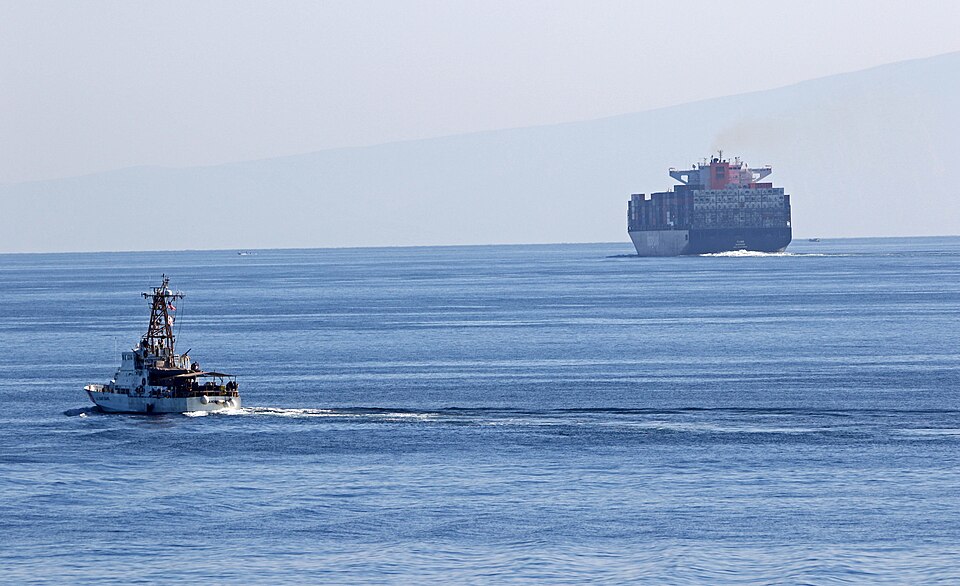
Oil And Stocks Surge After Trump And Iran Say Hormuz Is Open
Stocks and oil moved sharply after Iran and President Trump said the Strait of Hormuz was open on April 17, prompting market relief.
U.S. equities rallied, with the S&P 500 hitting a fresh record and rising roughly 0.8-1.1%, the Dow jumping about 1.4% (near 678 points) and the Nasdaq up about 1%. Oil prices plunged intraday, with U.S. crude down about 10% into the mid-$80s and Brent trading near $90 to the mid-$90s, while the 10-year Treasury yield fell from about 4.32% to 4.24% as inflation fears eased. Tehran's foreign minister said the strait was "completely open" along a coordinated route during a 10-day ceasefire, and President Trump said the war "should be ending pretty soon" while maintaining a U.S. blockade on some Iranian ports.
Analysts warned the market move may understate longer-term costs: GasBuddy's Patrick De Haan says national gasoline averages could slip below $4 soon and to about $3.65-$3.85 within a couple of weeks if crude holds. But forecasters including Mark Zandi and reporters at MS NOW note many price rises are "sticky," and that higher fares, delivery costs and food prices could persist even as oil retreats. Estimates of Middle East energy damage run into the tens of billions, and military sources say 19 ships complied with U.S. directions to return to Iran since the blockade began. Social posts reflected the split view, with strategists praising economic resilience and others warning a failed truce could trigger a deep market reversal; one independent analyst put the odds at roughly 55% for a bull case and 45% for a downside outcome.
Coverage shifted as the story developed: early pieces from PBS and CBS emphasized investor relief tied to ceasefire hopes and the reopening, noting an "in principle" diplomatic extension and the S&P's rebound from a late-March correction. Later reporting from MS NOW and NPR pushed back, stressing that Hormuz reopening is not a full reset and that many inflationary effects will linger for months to come. That evolution reflected a move from immediate market reaction to a more cautious assessment of durable economic impacts.
📌 Key Facts
- U.S. stocks jumped on April 17, extending a multi‑week rally and building on an S&P 500 all‑time high set on April 15; intraday moves showed the S&P up roughly 0.8–1.1%, the Dow up about 1.4–1.8% (≈678 points at one point) and the Nasdaq up about 1–1.3%, with gains tied to easing energy‑risk sentiment.
- The market move was prompted by public statements from both Iran and U.S. leadership: Iran’s foreign minister announced the Strait of Hormuz was “completely open” to commercial vessels on a coordinated route during a 10‑day ceasefire, while President Trump and U.S. officials signaled progress toward a ceasefire/deal (Trump saying the war “should be ending pretty soon” and that a deal was “mostly complete”).
- Despite Iran’s reopening claim, the U.S. maintained pressure: Trump reiterated a blockade of some Iranian ports/vessels and CENTCOM reported 19 ships had complied with U.S. directions to turn back since the blockade began.
- Oil prices plunged on the Hormuz announcements — U.S. crude/WTI fell about 10–11% into the low‑to‑mid $80s (reports showed prices around $81–$84) and Brent dropped roughly 9–10% to about $89–$95 a barrel — a fall of more than $10 from a week earlier.
- Retail fuel markets began to respond: the U.S. national average for regular gasoline was reported at $4.08/gal (down from $4.17 on April 9), and GasBuddy projected the average could fall below $4 soon and to $3.65–$3.85 within one to two weeks if crude prices hold; full unwinding of the war‑driven shock could take into late 2026 or early 2027.
- Analysts cautioned the reopening isn’t a full reset — Rystad Energy estimated up to $50 billion in damage to Middle East oil and gas infrastructure, and observers including KPMG and economist Mark Zandi warned many price increases (airfares, delivery, construction materials, food/fertilizer) are sticky and could keep inflationary pressure for months.
- The reaction cut across markets and sectors: bank and corporate earnings helped the rally (Bank of America reported $8.6B Q1 profit; Morgan Stanley, State Street and Fifth Third moved higher on results), while some companies like Netflix plunged (~11.5%) on guidance/board news; longer‑term rates eased (10‑year Treasury yield fell from ~4.32% to ~4.24%), European bourses jumped (CAC +2%, DAX +2.2%) and some Asian markets had earlier declines.
- News coverage emphasized that markets are highly sensitive to official statements about the Strait of Hormuz — equity optimism and oil volatility reacted strongly to political messaging even before maritime traffic was fully normalized, highlighting the outsized near‑term impact of diplomatic and military signals on prices.
📊 Analysis & Commentary (1)
"The WSJ editorial responds to reports that the Strait of Hormuz is open — praising the possible policy win and market relief but warning against declaring victory and urging continued pressure to verify and lock in concessions."
📰 Source Timeline (10)
Follow how coverage of this story developed over time
- CBS explicitly ties Friday's stock rally to announcements from both President Trump and Iran that the Strait of Hormuz is open.
- The piece frames market reaction in terms of optimism about Hormuz, not just Iran's statement, underscoring the role of U.S. messaging.
- CBS MoneyWatch positions this as a broad market upswing, not only a crude-price move, indicating investors reacted across asset classes.
- Mini-report quotes the Iranian foreign minister saying the Strait of Hormuz has been reopened for passage in line with the 10-day Israel-Lebanon ceasefire.
- It adds that President Trump posted on Truth Social that the U.S. blockade of Iran's key ports remains in effect despite Iran's reopening claim.
- Specific price levels: Brent futures around $90 a barrel, U.S. crude under $85, down more than $10 from a week earlier.
- GasBuddy analyst Patrick De Haan projects the U.S. gasoline national average could fall below $4 as soon as this weekend.
- De Haan forecasts prices could reach $3.65-$3.85 per gallon within one to two weeks if crude prices hold.
- He estimates that by Labor Day roughly half of the roughly $1-per-gallon war-driven price spike may be reversed.
- De Haan says fully unwinding the price shock could take until late 2026 or early 2027, roughly a week of normalization for every day of disruption.
- Rystad Energy estimates up to $50 billion in damage to Middle East oil and gas facilities from the conflict.
- KPMG oil and gas chief Angie Gildea warns reopening Hormuz is not a 'full reset' and that price impacts could linger for months.
- Provides exact intraday price moves: WTI down $10.33 (10.91%) to $84.36 and Brent down $8.89 (8.94%) to $90.05.
- Updates U.S. average gasoline prices to $4.08 per gallon for regular, down from $4.17 on April 9.
- Quotes Iran Foreign Minister Seyed Abbas Araghchi on X declaring the Strait of Hormuz 'completely open' to all commercial vessels on a coordinated route during the ceasefire.
- Reports that a U.S. blockade of Iranian ports and vessels remains in effect, with Trump reaffirming this on Truth Social.
- Adds CENTCOM detail that 19 ships have complied with U.S. directions to turn around and return to Iran since the blockade began earlier in the week.
- Notes same-day U.S. market reaction: S&P 500 up 1.09%, Dow up 1.84%, Nasdaq up 1.28% as of 2 p.m. ET.
- Reports Trump telling Bloomberg that a deal with Iran to end the war is 'mostly complete' and that Iran has agreed to suspend its nuclear program indefinitely, along with his openness to extending the two-week ceasefire.
- Clarifies that while Hormuz has been declared 'completely open' during a 10-day ceasefire, many price increases already baked into the U.S. economy are expected to persist.
- Introduces Mark Zandi's argument that many prices are 'sticky' and will remain permanently higher even as oil retreats.
- Details knock-on effects like higher airfares, ride-hailing and delivery costs, construction materials, and potential car-sales slowdowns.
- Highlights growing food-bank demand and possible fertilizer shortages if shipments through Hormuz lag, implying further food inflation.
- AP piece reports U.S. crude down 10.8% to $81.28 and Brent down 10.3% to $89.13 intraday after Iran said the Strait of Hormuz is 'fully open.'
- Confirms the S&P 500 up 0.8% in early trading, with the Dow up 678 points (1.4%) and the Nasdaq up 1%, extending a three-week winning streak.
- Adds Trump quote that the war 'should be ending pretty soon,' linking political rhetoric to market optimism.
- Notes specific stock movers: State Street up 2.9%, Fifth Third Bancorp up 1.9% on earnings beats; Netflix down 11.5% despite strong profit due to guidance and Reed Hastings leaving the board.
- Reports sharp drop in the 10-year Treasury yield from 4.32% to 4.24% as lower oil eases inflation fears.
- Details that European markets leapt (CAC 40 +2%, DAX +2.2%) on Iran's announcement, while Asian markets, which closed earlier, fell.
- Pinpoints that the latest leg down in oil prices was triggered by the April 17 Hormuz 'open' announcements, not just general ceasefire hopes.
- Shows that equity optimism and the S&P 500 record are tied to this perceived easing of energy risk.
- Reinforces that markets are highly sensitive to official statements about the strait, even in advance of fully normalized traffic.
- CBS reports that U.S. stocks hit new heights on Thursday, explicitly characterized as extending the prior day’s record gains.
- The segment attributes the latest leg of the rally specifically to investor optimism that a resolution to the war with Iran could be reached quickly.
- CBS positions this as a continuation of a record‑setting move rather than an isolated up day, underscoring momentum in market sentiment tied to the conflict.
- Confirms the S&P 500 rose 0.8% on April 15, 2026, and set a fresh all‑time high, surpassing its prior January peak.
- Details that the index had fallen nearly 10% into a correction in late March and has since rebounded more than 10% over about two weeks.
- Attributes much of the rebound to expectations that the Iran war will not trigger a worst‑case global economic scenario and that oil flows from the Persian Gulf will normalize.
- Reports that regional officials told the Associated Press the U.S. and Iran have an ‘in principle agreement’ to extend a ceasefire to allow further diplomacy.
- Notes Brent crude settled at $94.93 a barrel on the day — well above the roughly $70 pre‑war level but down from a $119 peak — illustrating partial easing of earlier oil‑price panic.
- Provides specific bank earnings updates: Bank of America reported $8.6 billion in Q1 profit and cited a ‘resilient American economy,’ and Morgan Stanley jumped 4.5% on better‑than‑expected results.
- Describes that earlier AI‑related fears that hit certain companies and private‑credit firms have eased somewhat, with some AI‑exposed stocks recovering 2026 losses.