U.S.-Brokered Israeli–Lebanese Direct Talks Begin in Washington Amid Ongoing Hezbollah Fighting
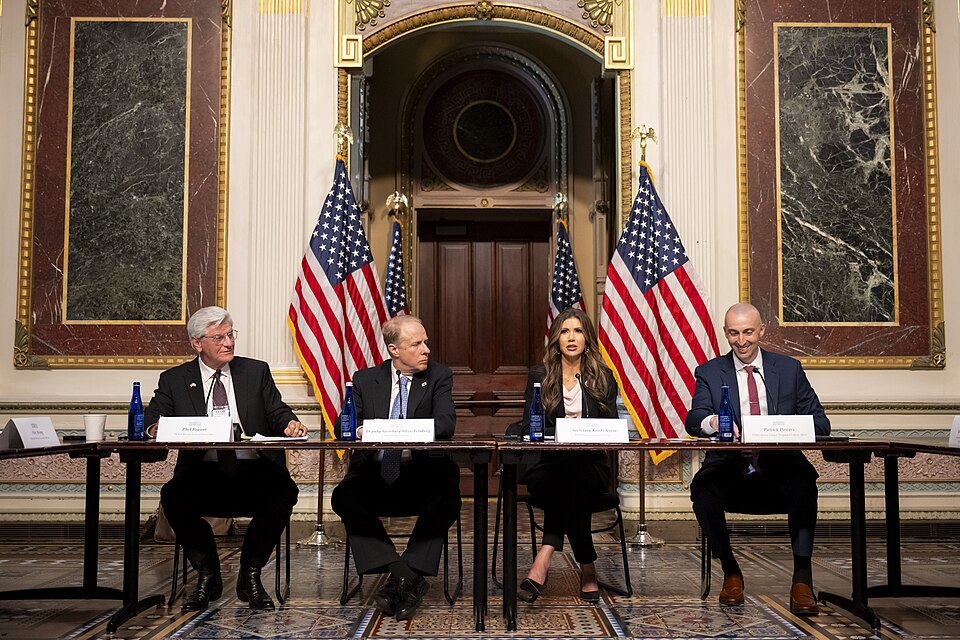
U.S. officials hosted the first direct, high‑level talks between Israel and Lebanon in Washington on April 14, a roughly two‑hour meeting at the State Department convened by Secretary of State Marco Rubio and attended by Israel’s ambassador to the U.S., Yechiel Leiter, and Lebanon’s ambassador. The session — the first in more than three decades — was framed as a U.S.‑brokered effort to halt fighting tied to Hezbollah and to explore ways to curb the group’s military influence; Lebanon has pressed for a ceasefire while Israel has insisted that any durable arrangement must address Hezbollah’s armaments. Hezbollah itself was not at the table and has publicly rejected being bound by any deal, underscoring a central dilemma for negotiators.
The talks took place against active and deadly fighting on the ground in Lebanon. Lebanese authorities report more than 2,000 killed and over one million displaced since early March, widespread destruction including roughly 40,000 homes, and particularly intense strikes that Lebanese health officials said killed hundreds in minutes. Israel has deployed substantial forces inside southern Lebanon — five maneuver divisions by some counts — and says many of the dead are Hezbollah fighters even as civilians have borne heavy losses; the Israel Defense Forces meanwhile reported dozens of launches from Hezbollah into northern Israel in recent days. All of this unfolded as the United States and Iran were engaged in parallel hostilities, including a U.S. naval blockade in the Strait of Hormuz, a backdrop U.S. officials and regional diplomats say complicates expectations for any immediate de‑escalation.
Participants agreed to return to Washington for follow‑up talks in the coming weeks, but diplomats expressed skepticism about how much the meetings can restrain Israel’s operations or alter Hezbollah’s behavior while the broader U.S.–Iran confrontation continues and the group remains outside formal diplomacy. Lebanon’s reformist government — which has moved to criminalize Hezbollah’s military activity — and Israel differ on sequencing (Lebanon wants a ceasefire first; Israel demands Hezbollah disarm), and Hezbollah has condemned Beirut’s engagement with Israel. Public reaction ranged from cautious optimism about a diplomatic thaw and Rubio’s elevated role to pointed doubts: social posts hailed the rare face‑to‑face breakthrough, others emphasized Hezbollah’s opposition and questioned whether Lebanon can sideline the group for a real ceasefire, while analysts suggested phased or partial deals might be the most realistic near‑term outcome.
Coverage of the talks shifted notably over a short period. Early accounts emphasized the historic nature of the dialogue and framed it as a positive diplomatic opening — a narrative reflected in initial NPR reporting and upbeat remarks by Israel’s ambassador after the meeting. Within 24–48 hours, outlets such as the New York Times and PBS layered in a more skeptical assessment, stressing the heavy countervailing forces — ongoing Israeli strikes, Hezbollah’s autonomy and rejection of agreements, and the active U.S.–Iran conflict including the Hormuz blockade — that make a quick or comprehensive resolution unlikely. That evolution in reporting moved the story from hopeful breakthrough to a more cautious view of what Washington‑hosted talks can realistically achieve without bringing Hezbollah into compliance or dampening the broader regional confrontations.
📌 Key Facts
- The United States brokered direct Israel–Lebanon talks in Washington, hosted by Secretary of State Marco Rubio; the first high‑level in‑person diplomatic dialogue since 1993 began with a roughly two‑hour preparatory meeting between Israeli Ambassador Yechiel Leiter and the Lebanese envoy, and both sides agreed to return for more talks in a few weeks.
- Ambassador Leiter appeared positive afterward, framing Israel and Lebanon as aligned against what he called an Iranian‑dominated 'occupation power' (Hezbollah); but Hezbollah was not part of the talks, has condemned the Lebanese government for negotiating, and says it will not abide by any agreement.
- The negotiations are taking place amid active Israel–Hezbollah fighting and heavy civilian losses in Lebanon: Lebanese authorities report more than 2,000 killed, over 1 million displaced and roughly 40,000 homes destroyed; reporters and officials cite multiple deadly strikes, including an attack that Lebanese health officials said killed hundreds in minutes and the April 8 wave of airstrikes that killed more than 350 in Beirut; a Lebanese Red Cross volunteer, Hassan Badawi, was also killed.
- Israel has deployed a large ground presence in southern Lebanon — described as five maneuver divisions — and says it is creating a 'deeper security zone'; some Israeli ultranationalist lawmakers have called for permanent annexation of parts of southern Lebanon.
- The talks are explicitly framed alongside broader U.S.–Iran ceasefire diplomacy and a U.S. naval blockade of Iranian ports in the Strait of Hormuz, with reports that Tehran sought to include Lebanon in a wider ceasefire but Israel rejected folding Lebanon into those talks, prompting Beirut to pursue a separate track.
- U.S. officials, including Rubio, called the session a 'historic opportunity' aimed in part at reducing Hezbollah’s influence, while unnamed diplomats and analysts expressed skepticism that the talks can meaningfully constrain Israel’s operations in Lebanon so long as the wider Iran war and naval blockade continue and Hezbollah remains outside the negotiations.
- Lebanon’s government (in power since early 2025) ran on a reformist platform that includes disarming non‑state actors; it has criminalized Hezbollah’s military activities, expelled Iran’s ambassador, and banned the IRGC — and Beirut has sought a ceasefire as a precondition for negotiating any permanent deal, while Israel has publicly rejected a formal ceasefire even as it paused strikes on Beirut at Washington’s request.
- The diplomatic initiative has prompted international reactions, including Italy’s Prime Minister Giorgia Meloni announcing suspension of a defense cooperation agreement with Israel.
📊 Analysis & Commentary (1)
"The WSJ editorial comments on recent Lebanon cease‑fire talks and negotiations, arguing that Iran — not Israel — wants the cease‑fire to save Hezbollah, and that the U.S. should exploit this Iranian need to extract substantive concessions rather than treating a cease‑fire as an unconditional diplomatic success."
📰 Source Timeline (9)
Follow how coverage of this story developed over time
- Lebanon’s current government, in power since early 2025, ran on a reformist platform that explicitly included disarming non‑state actors and responded to Hezbollah’s entry into the Iran war by criminalizing its military activities, expelling Iran’s ambassador, and banning the Iranian Revolutionary Guard.
- President Joseph Aoun previously offered direct negotiations with Israel in exchange for a cessation of hostilities, with French President Emmanuel Macron backing the idea; Israel and the U.S. ignored those offers until after a later truce between Iran and the United States.
- Tehran reportedly sought to fold Lebanon into a broader Iran–U.S. ceasefire as a condition for a permanent truce, but Israel rejected including Lebanon and Washington later followed suit, prompting Beirut to push for a separate diplomatic track rather than being treated as a bargaining chip in Tehran’s talks.
- The immediate trigger for Netanyahu’s April 8 decision to accept direct talks was an intense wave of over 100 Israeli airstrikes on Lebanon, including in some of Beirut’s busiest central districts, that killed more than 350 people.
- The first session of the direct negotiations was an in‑person preparatory meeting in Washington between the Lebanese and Israeli ambassadors to the United States; Lebanon wants a ceasefire in place before negotiating a permanent deal, while Israel has publicly rejected a formal ceasefire even as it has halted strikes on Beirut at Washington’s request.
- The United States announced Tuesday that Israel and Lebanon have agreed to 'launch direct negotiations' to end fighting between Israel and Hezbollah in Lebanon.
- Hezbollah publicly condemned the Lebanese government for negotiating with Israel and it remains unclear whether any agreement between Israel and Lebanon would actually halt Hezbollah’s military operations.
- Lebanon’s official National News Agency reported that Israeli forces continued bombarding southern towns on Wednesday and that several people were killed in a strike in the coastal town of Ansariya.
- The negotiations are explicitly framed as U.S.‑brokered and occurring in parallel with wider U.S.–Iran cease‑fire talks and the Hormuz blockade, highlighting Washington’s attempt to manage multiple fronts at once.
- The article underscores Hezbollah’s status as Lebanon’s dominant military and political force that has repeatedly defied the official government’s control, raising doubts about the talks’ reach.
- NPR reiterates that the April 14 Washington meeting between Israeli and Lebanese envoys is the first such direct diplomatic talks since 1993.
- The article notes that Lebanon is seeking a ceasefire while Israel insists Hezbollah must disarm before agreeing, underscoring the core sticking point.
- It adds that both sides agreed to hold more talks in Washington in a few weeks, confirming this is not a one‑off session.
- Israel carried out two new strikes on vehicles in Saadiyat and Jiyeh, coastal areas about 12 miles south of Beirut, after not striking near the capital since April 8 attacks that killed more than 350 people.
- Lebanon’s National News Agency also reported additional Israeli strikes across southern Lebanon the same day.
- The Israel Defense Forces said it detected roughly 30 launches by Hezbollah toward Israel since early Wednesday; Hezbollah claimed rocket attacks on 10 northern Israeli areas.
- Lebanese authorities now say Israeli attacks have killed more than 2,000 people and displaced more than one million since March 2, updating earlier tallies.
- Confirms the meeting framing under the headline “Rubio Hosts Israel and Lebanon for Rare Meeting Shadowed by U.S.-Iran War,” underscoring that U.S.–Iran hostilities are a central backdrop rather than incidental context.
- Adds New York Times sourcing on how U.S. officials and regional actors perceive the talks’ chances of shifting Hezbollah–Israel dynamics against the backdrop of the U.S. Hormuz blockade.
- Provides additional color on Rubio’s role and messaging that the session is a ‘historic opportunity,’ as well as skepticism from unnamed diplomats about whether the talks can constrain Israel’s operations in Lebanon while the broader Iran war continues.
- Israeli strikes and ground operations in Lebanon are ongoing despite a cease-fire with Iran, including a strike Lebanese health officials say killed more than 400 people in about 10 minutes, with many civilian victims.
- A 31-year-old Lebanese Red Cross volunteer, Hassan Badawi, was killed in an Israeli drone strike; his funeral and colleagues’ return to search-and-rescue work are described on the ground in Beirut.
- Secretary of State Marco Rubio personally hosted the Israel–Lebanon talks at the State Department, calling it a 'historic opportunity' and explicitly saying the goal is to end '20 or 30 years of Hezbollah’s influence.'
- Israel’s ambassador Yechiel Leiter, after the two-hour talks, said Israel and Lebanon are 'both united in liberating Lebanon from an occupation power dominated by Iran called Hezbollah,' emphasizing a 'same side of the equation' message.
- Hezbollah was not included in the talks and has stated it will not abide by any agreement, including demands to disarm.
- Italian Prime Minister Giorgia Meloni announced she will suspend a defense cooperation agreement with Israel in response to the war.
- The U.S. naval blockade of Iranian ports along the Strait of Hormuz has entered its second day, with the U.S. military claiming that no ships have passed their cordon so far as Washington tries to choke off Iran’s oil exports.
- Israeli Ambassador to the U.S. Yechiel Leiter briefed reporters after a roughly two‑hour meeting between U.S., Israeli and Lebanese officials in Washington, D.C.
- Leiter "appeared positive" about the talks, describing his country’s first high‑level diplomatic dialogue with Lebanon in over three decades in optimistic terms.
- Israel currently has five maneuver divisions deployed inside southern Lebanon, matching the scale of its peak deployment in Gaza.
- Prime Minister Benjamin Netanyahu says Israeli forces have expanded their presence beyond the five outposts set up in 2024 and are creating a 'solid, deeper security zone' inside Lebanon.
- Lebanese officials say Israeli evacuation orders have displaced more than one million people, destroyed about 40,000 homes, and killed more than 2,000 people, with Israel claiming most of the dead are Hezbollah fighters but acknowledging civilian deaths.
- Some ultranationalist Israeli lawmakers are publicly calling for permanent annexation of parts of southern Lebanon.
- Analyst Shira Efron of RAND characterizes these buffer zones in Lebanon and Gaza as part of a new Israeli defense doctrine formed after the surprise Hamas attack in 2023.