Trump Publicly Rebukes Italy’s Meloni Over Iran and Hormuz Blockade
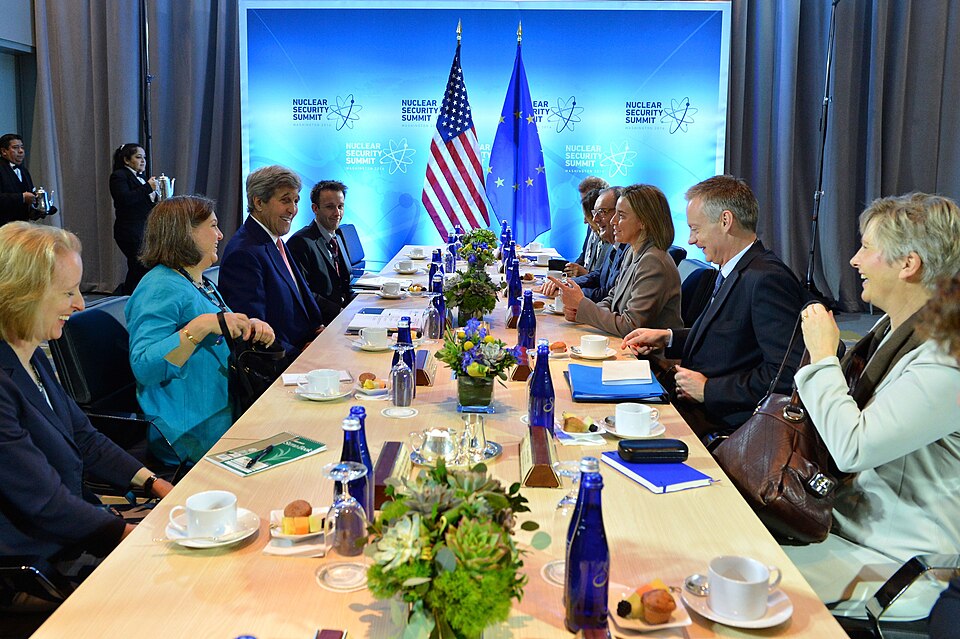
Former President Donald Trump publicly rebuked Italian Prime Minister Giorgia Meloni this week, accusing a close NATO ally of “failing” the United States over Iran and pressuring her to back U.S. operations linked to rising tensions in the region. The criticism followed public and social-media reports that Meloni declined requests for Italian support — including claims that she denied U.S. aircraft access to bases in Sicily — and marks a rare, overt confrontation between two leaders who have been billed as partners on security and foreign-policy issues.
The dispute takes on outsized strategic importance because much of the world’s maritime oil trade transits through the Strait of Hormuz: roughly a quarter of global tanker traffic, about 20.3 million barrels per day on average, moves through that chokepoint. Italian energy exposure is also material — about one in five of Italy’s oil and gas imports depend on routes that require passage through Hormuz — which helps explain Meloni’s caution about being drawn into a broader confrontation with Iran. Public-opinion data compound her political constraints: a 2026 poll found 56% of Italians oppose U.S.-Israeli military intervention against Iran, with opposition at 48% even among center-right voters who form a significant part of Meloni’s base. Within NATO, allies have not spoken with one voice; some states reportedly have provided quiet assistance to U.S. efforts while others, notably Spain, have refused involvement, underscoring broader divisions that Trump’s public criticism spotlights.
Public reaction has been polarized online. Supporters of Meloni framed her stance as a defense of national interest and a refusal to be pressured into a foreign war, while pro-Trump commentators praised his pressure on allies to contribute more to collective security and secure maritime routes. Mainstream coverage of Meloni’s posture has shifted in tone in recent days: earlier narratives emphasized her as a staunch transatlantic ally aligned with Washington on many issues, but newer reporting — propelled by high-profile U.S. comments like Trump’s and subsequent news accounts — has foregrounded a more fraught reality in which national energy dependence, domestic public opinion, and differing threat assessments are creating visible splits within NATO over how to respond to Iran.
📊 Relevant Data
Approximately 25% of the world's maritime oil trade, or an average of 20.3 million barrels of petroleum and crude oil per day, passes through the Strait of Hormuz.
How Much Oil Passes Through the Strait of Hormuz? — Britannica
Approximately 21% of Italy's oil and gas imports come from countries whose shipments require transit through the Strait of Hormuz.
Deandreis (SRM): 21 percent of Italy's oil and gas transits through the Strait of Hormuz — Agenzia Nova
A 2026 poll found that 56% of Italians oppose U.S.-Israeli military intervention against Iran, with opposition at 48% even among center-right voters who form Meloni's base.
Majority of Italians oppose US-Israel strikes on Iran: Poll — Anadolu Agency
The global shipping industry employs approximately 1.89 million seafarers, with nationalities such as Filipinos being highly represented, as they constitute a significant portion of the workforce on internationally trading merchant ships.
Shipping and World Trade: Global Supply and Demand for Seafarers — International Chamber of Shipping
While some NATO allies like the UK, Italy, Germany, Portugal, and France have provided quiet assistance to U.S. operations in Iran, divisions persist, with Spain as a notable exception refusing support.
NATO Allies Are Quietly Helping the U.S. in Iran — The Wall Street Journal
📌 Key Facts
- Trump told Corriere della Sera he was “shocked” by Meloni and called her “unacceptable,” accusing her of failing to help on Iran and the Strait of Hormuz.
- Trump attacked Pope Leo XIV on Truth Social and in the interview, saying the pope is “weak on crime,” “terrible for foreign policy” and “has no idea what’s going on in Iran.”
- Meloni announced Italy has suspended automatic renewal of its defense cooperation agreement with Israel, citing the current Middle East situation; Israel called the pact largely symbolic and opposition leader Yair Lapid labeled the suspension an embarrassing failure for his government.
📰 Source Timeline (1)
Follow how coverage of this story developed over time