Iran Reimposes Hormuz Restrictions After U.S. Insists Port Blockade Will Continue
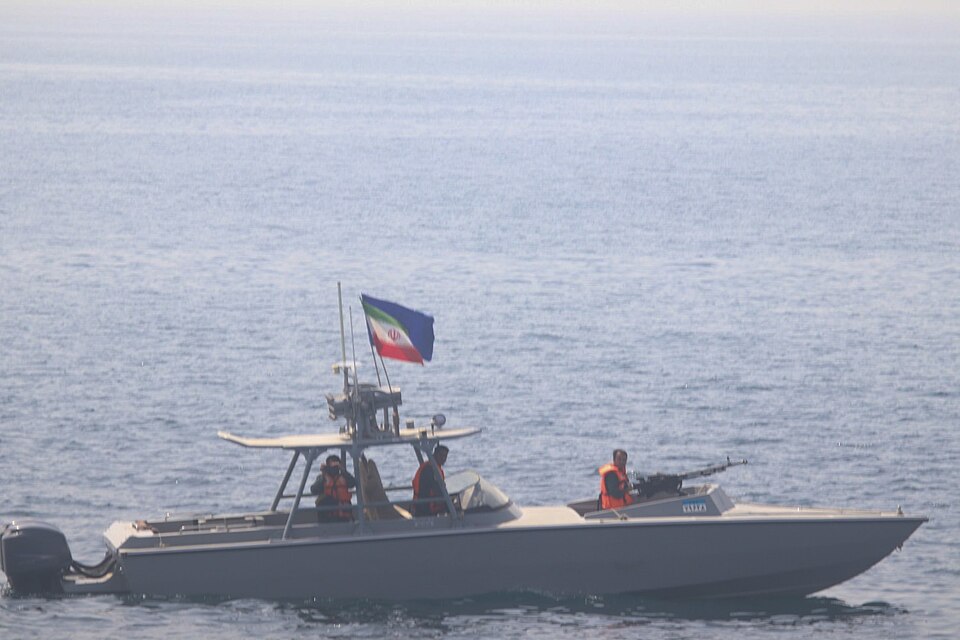
Iran reimposed restrictions on the Strait of Hormuz after the United States insisted its naval blockade of Iranian ports would continue. Iran's joint military command said control returned to its previous state and that military management would strictly regulate transits while the U.S. blockade remains in place. Tehran's move followed President Trump's public insistence that the U.S. naval blockade of Iranian ports "will remain in full force" until a broader deal is reached.
Independent and official tallies portray heavy regional costs: Human Rights Activists News Agency reported at least 1,701 civilians killed in Iran, Lebanon's health ministry listed about 2,124 dead, and other tallies vary. The New York Times and Iran's Red Crescent also reported more than 7,200 people rescued from rubble after U.S. and Israeli strikes, underscoring strike intensity and civilian harm. Markets reacted: Brent fell about 9.1 percent to $90.38 and U.S. crude dropped roughly 11 percent to $83.85 as traders parsed reopening claims and reimposed restrictions. Shipping analysts said few vessels returned immediately after Tehran and Washington declared the strait open, and Iran still requires coordinated routes and permission for transits. U.S. officials signaled continued pressure: the Pentagon said the blockade has "completely halted" Iranian sea trade and prepared to board Iran-linked ships under a campaign dubbed Economic Fury.
Earlier coverage from outlets such as PBS and The New York Times presented Tehran's and President Trump's joint announcement that the Strait of Hormuz was "completely open" as a potential easing. Within hours, reporting from MS NOW, NPR and The Wall Street Journal documented the reversal and Iran's Islamic Revolutionary Guard Corps (IRGC) joint command statement reasserting strict military control. Social media amplified civilian and economic concerns, with users citing varying casualty estimates and losses of tens of billions of dollars to Gulf economies, highlighting public alarm and confusion.
📌 Key Facts
- Reports indicate heavy civilian and combatant tolls across the conflict: NGOs and officials cite at least 1,701 civilians killed in Iran (including 254 children) and 2,124 killed in Lebanon, with later tallies putting Iranian deaths as high as ~3,000; additional deaths include roughly 23 in Israel, dozens in Gulf states, 13 U.S. service members, and Iran’s Red Crescent says more than 7,200 people have been rescued from rubble—overall casualty data remain incomplete and opaque.
- Iran and the U.S. publicly announced the Strait of Hormuz was 'completely open' for commercial traffic along coordinated routes (announced by Iran’s foreign minister and echoed by President Trump), but within a day Iran reimposed restrictions, saying control of the strait had 'returned to its previous state' under strict military/IRGC management and that transit would be blocked so long as the U.S. naval blockade of Iranian ports continues.
- Iran now requires vessels to use Tehran‑approved 'coordinated routes' and to receive permission for transits, and shipping analysts said vessels did not return in large numbers to the strait despite reopening statements—underscoring that Iran retains operational control over passage.
- The U.S. has insisted the naval blockade of Iranian ports will remain in force; senior U.S. officials publicly characterized the blockade as 'ironclad' and warned they are prepared to backstop diplomacy with renewed offensive operations, including possible strikes on Iranian infrastructure, if talks fail.
- Following Iran’s reimposition of restrictions, Iranian forces attacked several commercial vessels; U.S. planners are preparing to board and seize Iran‑linked ships globally under an 'Economic Fury' campaign as part of the broader enforcement response.
- A two‑week truce tied to the reopening announcement is set to expire next week, creating a firm deadline that heightens the risk of renewed escalation if a broader deal is not reached.
- Markets reacted to the back‑and‑forth: oil prices initially fell on reopening news (Brent around $90.38, U.S. crude about $83.85) and U.S. equity indexes hit records, but lingering uncertainty persisted; to ease supply strains tied to the Iran war the U.S. extended waivers/paused sanctions on some Russian oil shipments.
- The sequence of events included coordinated social‑media and public statements (Iran’s foreign minister and Trump declaring Hormuz open and, per Trump, Iran removing sea mines with U.S. help), followed by Trump’s simultaneous insistence the U.S. blockade remain and Iran’s accusation that the U.S. violated the reopening deal—precipitating the rapid reversal and reimposition of restrictions.
📰 Source Timeline (11)
Follow how coverage of this story developed over time
- Iran followed its reimposed restrictions by attacking several commercial vessels on Saturday while declaring the strait 'strictly controlled' by its military.
- The U.S. response is not just to keep the blockade but to prepare boardings and seizures of Iran-linked ships globally under the Economic Fury campaign.
- IRGC joint command's Saturday statement is quoted saying control has 'returned to its previous state' under strict military management and that restrictions will continue until the U.S. 'completely lifts' its blockade of Iranian ports.
- Trump, returning from a Phoenix rally, publicly linked the decision on extending the ceasefire to the possibility that the U.S. will 'have to start dropping bombs again' even as the blockade remains.
- NPR details the sequence of social media announcements in which Iranian Foreign Minister Abbas Araghchi and Trump both declared the Strait of Hormuz 'completely open' for commercial traffic along a coordinated route, while Iran's Foreign Ministry spokesman warned of reciprocal action if the blockade continues.
- The piece adds Trump's assertion that Iran is removing 'all sea mines' with U.S. help and notes that markets rallied on the reopening announcement before Iran's military reasserted restrictions.
- It reports that the U.S. Treasury Department extended its pause on sanctions on Russian oil shipments specifically to ease shortages tied to the Iran war, directly contradicting statements by Treasury Secretary Scott Bessent earlier in the week.
- Iran's joint military command announced that 'control of the Strait of Hormuz has returned to its previous state' under strict military management and control.
- Iran said it would continue to block transit through the strait as long as the U.S. blockade of Iranian ports remains in effect.
- The reversal came the morning after President Trump publicly said the American blockade 'will remain in full force' until Tehran reaches a broader deal including its nuclear program.
- Shipping analysts cited in the NYT say ships did not return in large numbers to the strait on Friday despite public statements that Hormuz is 'completely open.'
- Iran is requiring vessels to use 'coordinated routes' approved by Tehran and, according to other officials, still needs to grant permission for transits, reinforcing that it retains operational control.
- The two‑week truce period linked to the reopening announcement is reported to expire next week, setting a clear deadline for either progress or renewed escalation.
- The article explicitly ties the oil price drop to 'around $90 a barrel' to the reopening announcement while noting that leverage over shipping remains a central Iranian tool.
- It adds that the Trump administration has extended a waiver allowing some Russian oil sales, a move intended to ease prices even as the Hormuz situation remains tense.
- Iran has begun reopening part of its airspace for international overflights, a partial rollback of the full closure ordered after U.S.-Israeli strikes began on Feb. 28.
- Confirms that a top Iranian official publicly said the Strait of Hormuz is 'completely open.'
- Clarifies that President Trump simultaneously said the U.S. naval blockade on Iranian ports will remain in force, creating uncertainty for shippers.
- Provides precise same-session market data: Brent down 9.1% to $90.38, U.S. benchmark crude down 11% to $83.85, and S&P 500 and Nasdaq closing at record highs.
- PBS explicitly notes Iran has declared the Strait of Hormuz open to commercial traffic and that Trump publicly supported that step on social media.
- The report clarifies that Trump couples support for reopening Hormuz with a statement that the U.S. blockade of Iranian ports may continue.
- Revises the earlier picture of a "completely halted" Iranian sea trade by reporting that Iran now declares Hormuz "completely open" to commercial shipping under the Lebanon ceasefire.
- Reports Trump echoing that message, saying Iran has announced the strait "is fully open and ready for full passage."
- Updates cumulative casualty figures to at least 3,000 dead in Iran, more than 2,100 in Lebanon, 23 in Israel and over a dozen in Gulf Arab states.
- Adds Pentagon‑level confirmation that the U.S. is prepared to extend its campaign beyond the existing blockade to bombing Iranian infrastructure, power and energy facilities if talks fail.
- Clarifies that senior leadership — Hegseth, Gen. Dan Caine and Adm. Brad Cooper — are publicly presenting the blockade as 'ironclad' and ready to backstop diplomacy with renewed offensive operations.
- Iran’s Red Crescent president Pir Hossein Kolivand says emergency teams have rescued more than 7,200 people from rubble after U.S. and Israeli bombings.
- The article reiterates that Iran has provided little comprehensive casualty data despite ongoing strikes.
- It links these rescue figures and casualty opacity directly to current cease‑fire talks and escalation threats over maritime trade.
- Specific sourced death tolls: at least 1,701 civilians killed in Iran (including 254 children) according to Human Rights Activists News Agency, and 2,124 killed in Lebanon as per Lebanon’s health ministry.
- Additional casualties: at least 32 people killed in attacks attributed to Iran in Persian Gulf nations, 22 killed in Israel plus 12 Israeli soldiers killed in Lebanon, and 13 American service members killed.
- Confirmation that more than 7,200 Iranians have been rescued from rubble after U.S. and Israeli bombings, according to Iran’s Red Crescent president, giving some insight into strike intensity and civilian harm.
- Context that Iran has released little comprehensive casualty data more than a month into the war, forcing reliance on NGOs and partial official figures.
- Linkage of those tolls to a U.S.‑led blockade that the Pentagon now says has 'completely halted' Iranian sea trade and to Iranian threats to widen retaliation to multiple regional seas.