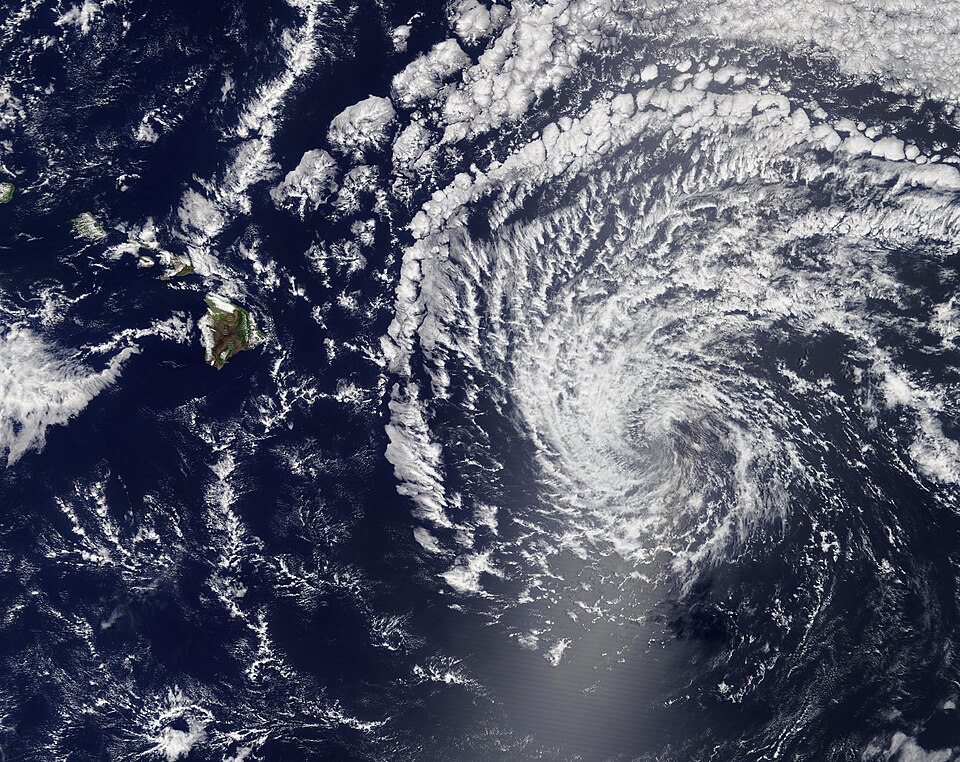
Super Typhoon Sinlaku Batters Saipan and Tinian With 150 mph Winds; Guam Hit by Flash Flooding
Super Typhoon Sinlaku slammed into the Northern Mariana Islands overnight, ripping across Tinian and Saipan with sustained winds near 150 mph as its inner eyewall passed around 10:15 p.m. local time. The storm had earlier peaked over open water near 180 mph and carried an expanded wind field — typhoon‑force gusts out to roughly 80 miles and tropical‑storm‑force winds as far as about 275 miles — producing prolonged destructive conditions as it slowed near the islands. Guam missed a direct eyewall hit but received torrential rain, flash flooding and tropical‑storm‑force gusts (reported between about 60–80 mph), with many businesses closed, schools canceled and authorities urging residents to shelter while military personnel were ordered to prepare and shelter in place.
On Saipan and Tinian crews and residents reported extensive structural damage: metal roofs ripped off, wooden and tin buildings collapsed, cars overturned, balcony railings torn away and water intrusion even into concrete homes. More than 1,000 people are being sheltered across Guam and the Northern Marianas by the American Red Cross, and local officials say there have been no reported deaths so far even as searches and rescues remain difficult in the storm’s aftermath. Federal response was activated quickly — the president approved emergency declarations for Guam and the Northern Marianas and FEMA is coordinating support, dispatching nearly 100 staff along with EPA, DOT and Army Corps of Engineers personnel — though officials acknowledge logistics are complicated by ongoing federal constraints. The islands’ vulnerability is accentuated by local building stock: historically about 56.5% of occupied homes in the commonwealth have concrete roofs while roughly 41.8% have metal roofs, the latter far more prone to catastrophic wind damage; scientists also note a broader trend of climate change contributing to stronger storms in the region.
Early reporting emphasized Sinlaku’s intensity and the precautionary warnings that put the region on high alert, but coverage shifted as first‑hand accounts and damage assessments arrived. Initial dispatches focused on watches, warnings and the storm’s peak metrics, while later reporting from outlets providing on‑the‑ground reporting — including ABC, NPR, PBS and The New York Times — documented the scale of destruction on Saipan and Tinian, firsthand eyewitness descriptions and the difficulties responders face. Social media and officials’ feeds reflected that evolution: the Department of Homeland Security publicly thanked the president for rapid declarations and FEMA engagement, meteorologists warned of potentially catastrophic impacts to infrastructure, volunteers and Red Cross teams posted about deploying to the region, and local outlets noted the governor keeping Guam at a high state of readiness amid ongoing dangerous seas and winds.
📊 Relevant Data
The Northern Mariana Islands experience an average of 6 typhoons per year, though not all make landfall.
Recent typhoons on the Northern Mariana Islands — WorldData.info
Climate change is contributing to stronger typhoons in the Northern Mariana Islands, with hotter weather and increased storm intensity among the projected impacts.
Climate change in the Northern Mariana Islands — Wikipedia
In 2017, 56.5% of occupied housing units in the Commonwealth of the Northern Mariana Islands had concrete roofs, while 41.8% had metal roofs, with metal roofs being more susceptible to damage from high winds.
LFP Housing Characteristics 2017 By Roof Material Type — CNMI Department of Commerce
📌 Key Facts
- Super Typhoon Sinlaku became the strongest tropical cyclone on Earth so far in 2026, peaking at about 180 mph over the open ocean, later stabilizing near 175 mph, and producing sustained winds around 150 mph as it crossed Saipan and Tinian.
- Sinlaku slowed and nearly stalled as it approached the Marianas (at one point about 30 miles offshore), and its inner eyewall moved over Tinian and Saipan overnight, prolonging destructive winds and rains and prompting NWS warnings that many residents "will wake up to a different island."
- Saipan and Tinian suffered extensive structural damage — tin roofs torn off, wooden and tin buildings collapsed, cars flipped or stacked, balcony railings torn away, and water intrusion even into concrete homes — though local officials reported no confirmed deaths so far.
- Guam avoided a direct eyewall hit but experienced torrential rain, flash flooding, widespread power outages, and tropical‑storm‑force gusts (reports of gusts up to about 80 mph), with schools closed, military personnel ordered to shelter in place, and forecasts calling for dangerous winds (75+ mph) to persist into Wednesday.
- Warnings and watches covered the region: typhoon warnings for Rota, Tinian and Saipan (extended to islands including Alamagan, Pagan and Agrihan in some updates), a tropical‑storm warning and typhoon watch for Guam, and a large wind field with typhoon‑force winds extending roughly 80 miles from the center and tropical‑storm‑force winds out to about 275 miles.
- Federal and relief response mobilized: President Donald Trump approved emergency disaster declarations for Guam and the Northern Mariana Islands; FEMA is coordinating multi‑agency support and dispatching nearly 100 staff plus EPA, DOT and U.S. Army Corps personnel; and the American Red Cross is sheltering more than 1,000 people across Guam and the Northern Marianas.
- Officials say emergency response functions are continuing despite an ongoing Department of Homeland Security shutdown — FEMA reports more than 10,000 disaster personnel remain paid and roughly $3.6 billion remains in the disaster relief fund while military and FEMA assets are being staged in the region.
📰 Source Timeline (8)
Follow how coverage of this story developed over time
- NPR/AP report that Sinlaku was 'the strongest tropical cyclone on Earth this year' when it hit Saipan and Tinian, with sustained winds up to 150 mph at landfall.
- Local officials say there are no reported deaths so far, despite extensive damage, according to Saipan mayor's office spokesperson Jaden Sanchez and former lawmaker Ed Propst.
- American Red Cross is sheltering more than 1,000 residents across Guam and the Northern Marianas, according to spokesperson Stephanie Fox.
- Eyewitnesses on Saipan describe tin roofs ripped off, cars flipped and stacked, balcony railings torn away, and rain penetrating even concrete homes, leaving 'every house just flooded with water.'
- National Weather Service on Guam expects winds of 75 mph or greater to continue through Wednesday afternoon, with winds still around 50 mph too strong for residents to safely go outside for at least another day and a half.
- Confirms Sinlaku made landfall on Tinian and Saipan with sustained winds up to about 150 mph, described as the strongest storm on Earth so far this year.
- Reports extensive structural damage on Saipan and Tinian, including multiple tin roofs torn off, trees thrown around, wooden and tin structures collapsed, and widespread water intrusion even in concrete homes.
- Details that Guam, though missing the eyewall, experienced tropical‑storm‑force gusts, torrential rain and flash flooding while U.S. military officials there ordered personnel to shelter in place.
- Includes direct eyewitness accounts from Saipan resident Glen Hunter and Saipan Mayor Ramon 'RB' Jose Blas Camacho describing flying debris, flooded homes, and difficulty conducting rescues during the height of the storm.
- Notes that Sinlaku slowed as it approached, prolonging destructive conditions overnight and that many residents 'will wake up to a different island,' according to NWS meteorologist Landon Aydlett.
- Confirms Sinlaku is the strongest tropical cyclone on Earth so far in 2026, with sustained winds up to 150 mph as it crosses the Northern Mariana Islands.
- Reports that the storm has slowed to a crawl over Tinian and Saipan, raising concern that destructive winds and rains will linger for many hours overnight.
- Provides on‑the‑ground quotes from Saipan Mayor Ramon “RB” Jose Blas Camacho describing flying debris, collapsed wooden and tin structures, and difficulty conducting rescues.
- Notes that torrential rainfall and flash flooding are already occurring in Guam, with weather officials urging residents to stay indoors and away from windows.
- Adds National Weather Service commentary that many residents on Tinian and Saipan “will wake up to a different island,” emphasizing expected structural damage.
- Confirms Sinlaku’s inner eyewall moved over Tinian and Saipan around 10:15 p.m. local time (8:15 a.m. ET) with maximum sustained winds of 130 mph, a strong Category 4 at that point.
- Clarifies that Guam is not expected to see a direct hit, though gusts up to 80 mph have been recorded and tropical-storm-force winds are forecast to persist through Wednesday afternoon.
- Reports concrete local impacts: Guam schools closed Tuesday and Wednesday, widespread power outages acknowledged by the water authority, and authorities urging residents to remain indoors and out of the water.
- Details that Sinlaku earlier became nearly stationary about 30 miles off the Marianas for several hours, and that its peak over open ocean reached 180 mph, making it the most powerful storm globally so far this year.
- Lists current warning configuration: typhoon warnings for Rota, Tinian, Saipan, Alamagan, Pagan and Agrihan, and a tropical-storm warning plus typhoon watch for Guam.
- The New York Times piece further characterizes Sinlaku as an 'extremely dangerous' super typhoon and details updated track forecasts that suggest Guam may avoid a direct eyewall hit while the Northern Marianas, especially Saipan and Tinian, remain at greatest risk.
- It adds more granular on‑the‑ground reporting from residents and local officials about early impacts, including specific wind gusts already recorded on Guam, localized flooding, and the condition of shelters as the outer bands arrive.
- The article provides additional color on constraints posed by the ongoing federal shutdown and how FEMA and military commands are attempting to work around staffing and funding limits while staging assets in the region.
- President Donald Trump approved emergency disaster declarations for Guam and the Northern Mariana Islands on Saturday, unlocking additional federal help with emergency services.
- FEMA says it is coordinating support across multiple agencies and is dispatching almost 100 FEMA staff plus personnel from EPA, DOT and the U.S. Army Corps of Engineers.
- FEMA officials state that emergency response functions continue during the record-long Department of Homeland Security shutdown, with more than 10,000 disaster personnel still paid and about $3.6 billion remaining in the disaster relief fund as of late March.
- The storm is already lashing Guam with heavy rain and tropical-storm-force gusts up to 60 mph early Tuesday, with most businesses closed and residents told to stay home.
- U.S. military officials on Guam have ordered personnel to prepare and shelter in place; the military controls about one-third of the island and uses it as a critical Pacific hub.
- Confirms Sinlaku’s maximum sustained winds have stabilized at 175 mph after peaking at 180 mph on Sunday, making it the strongest storm of 2026 so far, ahead of typhoons Narelle and Dudzai.
- Details the current warning and watch configuration: typhoon warnings for Rota, Tinian and Saipan; tropical storm warnings for Guam, Pagan and Alamagan; typhoon watch for Guam; and tropical storm watch for Agrihan.
- Reports Guam’s Joint Information Center advisory stating that while the threat of typhoon‑force winds for Guam has significantly diminished, the island still faces an extended period of tropical‑storm‑force winds from Monday night through Wednesday.
- Provides updated wind‑field size: typhoon‑force winds extending up to 80 miles from the center and tropical‑storm‑force winds extending up to 275 miles.