Hormuz Blockade Order Briefly Lifts Oil Above $100 Before Prices Ease as U.S. Stocks Rebound
A U.S. order to block ships entering or leaving Iranian ports, enforced beginning Monday, briefly pushed global oil prices above $100 a barrel before markets retreated as U.S. stocks recovered. Oil surged intraday — Brent crude topped the $100 mark and hit levels reported in the low $100s while U.S. West Texas Intermediate similarly spiked — then eased, with Brent settling just under $100. Equity markets first sold off (Dow futures plunged roughly 477 points at one point and other benchmarks fell), but later climbed back, leaving the S&P 500 and Nasdaq higher by the close and the Dow modestly up, as traders weighed the supply shock against signs of a holding ceasefire and prospects for talks.
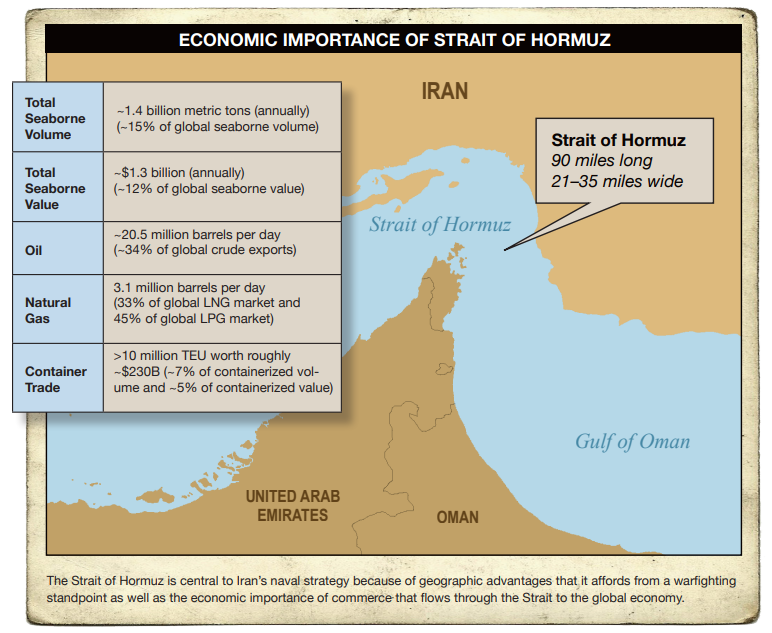
The strategic choke point at the Strait of Hormuz helps explain the outsized market response: in the first half of 2025 an average of about 23.2 million barrels a day transited the strait, with Asian buyers receiving an overwhelming share — roughly 89% of those flows and China alone taking about 37.7%. Shipping through Hormuz has plunged from roughly 129 vessels a day before the conflict to about 10 per day in April, amplifying concerns about fuel and industrial inputs. Markets also felt pressure beyond crude: aluminum jumped to a four‑year high as the Gulf region accounts for nearly a tenth of global supply, and downstream effects are emerging in Asia, where some factories have cut output, gas stations are rationing fuel and airports face jet‑fuel shortages with airlines trimming flights. Regional escalation risks were underscored by an Iranian military warning that “no port in the region will be safe,” while Riyadh has privately urged Washington to drop the blockade over fears Iran might retaliate by closing Bab al‑Mandeb; European governments are meanwhile quietly developing a post‑war plan to reopen Hormuz without the U.S.
Early coverage emphasized a narrower, more market‑focused impact — noting that the blockade was less sweeping than feared because the U.S. Navy would permit transits between non‑Iranian ports and spotlighting the immediate oil and stock moves — but reporting has shifted toward a broader geopolitical and economic framing. Subsequent Wall Street Journal and European reporting stressed how the blockade could convert a regional confrontation into a global economic shock, highlighted diplomatic pressure from Gulf states and Europe, and detailed real‑economy disruptions; that evolution in coverage has moved the narrative from a short, manageable market blip to a story about longer‑term supply risks and international political fallout. Public reaction on social media mirrored that divide, with some arguing higher prices will ultimately benefit U.S. shale producers while others warned of catastrophic price spikes and geopolitical consequences, and Chinese officials publicly condemned the blockade as dangerous ahead of sensitive U.S.–China summitry.
📊 Relevant Data
In the first half of 2025, an average of 23.2 million barrels of oil were transported through the Strait of Hormuz per day.
Oil trade volume in select maritime trade routes 2025 — Statista
China receives 37.7% of all crude oil and condensate exports that pass through the Strait of Hormuz, the highest share among countries.
Charted: Oil Trade Through the Strait of Hormuz by Country — Visual Capitalist
In Q1 2025, Europe received 3.8% of the crude oil and condensate flows through the Strait of Hormuz.
Charted: Oil Trade Through the Strait of Hormuz by Country — Visual Capitalist
Asian countries collectively receive 89.2% of the crude oil and condensate flows through the Strait of Hormuz.
Charted: Oil Trade Through the Strait of Hormuz by Country — Visual Capitalist
📌 Key Facts
- The U.S. naval blockade of ships entering or exiting Iranian ports has taken effect and is explicitly linked to the latest commodity-market moves; analysts say the blockade is narrower than feared because the U.S. Navy will allow transits between non‑Iranian ports.
- Oil spiked intraday: Brent and WTI jumped more than 7% as the blockade approach/implementation neared (CBS cited Brent ~$102.30 and WTI ~$104.20), with Brent briefly topping $100 before settling around $99.36 — still well below the prior wartime peak near $119.
- Traffic through the Strait of Hormuz has plunged from about 129 ships per day prewar to roughly 10 per day in April, and Iran’s military/Revolutionary Guards warned ‘no port in the region will be safe.’
- Equity markets first sold off on the blockade news (Dow futures down ~477 points; S&P 500 and Nasdaq futures down ~0.7%), then rebounded later in the session (S&P up ~0.6%, Dow up ~102 points, Nasdaq up ~0.8%) as signs mounted that the broader ceasefire may be holding.
- Energy‑market knock‑on effects are widening: aluminum surged to a four‑year high (the affected region supplies nearly 10% of global aluminum), some Asian factories are cutting production, gas stations are rationing fuel, airports face jet‑fuel shortages with airlines trimming flights, and U.S. gasoline prices have moved above $4 per gallon.
- Regional energy exporters and Gulf governments are alarmed — Saudi Arabia is pressing the U.S. to abandon the blockade over fears Iran could retaliate by closing Bab al‑Mandeb — raising the risk of simultaneous disruptions at both chokepoints.
- Diplomatic and political responses are active: China (the largest buyer of Iranian crude) publicly condemned the blockade as a ‘dangerous and irresponsible move’; there are reports of casualties across the region including U.S. deaths, and efforts are underway toward further talks (including a possible second Islamabad round).
- European governments are drafting a postwar plan to restore Hormuz shipping without U.S. participation — including mine‑clearing operations — with France saying the mission will exclude the U.S., Israel and Iran, and Germany now poised to participate.
📰 Source Timeline (8)
Follow how coverage of this story developed over time
- European governments are developing a longer‑term coalition plan, including mine‑clearing operations, to reassure shipping companies and normalize flows through Hormuz after hostilities end.
- Macron explicitly said the envisioned mission will exclude the U.S., Israel and Iran, classing them as 'belligerent' parties.
- Despite prior public reluctance, Germany is now poised to take part in a Hormuz mission and could formalize that position imminently.
- China is explicitly identified as the largest buyer of Iranian crude and therefore particularly exposed to, and angered by, the U.S. Hormuz blockade.
- Chinese Foreign Ministry spokesperson Guo Jiakun publicly criticized the blockade as a “dangerous and irresponsible move” that worsens confrontation and jeopardizes safe passage.
- The article ties market and shipping risks more directly to an upcoming Trump–Xi summit and a dedicated preparatory meeting with U.S. Ambassador David Perdue, linking energy chokepoint policy to broader strategic talks with Beijing.
- Updates that the ceasefire from the prior week is still holding but the showdown over Hormuz continues as the U.S. blockade actually takes effect.
- Adds the prospect of a second Islamabad round of talks as a new political variable alongside the previously reported market moves and price volatility.
- Specifies casualty totals across the region and U.S. deaths, which the earlier market-focused story did not foreground.
- Saudi Arabia is pressuring the U.S. to drop the Hormuz blockade out of concern that Iran might retaliate by closing Bab al-Mandeb, another key chokepoint for oil shipments.
- Gulf energy exporters’ worries now explicitly include the risk of simultaneous disruption at both Hormuz and Bab al-Mandeb, which would have deeper market consequences than those already seen from the blockade alone.
- Same trading day detail that Brent crude briefly topped $100 and then settled at $99.36 per barrel, below its intraday high and well under its prior ~$119 wartime peak.
- Specific U.S. equity market reaction on Monday: S&P 500 up about 0.6%, Dow Jones Industrial Average up 102 points (~0.2%), and Nasdaq composite up 0.8% late in the session.
- Quote from Iranian military and Revolutionary Guards statement via state media warning that ‘NO PORT in the region will be safe’ and that security in the Persian Gulf and Sea of Oman is ‘either for everyone or for NO ONE.’
- Analyst framing from Wells Fargo Investment Institute that markets are taking encouragement from signs ‘that the broader ceasefire seems to be holding, for now,’ tempering worst‑case fears.
- Corporate earnings color: Goldman Sachs reported $5.63 billion in quarterly profit, beating expectations but with weaker fixed income/commodities/currency trading revenue, and its stock fell 1.9%.
- Wall Street Journal explicitly ties the latest jump in oil and aluminum prices to President Trump’s now-active naval blockade on ships entering or exiting Iranian ports, rather than just a "planned" blockade.
- The article reports that aluminum prices have surged to a four-year high because the affected region produces nearly a tenth of global aluminum supply.
- It details downstream real-economy effects in Asia: some factories are cutting production, a growing number of gas stations are rationing fuel, and airports are short of jet fuel with some airlines already trimming flights.
- The piece frames the blockade as potentially turning a regional war into a broader global economic and financial shock, emphasizing that the depth of damage depends on how long disruption of the Strait of Hormuz lasts.
- Confirms Brent and WTI both jumped more than 7% Monday, with Brent at $102.30 and WTI at $104.20 as the blockade start approached.
- Adds equity‑market reaction: Dow futures down 477 points (~1%), S&P 500 and Nasdaq futures off about 0.7%.
- Details that traffic through the Strait of Hormuz has already plunged from about 129 ships per day prewar to roughly 10 per day in April.
- Provides analyst assessment that the announced blockade is narrower than initial fears because the U.S. Navy will allow transits between non‑Iranian ports.
- Notes that U.S. gasoline prices have already moved above $4 a gallon as a result of the earlier war‑driven disruption.