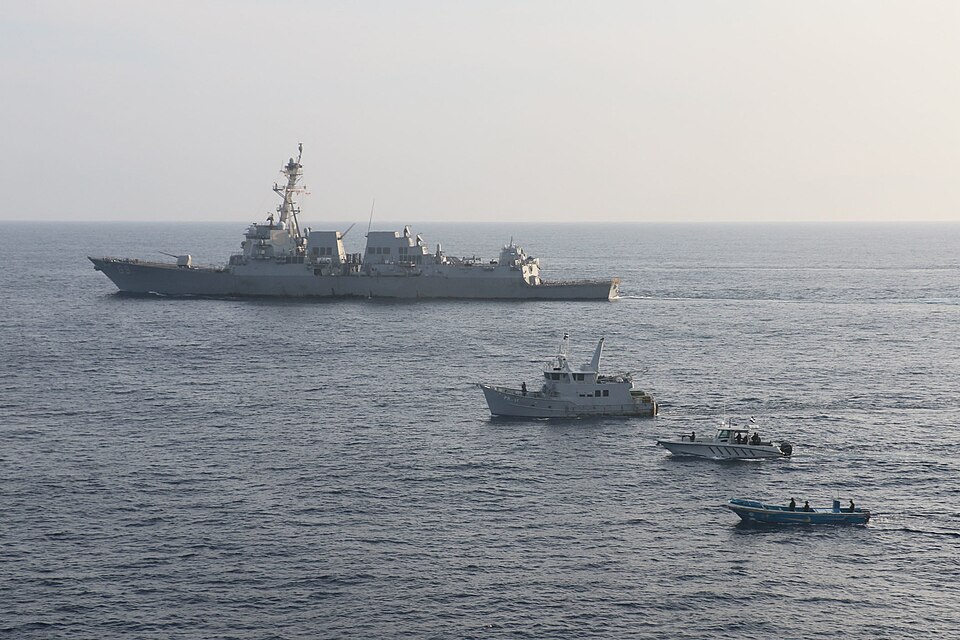
U.S. Boat Strikes Kill Five More Suspected Narco-Traffickers in Eastern Pacific
U.S. Southern Command says airstrikes on two small boats in the eastern Pacific on April 11 killed five men and left one survivor, bringing the death toll from the Pentagon’s campaign against alleged drug‑trafficking vessels to at least 168 since it began last September. SOUTHCOM’s statement, posted with aerial video on X, called the targets "vessels operated by designated terrorist organizations" transiting known narco‑trafficking routes, but offered no public evidence that the boats were carrying drugs. The command said a U.S. Coast Guard search‑and‑rescue mission was launched for the lone survivor, without disclosing the outcome. The operations are legally and politically contentious: the Trump administration classifies suspected smugglers as "unlawful combatants" in what it describes as a "non‑international armed conflict" with cartels, and earlier strikes have already prompted war‑crime accusations from lawmakers and a wrongful‑death lawsuit by families of men killed in a September Caribbean strike. Human‑rights advocates and some legal experts online are warning that the growing body count, opaque intelligence basis and treatment of survivors risk normalizing targeted killings at sea far from any traditional battlefield.
📌 Key Facts
- On April 11, 2026, U.S. forces conducted two lethal strikes on boats in the eastern Pacific, killing five men and leaving one survivor.
- U.S. Southern Command says the boats were operated by 'designated terrorist organizations' on known narco‑trafficking routes but has released no concrete evidence of drug cargo.
- The campaign of strikes on alleged drug boats in the Caribbean and eastern Pacific, begun in September 2025, has now killed at least 168 people.
- In a prior September 2 strike, two survivors of an initial hit were killed in a follow‑on attack, leading Democratic lawmakers to question whether a war crime was committed.
- The Trump administration has told Congress it considers itself in a 'non‑international armed conflict' with cartels and labels those on the boats 'unlawful combatants.'
📊 Relevant Data
In 2024, the poverty rate was 28% in Ecuador, 31.8% in Colombia, and 29.6% in Mexico, countries from which many maritime drug traffickers originate.
Poverty Rate by Country 2026 — World Population Review
The Eastern Pacific is a primary route for U.S.-bound cocaine, with an estimated 74% of documented cocaine shipments departing South America via this corridor.
Cocaine trafficking routes from latin america — Facebook Group Post (citing US estimates)
U.S. Coast Guard seized over 511,000 pounds of cocaine in 2025, the largest annual amount, but interdiction efforts failed to meet goals from 2015 to 2024, with overall cocaine flow not reduced.
Coast Guard achieves historic operational success in 2025 — U.S. Coast Guard
Maritime drug traffickers in the Eastern Pacific are predominantly from Colombia and Mexico, which account for roughly 60 percent of U.S. sanctions related to drug trafficking.
Sanctions by the Numbers: Transnational Crime and Drug Trafficking — Center for a New American Security
📰 Source Timeline (1)
Follow how coverage of this story developed over time