U.S. Says Hormuz Blockade Halts Iranian Sea Trade, but New Tracking Data Shows Iran‑Linked Tankers Transiting Strait
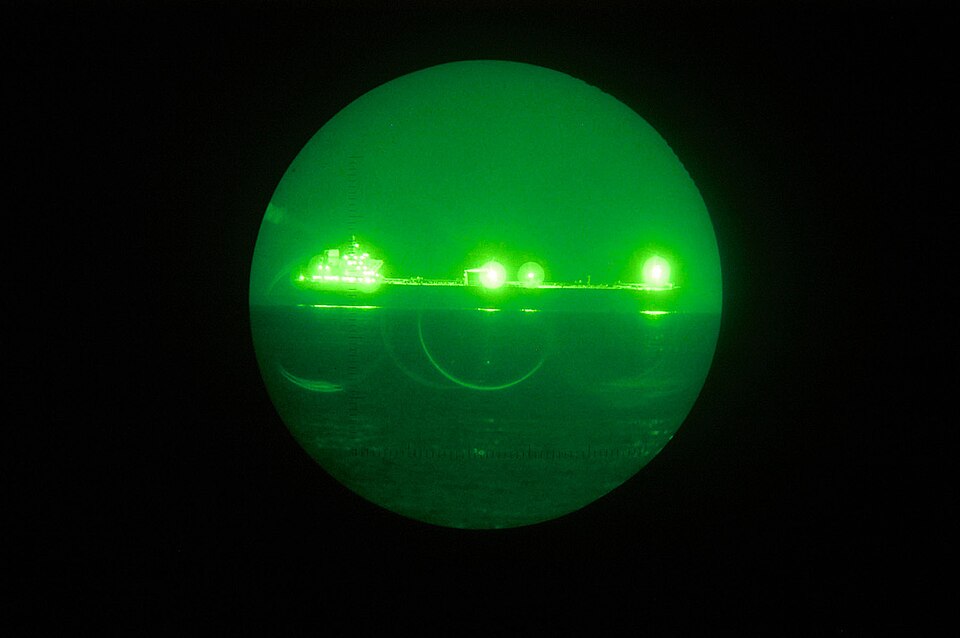
U.S. forces this week moved to enforce a naval blockade of Iranian ports aimed at stopping seaborne trade tied to Tehran, a step Washington says is intended to ratchet up economic pressure amid the wider regional conflict. The action has immediate global market effects: traders drove aluminum to four‑year highs and pushed crude sharply up as the Strait of Hormuz — which handles roughly a quarter of global seaborne oil flows — tightened. Benchmarks briefly jumped (Brent and WTI rose more than 7% in one session, with intraday Brent topping $100) and U.S. pump prices have climbed above $4 a gallon in the wake of the disruption; visible global oil inventories are estimated to have fallen by about 130 million barrels since the fighting began, adding to strain on oil‑importing economies and prompting some factories and airlines in Asia to cut output or flights. Gulf producers and partners are alarmed: Saudi officials have urged the U.S. to drop the blockade for fear of knock‑on strikes on other chokepoints, and European governments are drafting contingency plans to clear and secure Hormuz without the U.S. to reassure shippers once hostilities end.
At the same time, a sharp dispute has opened over how effective the blockade actually is. U.S. Central Command and some Pentagon officials initially reported that U.S. destroyers had interdicted outbound tankers, ordered six merchant vessels back into Iranian ports and, within roughly 24–36 hours, “completely halted economic trade going into and out of Iran by sea.” But new vessel‑tracking reporting from outlets including CBS and the Wall Street Journal identified multiple Iran‑linked tankers that appear to have transited the Strait of Hormuz after the blockade order — some switching off AIS transponders or stopping broadcasts near Qeshm Island to mask movements — and noted that U.S. enforcement rules allow ships transiting between non‑Iranian ports. The gap between claimed interdictions and visible ship movements is intensified by the human toll: roughly 20,000 seafarers are reported stranded in the strait, facing severe mental‑health strain and refusing to sail through the zone, while longer‑term labor pressures and rising incidents of vessel abandonment complicate any rapid normalization of shipping.
Reporting on the story has shifted noticeably in recent days. Initial mainstream dispatches emphasized the U.S. claim that the blockade had halted Iranian maritime trade, citing CENTCOM figures and administration officials; follow‑up coverage by outlets such as the Wall Street Journal and CBS, supplemented with AIS tracking data and ship identifications (names reported include Rich Starry, Elpis, Murlikishan and several Iran‑linked but not sanctioned tankers), has challenged that account and shown how vessels and shippers may be exploiting enforcement limits or spoofing signals. The evolving narrative has provoked a mix of public reaction and social‑media commentary — from warnings that China, the largest buyer of Iranian crude, could be particularly affected to suggestions that the Caspian Sea or clandestine ship movements may create back channels around the blockade — underscoring both the tactical complexity of policing Hormuz and the economic stakes that keep diplomats and markets watching for whether the ceasefire and any follow‑up talks will hold.
📊 Relevant Data
Approximately 20,000 seafarers are currently stranded on ships in the Strait of Hormuz due to the ongoing war and blockade, facing mental health challenges and refusal to sail through the strait even if it reopens, with some crews reporting the situation as mentally unbearable after weeks at sea.
Seafarers Marooned in Strait of Hormuz Amid Iran War — Sea News
The Strait of Hormuz carries around a quarter of global seaborne oil trade, and disruptions from the blockade have led to a decline in global visible oil inventories by 130 million barrels since the conflict began, pushing energy prices higher and exacerbating trade inequities for oil-importing developing countries.
Strait of Hormuz disruptions: Implications for global trade and development — UNCTAD
Seafarers face growing labor inequities, with nearly half intending to leave the profession within five years due to long working hours, limited rest, high stress, and issues like vessel abandonment increasing by 87% in 2024, conditions exacerbated in conflict zones like maritime blockades.
WMU Report Reveals Growing Strain On Seafarers' Work, Health, And Retention — Marine Insight
📌 Key Facts
- The U.S. has enacted a naval blockade of ships entering or exiting Iranian ports; U.S. officials (CENTCOM, Adm. Brad Cooper) say the blockade “completely halted” sea trade to and from Iran, reporting six merchant vessels ordered back to Iranian ports and zero transits past the blockade in the first 24 hours.
- Independent ship‑tracking data reported by CBS show multiple Iran‑linked tankers (sanctioned: Rich Starry, Elpis, Murlikishan; and Iran‑linked but not sanctioned: Alicia, Christianna, Peace Gulf) transiting the Strait of Hormuz after the blockade order; several vessels re‑entered the strait or turned off AIS near Qeshm Island—CBS noted AIS signals can be spoofed or deliberately disabled, complicating enforcement verification.
- U.S. guided‑missile destroyers have been used to enforce the blockade; one destroyer radioed to interdict two outbound oil tankers attempting to leave Iran’s Chabahar port.
- Commercial traffic through the Strait of Hormuz has collapsed from roughly 129 ships per day prewar to about 10 per day in April, reflecting a sharp drop in normal passage even as the blockade targets Iranian‑port transits.
- Markets reacted sharply and unevenly: oil and aluminum spiked (Brent and WTI briefly jumped more than 7%; CBS quoted Brent ~$102.30 and WTI ~$104.20 on the move; PBS later noted Brent topped $100 and settled near $99.36), U.S. gasoline averaged above $4/gal, aluminum hit a four‑year high, and equity futures fell initially but U.S. indexes later rallied on ceasefire hopes (S&P and Nasdaq gains; mixed Dow performance).
- Diplomatic and regional pressure intensified: Saudi Arabia pressed the U.S. to drop the blockade over fears Iran could retaliate by closing the Bab al‑Mandeb chokepoint; China criticized the blockade as “dangerous and irresponsible” (China is a major buyer of Iranian crude); European leaders are drafting a post‑war mine‑clearing and shipping‑security plan that would exclude the U.S., Israel and Iran (France pushed the plan and Germany is now expected to join).
- Iran warned of retaliation if the blockade continues—its military and Revolutionary Guards threatened to make ‘‘no port in the region…safe’’ and to block exports or imports across the Persian Gulf, Sea of Oman and Red Sea—while mediators reported an “in principle” extension of the ceasefire and U.S. officials and President Trump signaled possible renewed peace talks, a development that helped ease oil prices.
📰 Source Timeline (13)
Follow how coverage of this story developed over time
- Identification of specific sanctioned tankers (Rich Starry, Elpis, Murlikishan) and non‑sanctioned but Iran‑linked ships (Alicia, Christianna, Peace Gulf) passing through Hormuz after the blockade order.
- Behavioral details: Rich Starry re‑entered Hormuz and switched off AIS near Qeshm Island; Elpis stopped broadcasting in the same area shortly afterward.
- At least two other vessels near Iran’s coastal waters also turned off their AIS transponders in recent days, removing themselves from public tracking.
- Explicit acknowledgement by CBS that AIS signals can be spoofed and destinations misreported, illustrating how Iran and shippers may be masking port calls and testing U.S. enforcement rules that purport not to impede non‑Iranian‑port traffic.
- U.S. officials now publicly characterize the blockade as having 'completely halted' trade in and out of Iranian ports by sea.
- Iran’s military joint command, via Maj. Gen. Ali Abdollahi, threatens to block any exports or imports in the Persian Gulf, Sea of Oman and Red Sea if the U.S. blockade continues.
- The article notes that Iran has not fully relaxed its own restrictions on Hormuz, despite Trump having described that as a condition for the current truce.
- It confirms that Israel and Lebanon have agreed, per U.S. announcement, to 'launch direct negotiations' in Washington over ending fighting between Israel and Hezbollah.
- It provides updated, NGO‑sourced and official casualty numbers for Iran, Lebanon, Israel, Persian Gulf states and U.S. forces, refining earlier toll estimates.
- CBS highlights Trump’s assertion that another round of peace talks with Iran could begin within days, sharpening earlier, vaguer references to ongoing diplomacy.
- It confirms that some vessels are still moving through the Strait of Hormuz despite the blockade of Iranian ports.
- Oil prices have now fallen on news that mediators say the U.S. and Iran reached an “in principle agreement” to extend the ceasefire, after earlier spikes when the blockade began.
- U.S. stocks have surged toward record highs last set in January on hopes that the fighting may end soon.
- CENTCOM provides initial operational data: six merchant vessels ordered back into Iranian waters in the first 24 hours, zero ships passing the blockade.
- Casualty figures across Iran, Lebanon, Israel, Gulf Arab states and U.S. forces are updated, framing the human cost behind the market swings.
- Trump publicly characterizes the war as “very close to over” while reaffirming threats to target bridges and power plants, signaling to markets and allies how he sees the trajectory.
- Documents that U.S. guided‑missile destroyers in particular are executing the blockade and that one destroyer used radio communications to interdict two outbound oil tankers from Chabahar.
- Adds CENTCOM’s quantified claim that in the first 24 hours, no ships transited past the blockade and six merchant vessels complied with orders to return to Iranian ports.
- Includes Adm. Brad Cooper’s statement that within roughly 36 hours of implementation, U.S. forces had “completely halted economic trade going into and out of Iran by sea.”
- European governments are developing a longer‑term coalition plan, including mine‑clearing operations, to reassure shipping companies and normalize flows through Hormuz after hostilities end.
- Macron explicitly said the envisioned mission will exclude the U.S., Israel and Iran, classing them as 'belligerent' parties.
- Despite prior public reluctance, Germany is now poised to take part in a Hormuz mission and could formalize that position imminently.
- China is explicitly identified as the largest buyer of Iranian crude and therefore particularly exposed to, and angered by, the U.S. Hormuz blockade.
- Chinese Foreign Ministry spokesperson Guo Jiakun publicly criticized the blockade as a “dangerous and irresponsible move” that worsens confrontation and jeopardizes safe passage.
- The article ties market and shipping risks more directly to an upcoming Trump–Xi summit and a dedicated preparatory meeting with U.S. Ambassador David Perdue, linking energy chokepoint policy to broader strategic talks with Beijing.
- Updates that the ceasefire from the prior week is still holding but the showdown over Hormuz continues as the U.S. blockade actually takes effect.
- Adds the prospect of a second Islamabad round of talks as a new political variable alongside the previously reported market moves and price volatility.
- Specifies casualty totals across the region and U.S. deaths, which the earlier market-focused story did not foreground.
- Saudi Arabia is pressuring the U.S. to drop the Hormuz blockade out of concern that Iran might retaliate by closing Bab al-Mandeb, another key chokepoint for oil shipments.
- Gulf energy exporters’ worries now explicitly include the risk of simultaneous disruption at both Hormuz and Bab al-Mandeb, which would have deeper market consequences than those already seen from the blockade alone.
- Same trading day detail that Brent crude briefly topped $100 and then settled at $99.36 per barrel, below its intraday high and well under its prior ~$119 wartime peak.
- Specific U.S. equity market reaction on Monday: S&P 500 up about 0.6%, Dow Jones Industrial Average up 102 points (~0.2%), and Nasdaq composite up 0.8% late in the session.
- Quote from Iranian military and Revolutionary Guards statement via state media warning that ‘NO PORT in the region will be safe’ and that security in the Persian Gulf and Sea of Oman is ‘either for everyone or for NO ONE.’
- Analyst framing from Wells Fargo Investment Institute that markets are taking encouragement from signs ‘that the broader ceasefire seems to be holding, for now,’ tempering worst‑case fears.
- Corporate earnings color: Goldman Sachs reported $5.63 billion in quarterly profit, beating expectations but with weaker fixed income/commodities/currency trading revenue, and its stock fell 1.9%.
- Wall Street Journal explicitly ties the latest jump in oil and aluminum prices to President Trump’s now-active naval blockade on ships entering or exiting Iranian ports, rather than just a "planned" blockade.
- The article reports that aluminum prices have surged to a four-year high because the affected region produces nearly a tenth of global aluminum supply.
- It details downstream real-economy effects in Asia: some factories are cutting production, a growing number of gas stations are rationing fuel, and airports are short of jet fuel with some airlines already trimming flights.
- The piece frames the blockade as potentially turning a regional war into a broader global economic and financial shock, emphasizing that the depth of damage depends on how long disruption of the Strait of Hormuz lasts.
- Confirms Brent and WTI both jumped more than 7% Monday, with Brent at $102.30 and WTI at $104.20 as the blockade start approached.
- Adds equity‑market reaction: Dow futures down 477 points (~1%), S&P 500 and Nasdaq futures off about 0.7%.
- Details that traffic through the Strait of Hormuz has already plunged from about 129 ships per day prewar to roughly 10 per day in April.
- Provides analyst assessment that the announced blockade is narrower than initial fears because the U.S. Navy will allow transits between non‑Iranian ports.
- Notes that U.S. gasoline prices have already moved above $4 a gallon as a result of the earlier war‑driven disruption.