Average 2026 Tax Refunds Top $3,400 Under Trump One Big Beautiful Bill Act
The 2026 filing season so far has delivered average federal tax refunds just above $3,400, a gain driven largely by provisions in the Trump administration’s One Big Beautiful Bill Act that eliminate federal tax on tips and broaden overtime and senior deductions. IRS data through early April put the mean refund at $3,462, roughly an 11% (about $350) increase from the same point in 2025, and Treasury/IRS officials say more than 53 million filers have used at least one of the new breaks — about 6 million claimed the no‑tax‑on‑tips provision, roughly 21 million used an overtime deduction, and around 30 million seniors took an enhanced deduction. Analysts note that the overtime change primarily benefits hourly workers and policy estimates put about 17 million filers in line for that cut with an average tax savings of more than $1,400, while changes such as raising the SALT cap to $40,000 have skewed larger gains toward higher‑income filers.
Those headline increases mask a more complicated picture for households and markets. Surveys and reporting show sizable public ambivalence: a Bipartisan Policy Center poll found 62% of Americans think the tax changes either harmed them or made no difference, and evidence from tax analysts suggests a meaningful portion of the relief lowered final tax bills without producing a refund bump for many filers. Treasury has highlighted broader measures — for example, reporting more than 5 million new "Trump Accounts" and millions using expanded credits — but experts warn the IRS’s 27% workforce reduction over the past year has created processing backlogs and could delay refunds, and separate disclosures show the agency mistakenly shared taxpayer data with ICE roughly 42,695 times, raising privacy concerns even as the new system rolls out. Public reaction on social media reflects partisan and fiscal splits: Republican officials celebrate average refunds above $3,500 and White House posts tout even larger gains, while market analysts warn that roughly $318 billion in 2026 refunds and other relief could be a short‑term demand stimulus that increases debt issuance and market volatility.
Reporting on the size and reach of the tax cuts has shifted over weeks. Early White House and administration messaging framed the season as the “largest tax refund season in U.S. history,” with promises of average refunds rising by $1,000 or more; subsequent data and independent coverage tempered that claim. Outlets such as CBS and NPR have emphasized the actual IRS figures showing an 11% bump to about $3,462 and highlighted nuances — that some relief primarily reduced taxes owed rather than boosting refunds, and that higher‑income taxpayers have been likelier to report big refund increases. At the same time, conservative outlets and Treasury statements have focused on top‑line averages exceeding $3,400 and wide take‑up of the new breaks. The net effect is a more granular understanding: taxpayers broadly are receiving substantial new deductions, but the benefits are uneven in size and visibility, and initial political claims about a uniform $1,000 refund boost have not held up to the emerging data.
📊 Relevant Data
The overtime deduction primarily benefits hourly workers under the Fair Labor Standards Act, with an estimated 17 million filers benefiting and an average tax cut of more than $1,400.
No Tax on Overtime in the 2026 Filing Season — Bipartisan Policy Center
The IRS-ICE data-sharing agreement led to the IRS erroneously sharing taxpayer information approximately 42,695 times, violating IRS Code 6103 on taxpayer privacy.
Undocumented immigrants paid $96.7 billion in U.S. taxes in 2022, including $59.4 billion to the federal government and $37.3 billion to state and local governments.
Tax Payments by Undocumented Immigrants — Institute on Taxation and Economic Policy
The 1965 Immigration and Nationality Act eliminated national origins quotas, leading to increased immigration from Asia and Latin America, fundamentally shifting U.S. immigration patterns.
How U.S. immigration laws and rules have changed through history — Pew Research Center
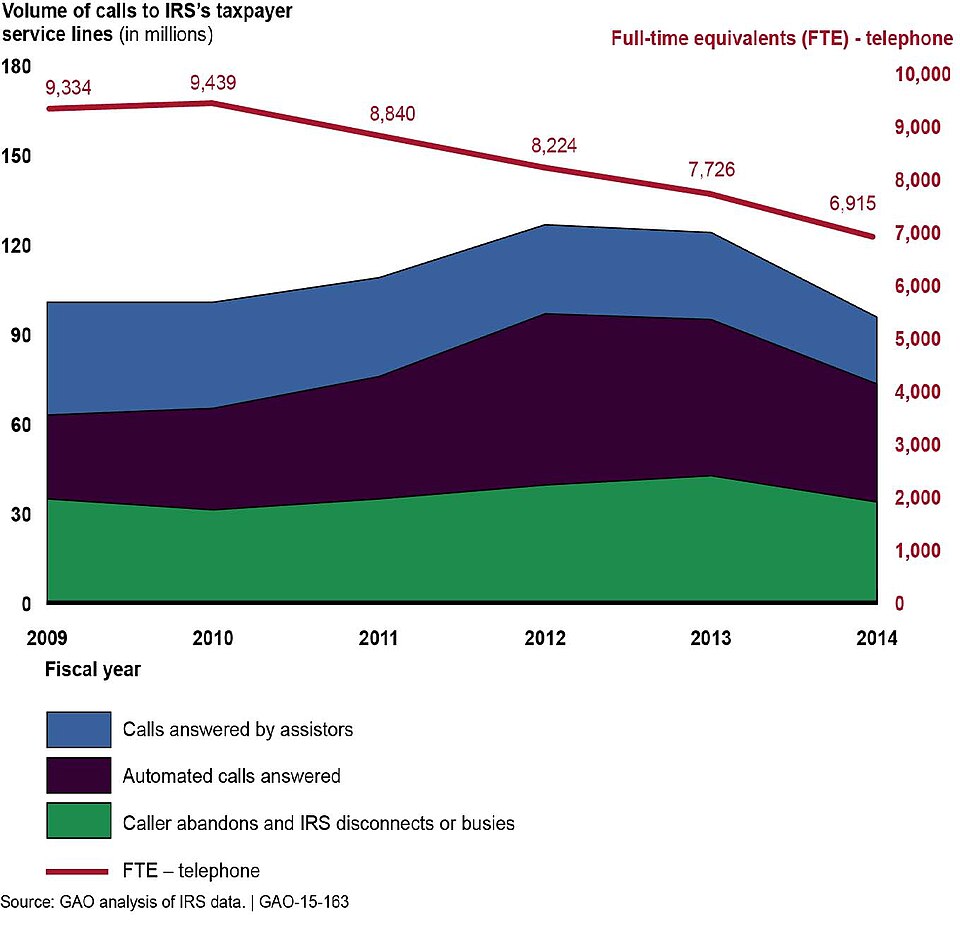
IRS workforce cuts of 27% in 2025-2026 have led to processing backlogs and reduced staffing at taxpayer assistance centers, potentially delaying refunds and increasing risks for the 2026 filing season.
IRS faces challenges in 2026 tax season due to jobs cuts and new laws — PBS NewsHour
📌 Key Facts
- IRS data through early April show the average 2026 federal tax refund is $3,462 — roughly $350 (11%) higher than the same point in 2025 — and Treasury says the average has climbed above $3,400, a 24% increase compared with the four‑year pre‑Trump average.
- Treasury/IRS report that more than 53 million filers used at least one Trump‑era/One Big Beautiful Bill Act tax break: about 6 million claimed the no‑tax‑on‑tips provision; roughly 21–25 million claimed an overtime deduction; about 30 million seniors used an enhanced deduction; about 34 million families claimed an expanded child tax credit; roughly 105 million filers used the expanded standard deduction; about 1 million deducted interest on car loans for new American‑made vehicles; and more than 5 million "Trump Accounts" were opened (≈1.2 million eligible for a $1,000 pilot contribution).
- Analysts attribute much of the refund increase to One Big Beautiful Bill Act changes — especially elimination of federal income tax on tips and the overtime deduction — but note distributional effects: Piper Sandler’s earlier estimate of up to a $1,000 average boost was a hypothetical maximum assuming every filer gets a refund, and $106 billion in retroactive relief also reduced tax bills for non‑refund filers.
- Evidence and surveys suggest benefits are uneven: higher‑income filers are more likely to report significantly larger refunds (in part because the SALT cap was raised to $40,000), a Bipartisan Policy Center survey found 62% of Americans say the tax changes harmed them or made no difference, and only 35% of Republicans say the changes favored them; analyst Don Schneider says much relief may instead be lowering taxes owed (not raising refunds) for some filers.
- State responses vary: Idaho, Iowa, Montana, North Dakota and Oregon now offer all three new deductions (tips, overtime and U.S.‑assembled auto‑loan interest); Colorado allows deductions for tips and auto‑loan interest but not overtime (it explicitly opted out); Alabama allows only the auto‑loan deduction; Arizona tax forms list the Trump‑related deductions under an executive order despite no legislative change and a subsequent gubernatorial veto, prompting warnings that taxpayers may be told to take deductions they are not yet legally entitled to — reflecting that some states automatically conform to federal changes while others require legislative action.
- Implementation strains and oversight: the IRS workforce has been cut by about 27% over the past year even as the new rules were rolled out; IRS CEO Frank Bisignano testified before the Senate Finance Committee on the filing season and Republican tax law implementation, and Democratic senators pressed IRS disclosures of confidential taxpayer information to ICE under an information‑sharing agreement.
- Household impact and how refunds are used: survey data show 14% of taxpayers report a significantly larger refund, about one‑third had tipped income or overtime, over one‑third plan to use refunds to pay down debt and about 13% plan to save; meanwhile national average gasoline prices rose to about $4.12 per gallon, and Stanford economists estimate the average household will pay roughly $740 more for gas in 2026 — about double the typical refund increase so far.
📊 Analysis & Commentary (2)
"The WSJ opinion argues that progressive, high‑tax states are driving away jobs and residents while flat‑tax reforms in lower‑tax states are producing stronger job growth, framing state tax competition as a key economic divide."
"A pro‑administration opinion piece that uses IRS refund data and details of the Trump tax law to argue the Working Families Tax Cuts are delivering broad, measurable benefits to workers, families and manufacturers by boosting take‑home pay and spurring investment."
📰 Source Timeline (6)
Follow how coverage of this story developed over time
- Treasury now reports the average refund this filing season has climbed above $3,400, an 11% increase over the prior year as of April 14.
- More than 53 million filers used at least one Trump-era tax break created by the Working Families Tax Cuts and One Big Beautiful Bill Act.
- Breakdown of uptake: about 25 million filers claimed an overtime deduction, roughly 6 million claimed a tax break on tips, an estimated 30 million seniors used an enhanced deduction, and about 34 million families claimed an expanded child tax credit.
- Roughly 105 million filers used the expanded standard deduction, and about 1 million deducted interest on car loans for new American-made vehicles.
- Treasury says more than 5 million "Trump Accounts" have been opened, including about 1.2 million accounts eligible for a $1,000 pilot contribution.
- Treasury Secretary Scott Bessent issued a new statement claiming the data show Trump’s tax policy is letting Americans "keep more of what they earn."
- On Tax Day, April 15, 2026, IRS CEO Frank Bisignano is testifying before the Senate Finance Committee on the 2026 filing season and implementation of the Republican tax law.
- Treasury now reports that more than 53 million filers have used at least one of the new tax breaks: about 6 million claimed the no‑tax‑on‑tips provision, 21 million used the overtime deduction, and 30 million seniors claimed the enhanced deduction.
- The IRS workforce has been cut by 27% over the past year due to the Department of Government Efficiency, even as the new tax system rolled out.
- Democratic senators are focusing their questioning on IRS disclosures of confidential taxpayer information to Immigration and Customs Enforcement under an information‑sharing agreement with DHS aimed at identifying and deporting people in the U.S. illegally.
- Treasury has shifted its messaging to say refunds are up 24% compared with the four‑year pre‑Trump average, after earlier White House claims that average refunds would rise by at least $1,000.
- IRS data through early April show the average 2026 refund is $3,462, about $350 (11.1%) higher than the same point last year.
- The White House had declared this would be the “largest tax refund season in U.S. history” and projected the average refund to rise by $1,000 or more, a promise current numbers are not meeting.
- A Bipartisan Policy Center survey found 62% of Americans think the tax changes either harmed them or made no difference, and only 35% of Republicans believe the changes favored them.
- Analyst Don Schneider argues evidence suggests more of the tax relief is flowing to filers who otherwise would owe at filing, which does not show up in refund averages and is less noticeable to taxpayers.
- Higher‑income filers are more likely than lower‑income filers to report significantly higher refunds, in part because the One Big Beautiful Bill Act raised the SALT deduction cap to $40,000.
- Average 2026 federal tax refund so far is $3,462, an 11% increase (around $350) from 2025, per IRS data.
- Analysts attribute much of the refund increase to new deductions in the One Big Beautiful Bill Act, especially elimination of federal income tax on tips and overtime.
- Piper Sandler’s earlier projection of up to a $1,000 average refund boost is clarified as a ‘hypothetical maximum’ assuming every filer gets a refund; $106 billion in retroactive relief also lowers tax bills for those who don’t get refunds.
- Survey data show 14% of taxpayers report a ‘significantly’ larger refund, about one-third had tipped income or overtime, over one-third plan to use refunds to pay down debt and about 13% plan to save.
- National average gasoline price has risen to $4.12 per gallon, with Stanford economists estimating the average household will pay an extra $740 for gas in 2026—roughly double the typical refund increase so far.
- Confirms which states now offer all three deductions (tips, overtime and U.S.-assembled auto-loan interest): Idaho, Iowa, Montana, North Dakota and Oregon.
- Clarifies that Colorado allows state deductions for tips and auto-loan interest but not overtime; Alabama allows only the auto-loan deduction.
- Details Arizona’s unusual situation in which state tax forms list the Trump-related deductions under a November executive order, even though the legislature has not changed state law and the governor has since vetoed related bills; experts warn Arizonans are being instructed to take deductions they are not yet legally entitled to.
- Adds explanation that some states automatically conform to federal changes unless they affirmatively opt out (as Colorado did for overtime), while most require proactive legislative updates (as Idaho did).