Trump Calls Iran War ‘Very Close to Over’ as Mediators Report ‘In Principle’ Ceasefire Extension Despite Ongoing Hormuz Blockade
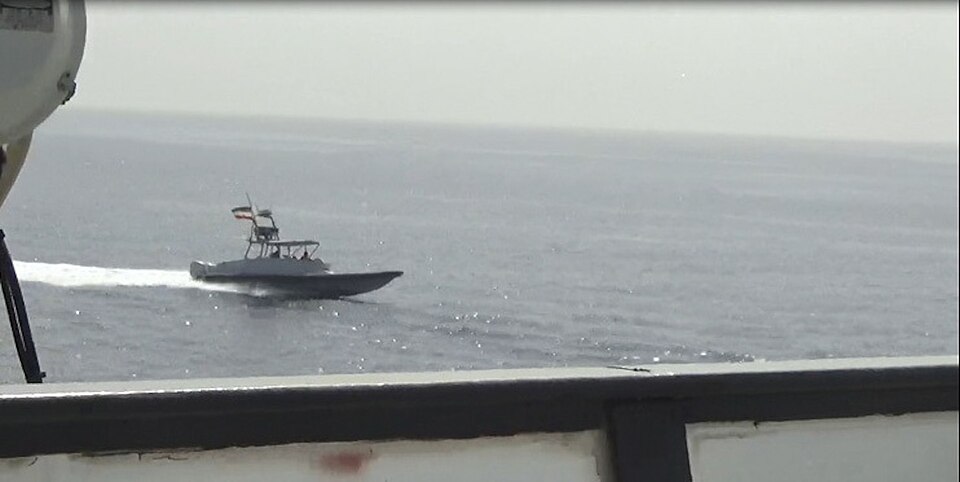
President Trump announced that U.S. forces would begin a blockade of Iranian ports and coastal areas around the Strait of Hormuz after marathon U.S.–Iran talks in Islamabad failed to produce an “affirmative” Iranian pledge not to pursue a nuclear weapon. CENTCOM set the blockade to begin at 10 a.m. Eastern Monday, saying it would bar ships entering or leaving Iranian ports while allowing transit between non‑Iranian ports, and Trump ordered forces to interdict vessels that had paid Iran’s tolls. U.S. Navy warships were reported moving into the area to clear mines and enforce the order; CENTCOM and other U.S. officials claimed several tankers and merchant vessels were turned back in the first 24–36 hours. Mediators from Pakistan and Oman meanwhile said Washington and Tehran had agreed “in principle” to extend the two‑week ceasefire beyond its April 22 expiry to allow more negotiations, a development markets reacted to after an initial oil spike (Brent near $100–$102 a barrel). The strategic stakes are high for energy‑dependent economies: about 73% of Japan’s and 70% of South Korea’s oil imports transit the Hormuz chokepoint.
Operational and diplomatic details in later reporting have fleshed out how the U.S. action overlays an existing Iranian de facto restriction on traffic—Tehran had already been selectively allowing primarily friendlier ships to pass and reportedly charging substantial fees—so the U.S. blockade does not simply reopen the strait but seeks to deny Iran revenue and control. CENTCOM emphasized limited rules of engagement and impartiality by flag, while several outlets reported U.S. destroyers interdicting tankers and mine‑clearance missions beginning; others noted allies’ reluctance to join a full blockade, with the U.K. emphasizing minesweeping and Saudi Arabia pressing the U.S. to drop the blockade. U.S. officials and analysts told The Wall Street Journal the blockade is part of a broader pressure campaign that could include limited strikes inside Iran, even as Pakistan and mediators push for a second round of talks to convert an “in principle” extension into a durable deal. Iran’s warnings of retaliation, China’s formal criticism of the U.S. move, and concerns about how long the U.S. can sustain control of Hormuz underscore the fragility of the current ceasefire.
Mainstream coverage has shifted noticeably since the initial announcement. Early reports generally presented the blockade as a direct, immediate response to the Islamabad talks’ collapse; subsequent reporting from outlets including Fox News, PBS, The Wall Street Journal and MS NOW has emphasized a more complex picture in which the blockade is also a calibrated negotiating tactic, operationally partial rather than absolute, and politically risky to sustain. Those newer pieces added detail on enforcement rules (targeting ships that paid Iran’s tolls), concrete interdictions in the first day, and growing diplomatic pressure for renewed talks, while raising skepticism about long‑term viability and potential escalation. Public reaction on social media reflected those divisions: some users celebrated the move as a win that forced Iran to yield, others warned that leaving the Hormuz issue unresolved would amount to a strategic defeat or premature end to the war, and commentators on both sides argued the blockade’s true purpose—punishment, leverage, or a bridge to renewed diplomacy—remains contested.
📊 Relevant Data
Japan and South Korea are highly dependent on oil imports through the Strait of Hormuz, with about 73% and 70% of their respective oil imports passing through this chokepoint.
Asian countries most at risk from oil and gas supply disruptions in Strait of Hormuz — Zero Carbon Analytics
📌 Key Facts
- A 21‑hour shuttle of U.S.–Iran negotiations in Islamabad led by Vice President JD Vance ended without a deal after Iran refused to give an “affirmative commitment” not to seek a nuclear weapon; U.S. demands reportedly included a 20‑year suspension of enrichment while Iran’s counterproposal included up to 5 years, retention of control over the Strait of Hormuz, cessation of attacks on its proxies, and requests for roughly $27 billion in unfrozen funds and war reparations.
- Mediators — including Pakistan and Oman, with the EU and Russia urging continued diplomacy — say Washington and Tehran have agreed “in principle” to extend the current two‑week ceasefire beyond its April 22 expiry and are discussing a second round of talks to conclude more detailed terms and verification measures.
- President Trump ordered an immediate U.S. naval blockade of Iranian ports and a partial blockade of the Strait of Hormuz (CENTCOM set the operational start at 10 a.m. ET), directing forces to seek and interdict vessels that have paid Iran’s tolls; CENTCOM says transits to and from non‑Iranian ports will be allowed, but coalition participation and the long‑term sustainability of control in Hormuz remain unclear.
- The blockade was quickly implemented: U.S. guided‑missile destroyers and other assets have been deployed for mine‑clearance and interdiction, CENTCOM reported multiple tankers/merchant ships were ordered back into Iranian waters in the first 24–36 hours, though ship‑tracking data and sanctioned tankers show some maritime traffic has continued and Iran had already been restricting passage and charging fees.
- Markets and the global economy reacted sharply — Brent crude jumped above $100 (around $102+) before later moves on ceasefire hopes; analysts warn a successful blockade could inflict roughly $435 million per day in lost Iranian trade and the IEA now projects a large near‑term drop in oil demand as high prices bite.
- The situation heightens escalation risks: Trump has renewed threats to destroy Iranian civilian energy infrastructure and said the war is “very close to over,” U.S. officials are weighing limited strikes alongside the blockade, Iran has warned any strike on energy infrastructure would be met with retaliation (including threats to broaden port closures), and U.S. leaders have threatened tariffs if China supplies weapons — allegations China denies even as U.S. intelligence probes possible transfers such as MANPADS.
- International reactions are divided: the U.K. has refused to join a blockade and is emphasizing minesweeping to reopen the strait, France and Britain plan to convene a conference for a peaceful multinational mission, China called the U.S. blockade “dangerous and irresponsible,” and Saudi Arabia has urged the U.S. to drop the blockade and return to negotiations to avoid wider maritime escalation.
- Nuclear verification and access remain central obstacles: IAEA Director General Rafael Grossi stressed that any end‑of‑war agreement must include “very detailed” verification and expanded inspector access, noting Iran’s stockpile of highly enriched uranium (reported around 440.9 kg up to 60% purity) and past limits on inspectors’ access to bombed facilities, which complicate trust and enforcement of any deal.
- The conflict continues to produce significant regional human costs and parallel fighting: updated casualty tallies cover Iran, Lebanon, Israel, Gulf states and U.S. service members (including reports of 13 U.S. fatalities), intense Israel–Hezbollah clashes in southern Lebanon have killed thousands and displaced large populations, and Israeli–Lebanese diplomatic contacts are beginning in Washington even as Lebanon was excluded from the two‑week ceasefire.
📊 Analysis & Commentary (1)
"The WSJ opinion urges the Trump administration to use the upcoming NPT Review Conference to tighten rules—especially barring non‑nuclear states from producing nuclear fuel—as a way to rally international support and legitimize tougher pressure (including potential strikes) on Iran’s nuclear program."
📰 Source Timeline (39)
Follow how coverage of this story developed over time
- Trump now says another round of peace talks with Iran could begin within days, according to CBS.
- CBS confirms some shipping continues through the Strait of Hormuz even as the U.S. enforces a blockade of Iranian ports.
- Mediators say Washington and Tehran have agreed ‘in principle’ to extend the current U.S.–Iran ceasefire beyond its April 22 expiry to allow more negotiations.
- Trump’s Fox Business interview includes explicit language that he sees the war as “very close to over” and threatens to wipe out Iranian civilian infrastructure within an hour if he chose.
- The piece quantifies regional deaths at this stage of the war and notes 13 U.S. service‑member fatalities.
- AP sources identify three core unresolved issues in mediation: Iran’s nuclear program, freedom of navigation and control in the Strait of Hormuz, and compensation for wartime damage.
- CENTCOM reports six tankers/merchant ships ordered back into Iranian waters in the first 24 hours of blockade enforcement, with none getting through.
- Oil prices dip and U.S. equities rally on expectations of a ceasefire extension and potential talks, underscoring market sensitivity to each diplomatic signal.
- Trump moves from generic assurances about the war being ‘close to over’ to saying talks with Iran might resume within two days.
- CENTCOM’s completion of the Hormuz port blockade is now a fact rather than an announced plan or partial implementation.
- The article underscores that U.S. and Iran positions remain far apart, particularly over tying an Israel–Hezbollah ceasefire into the Iran peace track.
- Confirms that in the first 24 hours of the blockade six merchant vessels were ordered by U.S. forces to turn around and re‑enter an Iranian port in the Gulf of Oman, with none passing U.S. lines.
- Details that the two oil tankers interdicted on Tuesday had departed Chabahar port before being contacted by the U.S. destroyer via radio.
- Provides CENTCOM’s explicit public claim that within less than 36 hours U.S. forces had “completely halted” sea‑borne economic trade into and out of Iran.
- Reiterates and fleshes out CENTCOM’s messaging that the blockade is “impartial” by flag and is being carried out by guided‑missile destroyers among other assets.
- Trump told Fox News the Iran war is 'very close to over' and is again voicing optimism about a potential deal to end the conflict during an active two-week ceasefire.
- Pakistan’s Prime Minister Shehbaz Sharif is undertaking a new diplomatic push, including planned visits to Saudi Arabia, Qatar and Turkey, to secure a fresh round of direct U.S.–Iran peace talks.
- Iran is publicly disputing U.S. military claims that economic trade to and from Iran by sea has been 'completely halted'; ship-tracking data show some vessels, including sanctioned tankers, are still transiting the Strait of Hormuz.
- Trump escalated his feud with Pope Leo XIV and NATO in new Truth Social posts, accusing the Iranian regime of killing 'at least 42,000' protesters in the last two months and again saying 'NATO wasn't there for us, and they won't be there for us in the future!'
- Israeli forces conducted rare strikes on vehicles in Saadiyat and Jiyeh, just south of Beirut, while Hezbollah launched around 30 rockets at 10 northern Israeli areas; Lebanese authorities say Israeli attacks have killed over 2,000 people and displaced more than 1 million since March 2.
- IAEA Director General Rafael Grossi, speaking in Seoul, said any U.S.–Iran agreement to end the war must include “very detailed” verification measures for Iran’s entire nuclear program, warning that without such provisions negotiators would have only an “illusion of an agreement.”
- Grossi emphasized that Iran’s “very ambitious, wide nuclear program” would require extensive IAEA inspector presence under any deal.
- A confidential IAEA report seen by AP in February says Iran has not allowed inspectors access to nuclear facilities bombed by Israel and the U.S. during a 12‑day June war, and the agency cannot verify whether enrichment-related activities have been suspended or the size of Iran’s uranium stockpile at those sites.
- The IAEA maintains that Iran holds about 440.9 kg of uranium enriched up to 60% purity — a short technical step from weapons‑grade — which Grossi has previously said could be enough for as many as 10 nuclear bombs if weaponized.
- Grossi underlined that such highly enriched material should normally be verified monthly under IAEA guidelines, something current access limits prevent.
- Trump told the New York Post by phone that additional U.S.–Iran discussions in Islamabad "could be happening over the next two days."
- Reports that Pakistani officials characterize the Islamabad meeting as part of an ongoing diplomatic process and not a one‑off, reinforcing the expectation of continued talks.
- Adds that a diplomat from a mediating country says Tehran and Washington have agreed to a second round of talks, with U.S. officials indicating it could occur on Thursday.
- Provides updated, cross‑theater casualty numbers for Iran, Lebanon, Israel, Gulf Arab states, and U.S. service members.
- Describes initial shipping responses to the U.S. blockade: tankers turning away from the Strait of Hormuz as the order takes effect, with at least one tanker ultimately deciding to transit.
- Names the Rich Starry tanker, notes its association with Iranian shipping per OFAC, and situates it off the UAE coast before its movements around the blockade.
- Mentions that direct talks between Israeli and Lebanese ambassadors in Washington are beginning, described as the first such negotiations in decades.
- China issued a formal statement via Foreign Ministry spokesperson Guo Jiakun blasting the U.S. blockade as 'dangerous and irresponsible' and alleging it undermines the temporary ceasefire.
- China urged all parties to honor the ceasefire and resume peace talks so that normal shipping traffic through the Strait of Hormuz can restart.
- The article includes CENTCOM’s warning that unauthorized vessels entering or leaving the blockaded zone risk interception, diversion and capture.
- Vance’s Fox News interview frames the post‑Islamabad dynamic as Iran’s move to make, with the U.S. having already set 'red lines' and 'put a lot on the table.'
- He articulates a harder‑line formulation that 'Iran cannot have the ability to enrich uranium' and that 'nuclear dust' must be removed from Iran, not just capped.
- He claims an 'uptick' in traffic through the Strait of Hormuz despite the blockade and partial closure, implying some maritime adaptation under U.S. pressure.
- The article confirms high‑level U.S.‑brokered Israel–Lebanon talks in Washington with Secretary of State Rubio participating, while Hezbollah’s Naim Qassem calls for canceling the meeting.
- It reiterates that Lebanon was explicitly excluded from the two‑week Iran cease‑fire, situating the Israel–Hezbollah fighting as a parallel theater that could destabilize the wider truce.
- Second-round Islamabad talks are now being actively considered by both parties, with Pakistan positioning the process as ongoing rather than failed.
- CENTCOM’s blockade is now operational, and at least two tankers turned back after it took effect, suggesting ships are responding to the new U.S. rules as well as to Iranian threats.
- The article confirms the ceasefire from last week is still holding even as the blockade and threats escalate rhetorically.
- Reveals that the U.S. proposal in Islamabad sought a 20‑year suspension of Iranian uranium enrichment, while Iran’s formal response offered up to 5 years.
- States that Trump rejected Iran’s 5‑year proposal, according to a U.S. official, even as officials keep discussing a second round of talks.
- Reports from Kpler and ship‑tracking data indicate that several ships from Iran, including a U.S.‑sanctioned tanker, crossed the Strait of Hormuz in the hours around the start of the U.S. port blockade.
- Adds fresh IEA projections that global oil demand this quarter will fall by 1.5 million barrels per day due to high prices from the Iran war, the sharpest drop since the pandemic.
- Supplies updated, sourced casualty tallies for Iran, Lebanon, Israel, Gulf states and U.S. service members.
- Saudi Arabia is now pressing the U.S. to drop the post-Islamabad Strait of Hormuz blockade and return to negotiations.
- Saudi officials are explicitly warning that Iran may escalate by closing Bab al-Mandeb, broadening the maritime crisis beyond Hormuz.
- JD Vance publicly rejects the framing that the Islamabad talks simply 'failed,' saying 'I wouldn't just say that things went wrong. I also think things went right. We made a lot of progress.'
- Vance says Iranian negotiators in Islamabad 'moved in our direction' but 'didn't move far enough' to finalize a deal.
- He states the delegation concluded the Islamabad team 'was unable to cut a deal' and had to 'go back to Tehran' for approval from the supreme leader or other senior authorities.
- Vance reiterates that under the cease‑fire the U.S. has 'stopped bombing the country' and expects in return a 'full reopening of the Straits of Hormuz.'
- He labels Iran’s earlier closure and threats in Hormuz as 'economic terrorism against the entire world' and frames Trump’s blockade of Iranian ports as the U.S. response: 'two can play at that game.'
- He confirms that U.S. Navy ships have been ordered to identify and flag Iran‑affiliated vessels moving through the Strait of Hormuz as part of the blockade.
- CBS confirms that the U.S. military is now 'officially' blocking off Iranian ports in the Strait of Hormuz rather than just preparing for or ordering a blockade.
- The report ties the operational start of the blockade directly to the failure of a 21-hour marathon negotiation in Pakistan over the weekend to produce a peace deal.
- CBS attributes on-the-ground updates and framing of the blockade’s start to correspondents Eleanor Watson and Fin Gómez, signaling corroborated timing from a major U.S. network.
- Provides retrospective testimony from retired Pakistani Gen. Saeed that the Islamabad talks were 'inches away' from an agreement and featured 'very friendly' interactions with mutual 'accommodation,' suggesting the breakdown was not due to total deadlock.
- Presents Saeed’s argument that the blockade may be primarily a 'maneuver' to increase pressure on Iran to come back to the table, framing it as part of a calculated negotiating strategy rather than only a response to talks failing.
- Reinforces that this was the first such high‑level, direct U.S.–Iran engagement in roughly 47 years, and emphasizes Pakistan’s belief that its military and political leadership can still act as an effective intermediary.
- The U.S. military now publicly says it will begin a blockade of all Iranian ports and coastal areas on Monday, framed as tempering Trump’s earlier vow to fully block the Strait of Hormuz.
- PBS reports that early information indicates ships had already stopped crossing the Strait of Hormuz before the blockade formally begins.
- Trump warned on social media that any Iranian warships that come 'anywhere close' to the U.S. blockade will be destroyed, sharpening the rules of engagement.
- Cease-fire talks over the weekend between the U.S. and Iran ended without agreement, with the current two-week truce set to expire April 22.
- The article notes intensified Israeli ground and air operations in southern Lebanon against Hezbollah around a strategic town, alongside ongoing rocket and drone attacks on northern Israel.
- Trump, speaking to reporters Saturday, said China would have 'big problems' if it supplies air defense systems to Iran, explicitly tying this to potential Chinese support for Tehran.
- U.S. intelligence assessments, described as not yet definitive, indicate China may be preparing to supply, or may already have supplied, man‑portable air defense systems (MANPADS) to Iran, though there is no evidence so far that such Chinese‑origin weapons have been used against U.S. or Israeli forces.
- U.S. officials believe a shoulder‑fired weapon of this general type was likely used to shoot down a U.S. F‑15E fighter jet over Iran earlier in April, the first loss of a manned U.S. aircraft in Iran in the current conflict.
- The article specifies that Trump’s warning comes ahead of a high‑stakes Trump–Xi summit in Beijing expected in May, after an earlier postponement due to the Iran conflict.
- China’s embassy in Washington formally denied the reports, stating that China 'never provides weapons to any party to the conflict' and calling the allegations untrue.
- UKMTO mariner notice quoted here specifies that the 'restrictions included the entirety of the Iranian coastline, including ports and energy infrastructure', giving sharper geographic definition than prior reporting.
- The AP report highlights that Iran has been allowing only 'some ships perceived as friendly' to pass and charging 'considerable fees,' expanding on the picture of Tehran's de facto toll regime as economic coercion.
- Article restates that about 20% of traded oil normally moves through the Strait of Hormuz and notes that Tehran’s closure has already pushed up prices on gasoline, food, and other basics 'far beyond the Middle East,' underscoring global consumer impact.
- Confirms that, after the original inconclusive 21-hour talks in Islamabad referenced in this story, Pakistan is now actively trying to organize a second round dubbed the 'Islamabad Process.'
- Clarifies that the goal of the second round is to reach a 'workable understanding' before the current cease-fire ends around April 22 to avoid renewed full-scale fighting.
- Reports that Pakistan is currently in contact with both U.S. and Iranian officials and is waiting for their replies on whether they will rejoin talks.
- Trump told Fox News’ 'Sunday Morning Futures' that if China is 'caught' supplying military aid to Iran, it would face a 'staggering' 50% tariff.
- Trump said he thinks China may have provided some aid 'at the beginning' of the conflict but claimed they would not do so now, implicitly tying behavior to his tariff threat.
- Rep. Tim Burchett, a Republican on the House Foreign Affairs Committee, publicly backed Trump’s hard line, saying China 'has an interest not to tick off' Trump and predicting he would actually impose the tariff.
- Burchett characterized the Iran regime as 'demonic' and asserted that 'the only thing they understand is total destruction,' framing Trump’s Iran policy as preventing 'World War III' despite higher gas prices.
- The piece reiterates that the U.S. blockade on the Strait of Hormuz is scheduled to take effect early Monday, with Trump describing it to Fox host Maria Bartiromo as an 'all in, all out' effort to stop Iran from selectively selling oil.
- Confirms broadcast‑news characterization that Trump 'called for a blockade of the Strait of Hormuz' immediately after the Islamabad talks collapsed, consistent with but less detailed than the existing print account of his order.
- Provides additional, albeit high‑level, commentary from a retired U.S. Navy vice admiral about potential operational and escalation risks, echoing concerns already being raised by defense analysts and market watchers online.
- CBS describes the negotiations as 'marathon peace talks in Pakistan,' aligning with but not expanding on prior reporting that Islamabad conversations ran for 21 hours and failed.
- NPR reinforces that the Islamabad talks failed specifically over Iran’s refusal to give an 'affirmative commitment' not to seek a nuclear weapon or the tools to rapidly develop one, via a direct quote from Vice President Vance.
- It adds detail that Iran is exploiting disrupted traffic by charging foreign ships up to about $2 million to pass through the Strait of Hormuz, even as some oil still flows, a figure not spelled out in the earlier piece.
- The article makes the point that Trump’s decision to begin the naval blockade at 10 a.m. ET today will likely undercut the prospects for future talks, rather than serving as a bridge back to negotiations.
- NPR’s segment connects the blockade to climbing oil prices and notes Iran feels it is in a strong negotiating position after withstanding weeks of heavy U.S. and Israeli bombing.
- Clarifies that CENTCOM has publicly scheduled the blockade start for 10 a.m. Eastern Time Monday.
- Specifies CENTCOM’s pledge not to impede freedom of navigation for vessels transiting the Strait of Hormuz to and from non‑Iranian ports.
- Adds UK Prime Minister Keir Starmer’s refusal to join the blockade and focus instead on minesweeping and reopening the Strait.
- Notes President Macron’s plan, with Britain, to organize a conference to create a 'peaceful multinational mission' in the Strait.
- Updates Brent crude to $102.24 a barrel in response to mounting tension.
- U.S. demands in Islamabad included that Iran 'hand over or sell' its highly enriched uranium stockpile, while Tehran sought $27 billion in unfrozen funds and war reparations.
- Vance, Witkoff, and Kushner are described by Trump as becoming 'very friendly' with Iran’s top three negotiators even as the talks failed, underscoring the odd mix of personal rapport and hardline positions.
- Iran’s lead negotiator, Mohammed Bagher Ghalibef, publicly accused Washington of 'excessive' demands and said the U.S. had 'failed to win Iran’s trust.'
- ISW’s analysis that only Iranian and Iranian‑approved ships are currently passing through Hormuz, highlighting the extent of Iran’s practical control over the strait before the U.S. blockade.
- Maleki’s estimate of $435 million per day in lost Iranian trade if the blockade is effective, providing a concrete sense of the economic pressure Washington is trying to generate.
- Confirmation via Trump’s Truth Social post of the exact start time and scope of the blockade on ships entering or exiting Iranian ports.
- CENTCOM clarification that U.S. forces will continue to allow transits through the Strait of Hormuz for vessels not using Iranian ports.
- On‑the‑record Iranian military statement calling the impending blockade 'illegal' and 'piracy' and threatening broader insecurity for Gulf and Arabian Sea ports if Iran’s own are targeted.
- Clarifies that from 10 a.m. Eastern Monday, U.S. forces plan to block ships entering or departing Iranian ports and coastal areas while letting vessels transit between non‑Iranian ports, adding operational detail to earlier blockade descriptions.
- Reports that Iran has already choked off most shipping through the Strait of Hormuz since late February, allowing mainly its own ships and a few others, so the U.S. action overlays Iran’s de facto closure rather than replacing open passage.
- Adds concrete oil market reaction ahead of the blockade’s start: Brent crude jumped more than 7% at the open to around $102 a barrel, after retreating following last week’s cease-fire announcement.
- Quotes a senior adviser to Iran’s supreme leader threatening 'large, untouched levers' in response to a blockade, suggesting preparations for non‑naval retaliation.
- Includes Ghalibaf’s direct appeal to American consumers, warning they will miss $4–$5 gas, which links Iran’s leverage directly to U.S. domestic pain at the pump.
- Notes Trump’s public insistence that the cease-fire is 'holding well' and his claim to be indifferent to whether Iran returns to talks, even as the U.S. moves toward a blockade and considers renewed strikes.
- Provides another major‑network confirmation that the blockade announcement followed 'a marathon round of talks' that failed over the weekend.
- Adds no new specifics on strike planning or blockade rules but reinforces that the blockade is already being publicly framed as a done decision, not merely 'vowed' or hypothetical.
- Wall Street Journal reports that oil prices rose and stock markets in Japan, South Korea and Australia fell following the collapse of U.S.–Iran peace talks.
- CENTCOM statement, as cited by WSJ, says a blockade will begin Monday morning of all maritime traffic entering and exiting Iranian ports.
- Article reiterates that President Trump and advisers are considering resuming limited military strikes in Iran, tying that prospect directly to current market moves.
- Reiterates that the public justification for the Hormuz blockade is the failure of "peace talks" in Pakistan, language that could matter for how the administration sells this to Congress and the public.
- Provides additional confirmation from a major U.S. broadcast outlet that Trump is personally framing the move as stepping up pressure on Iran immediately after negotiations collapsed.
- Provides granular timeline for Vance’s Islamabad shuttle: about an 18‑hour Air Force Two flight from Joint Base Andrews to Islamabad via Paris, negotiations beginning shortly after his arrival and running more than 16 hours over under three days.
- Names U.S. Special Envoy for Peace Missions Steve Witkoff and Jared Kushner as part of the delegation and notes that they traveled separately but joined Vance in Pakistan.
- Documents that senior Pakistani officials gave Vance a red‑carpet welcome with an honor guard and flowers, signaling Islamabad’s role and optics in hosting the talks.
- WSJ reports Trump and his advisers are considering resuming limited military strikes inside Iran as an additional tool alongside the Strait of Hormuz blockade to try to break the diplomatic stalemate.
- Officials say a resumption of a "full-fledged bombing campaign" is also on the table but is viewed as less likely, given concerns about destabilizing the region and Trump’s stated aversion to prolonged wars.
- Another option under discussion is structuring the current blockade as more temporary, while Washington pressures allies to assume long-term responsibility for naval escort missions through the strait.
- Aides insist Trump "remains open" to a diplomatic solution even as these escalation options are weighed.
- The WSJ article explicitly positions the announced blockade as a 'risky new showdown' whose core dynamic is a war of attrition between Tehran’s tolerance for economic and military pressure and global markets’ tolerance for disrupted oil flows.
- It ties the blockade order tightly to the breakdown of the 21‑hour Islamabad talks led by Vice President JD Vance, reinforcing that this was an immediate response to Iran’s refusal of U.S. nuclear terms, rather than a long‑planned step.
- It adds sourced skepticism from U.S. officials and outside analysts that, while the U.S. certainly has the capability to mount a blockade, the long‑term sustainability and political costs of maintaining control of Hormuz are in doubt.
- Confirms from Pakistani officials that the U.S. 15‑point plan includes reopening the Strait of Hormuz as a key demand, not just nuclear assurances.
- Adds that Iran’s 10‑point counterproposal centers on retaining control over the Strait of Hormuz, cessation of attacks on its proxies including Hezbollah, and war‑damage compensation.
- Provides additional on‑record quotes from JD Vance clarifying that the U.S. wants not only a verbal assurance but an 'affirmative commitment' Iran will not seek a nuclear weapon or the means for rapid breakout.
- Shows Iranian officials publicly signaling that control of the Strait of Hormuz is a red‑line issue tied to national 'rights,' reinforcing that it is not just a bargaining chip.
- Trump publicly states from Islamabad that the Navy will 'immediately' start a blockade to stop ships entering or leaving the Strait of Hormuz, going beyond prior 'plan' language.
- He specifies an enforcement rule: the Navy is to 'seek and interdict every vessel in International Waters that has paid a toll to Iran,' declaring that such ships will not have 'safe passage on the high seas.'
- The article emphasizes that other nations will participate in the blockade, though Trump does not name them, raising questions about coalition structure and legality.
- It highlights the economic stakes by recalling the strait handled about 20% of global oil supplies before the war and warning a blockade could further rattle oil and gas markets.
- The piece reiterates and contextualizes Trump’s earlier statement that 'a whole civilization will die tonight' — criticized as genocidal rhetoric — as he again threatens to 'finish up' Iran and to strike civilian infrastructure.
- It notes that Pakistani mediators, the EU, Oman and Russia are all calling for continued diplomacy or 'painful concessions,' showing immediate international reaction to both the failed talks and blockade declaration.
- Spells out that Trump is framing the blockade as denying ‘safe passage’ specifically to vessels that have paid Iran’s ‘illegal’ tolls, not an absolute halt to all shipping once his ‘all being allowed to go in, all being allowed to go out’ condition is met.
- Details that Trump is publicly characterizing Iranian toll‑collection as ‘WORLD EXTORTION,’ language likely to shape how the administration sells the campaign to allies and oil markets.
- Documents that Trump’s threats to destroy Iranian power plants and energy infrastructure were repeatedly postponed in short increments (five days, then ten days) at what he claims was Tehran’s request, suggesting a pattern of brinkmanship more than a single, one‑off decision.
- Includes Iranian responses that any U.S. strike on energy infrastructure would be treated as an attack on the Iranian people and met with retaliation, underscoring the potential for major escalation if Trump carries out his threats.
- Clarifies that the 21-hour Islamabad talks ended without agreement because, according to Trump, Iran would not provide an "affirmative" pledge not to pursue a nuclear weapon, even though he says "most points were agreed to."
- Adds that two U.S. destroyers or warships transited the Strait of Hormuz on Saturday, for the first time since the war began, to start clearing IRGC-laid mines, showing initial implementation of the blockade and mine-clearance order previously announced on Truth Social.
- Includes Trump’s televised claim that his April 7 threat to wipe out Iran’s "whole civilization" was instrumental in forcing Tehran into direct talks, and his prediction that Iran will "give us everything we want" if pressure continues.
- Provides public mediator reactions from Pakistan’s foreign minister and Oman’s foreign minister urging extension of the ceasefire and continuation of negotiations, giving a fuller diplomatic backdrop to the blockade decision.
- Features Rob Malley’s assessment that both sides believe they hold the upper hand, which he argues makes the kind of concessions needed for a deal unlikely under current conditions.