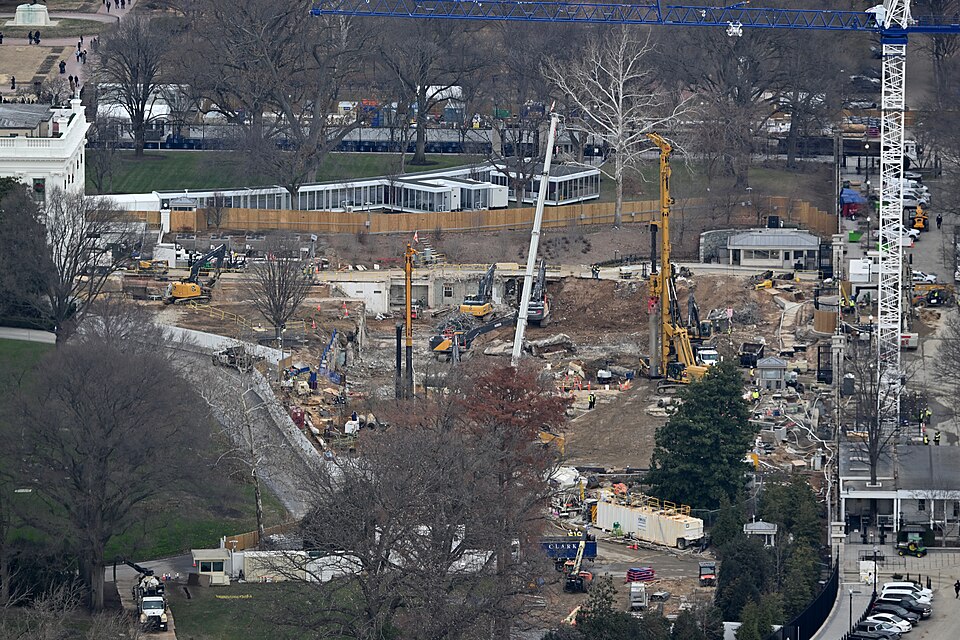
D.C. Appeals Court Pauses Injunction, Lets Trump White House Ballroom Work Continue Briefly While Ordering New Security Review
A three-judge D.C. Circuit panel ruled 2–1 late this week to pause a district court injunction and allow work on the White House East Wing ballroom to continue through April 17 while the Trump administration seeks Supreme Court review. The stay blocks Judge Richard Leon’s prior order that construction stop by April 14 “until Congress authorizes its completion,” and specifically directs Leon to revisit how his injunction’s safety-and-security exception addresses the government’s contention that the ballroom and related measures are needed to protect the president and others at the White House. The project — demolition of the East Wing began in October 2025 — is planned to create a roughly 1,000‑seat ballroom and has been reported to cost between about $300 million and nearly $400 million; the administration says the work is privately funded and that pausing construction would imperil officials’ safety, including protections against drones, missiles and biological threats.
That security rationale has shaped the appeals court’s instruction: judges asked the district court to clarify whether halting work would undercut measures the government describes as essential to safety. The claim is bolstered in part by broader trends: unmanned aircraft sightings remained elevated in 2025, with the FAA recording more than 100 reports per month near sensitive areas, a fact that feeds into arguments about drone vulnerability. Preservation and process questions continue to animate the dispute — the National Trust for Historic Preservation sued in December after demolition was completed and says it seeks broader public consultation even as it told the appeals court it had no problem with the three‑day extension — but legal defenses of the project point to historical precedents for privately funded White House work (Jacqueline Kennedy’s 1960s restoration being a notable example) and to the fact that the White House is exempt from the National Historic Preservation Act.
Coverage of the case has shifted as the litigation has progressed. Early reporting emphasized Judge Leon’s view that the administration likely lacked authority to undertake such a major alteration without congressional authorization, framing the fight as about statutory power and preservation. More recent accounts, particularly in outlets highlighting the government’s arguments, have foregrounded national‑security claims — stressing DOJ assertions that the ballroom and an underground fortified facility are needed to protect the president and others — and the appeals panel’s request that those security implications be weighed anew. Public reaction on social media has mirrored that split: some users criticized the administration for demolishing before securing approval or for adopting a defiant tone in filings, others questioned priorities given economic and national issues, and some welcomed the appeals court’s temporary allowance to continue work while courts further assess the competing legal and security questions.
📊 Relevant Data
The White House is exempt from the National Historic Preservation Act of 1966, which may impact claims that the ballroom project violates historic preservation requirements.
The decades-old exemption that lets Trump fast-track White House ballroom — BBC
Jacqueline Kennedy's restoration of the White House in the 1960s was funded through private donations and proceeds from guidebook sales, with the White House Historical Association established to raise funds for the project.
How Jackie Kennedy Transformed the White House — History.com
The East Wing of the White House was originally constructed in 1902 during Theodore Roosevelt's administration and expanded in 1942 under Franklin D. Roosevelt, without explicit mention of congressional approval in historical records.
Construction of the White House Ballroom — National Trust for Historic Preservation
In 2025, the FAA received reports of unmanned aircraft sightings remaining high, with more than 100 such reports per month, including incidents near sensitive areas.
Drone Sightings Near Airports — Federal Aviation Administration
📌 Key Facts
- A three‑judge D.C. Circuit panel ruled 2–1 to stay Judge Richard Leon’s injunction and allow construction of the White House East Wing ballroom to continue until April 17 while the Trump administration seeks Supreme Court review.
- The appeals court’s stay blocks Leon’s prior order that construction must stop by April 14 “until Congress authorizes its completion,” and it directed Leon to reconsider and clarify how his injunction’s exception for work “necessary for safety and security” should apply.
- The panel asked the district court to address the government’s claims that the ballroom and related measures are needed for protection against drones, ballistic missiles and biohazards and to weigh those national‑security concerns against other legal issues.
- Government lawyers argued that halting the project “would imperil the president and others who live and work in the White House,” told the court no taxpayer dollars are being used, and pointed to past White House expansions as precedent for proceeding without congressional approval.
- Judge Leon had earlier found the administration likely lacked legal authority to proceed without congressional approval and questioned the legality of replacing parts of the East Wing with a privately funded structure.
- Demolition of the East Wing began in October 2025 and was completed in December 2025; the planned ballroom is expected to seat about 1,000 guests and cost estimates reported range from roughly $300 million to nearly $400 million.
- Former President Trump has publicly described an upgraded, heavily fortified underground facility beneath the ballroom — including a bunker, bomb shelters, a medical unit and high‑grade bulletproof glass — which the government cites in its security justification.
- The National Trust for Historic Preservation sued in December (about a week after demolition was completed), is seeking broader public consultation on changes to the historic White House, and said it was not concerned about construction continuing the extra three days while awaiting further district‑court clarification.
📰 Source Timeline (4)
Follow how coverage of this story developed over time
- Fox article pegs the ballroom project cost at "nearly $400 million," higher than the earlier public figure of roughly $300 million.
- It reiterates that Judge Leon found the administration likely lacked legal authority to proceed without congressional approval and that he questioned the legality of replacing parts of the East Wing with a privately funded structure.
- The piece quotes DOJ’s position that no taxpayer dollars are being used and that past White House expansions (East and West Wings) did not require congressional involvement, sharpening the administration’s legal argument about precedent.
- Fox confirms the D.C. Circuit three‑judge panel’s order allows White House East Wing ballroom construction to continue until Friday, April 17, specifically to give the administration time to seek Supreme Court review.
- The panel directs District Judge Richard Leon to clarify how his injunction’s exception for work “necessary for safety and security” addresses the government’s claims that the ballroom itself and related measures are needed for protection against drones, ballistic missiles and biohazards.
- Government lawyers are quoted as arguing that halting the project 'would imperil the president and others who live and work in the White House,' while Trump has publicly described a 'heavily fortified' underground facility with bomb shelters and a medical unit being installed beneath the ballroom.
- The National Trust for Historic Preservation reiterates that it sued in December, one week after the East Wing demolition was completed, and its CEO Carol Quillen says the group awaits further clarification from the district court and is focused on broad public consultation about changes to the historic White House.
- The D.C. Circuit ruled 2–1 that construction of the White House East Wing ballroom may continue until April 17 while the Trump administration seeks Supreme Court review.
- The appeals court’s stay blocks Judge Richard Leon’s prior order that construction must stop by April 14 "until Congress authorizes its completion."
- The article specifies that the East Wing demolition began in October 2025, that the ballroom is expected to seat 1,000 guests and cost at least $300 million, and that Trump publicly described an upgraded "big complex" bunker under the ballroom protected by high‑grade bulletproof glass.
- The National Trust for Historic Preservation said it has no concern about construction continuing the extra three days and emphasized its broader goal of public consultation on the project.