D.C. Appeals Court Orders New Review of Trump White House Ballroom Halt Over Security Risks
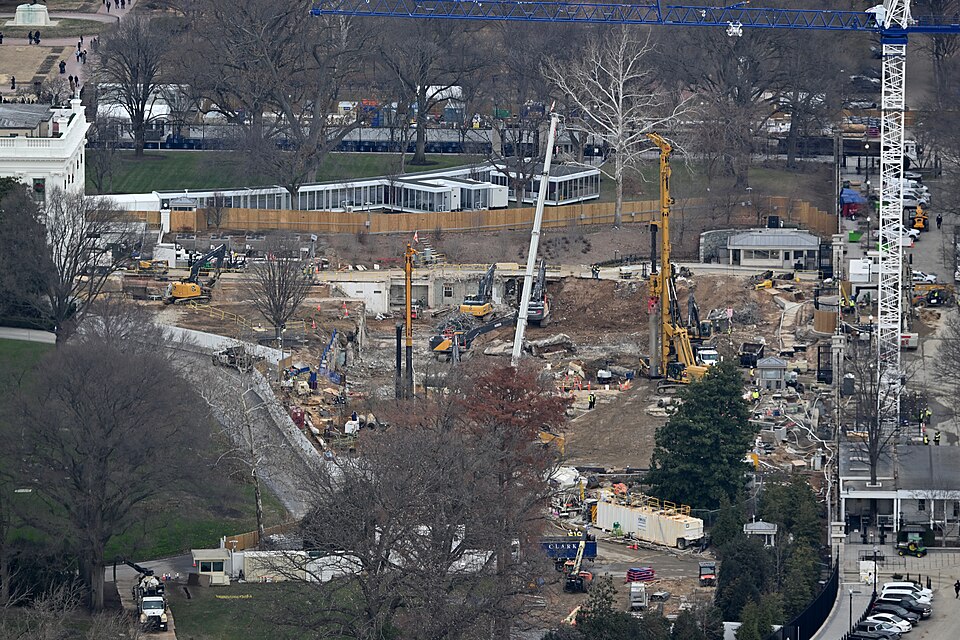
A three‑judge panel of the U.S. Court of Appeals for the D.C. Circuit has sent a lower‑court injunction blocking President Trump’s $400 million White House East Wing ballroom project back to U.S. District Judge Richard Leon, ordering him to more clearly explain how his halt affects planned security upgrades. Leon ruled March 31 that Trump likely lacks statutory authority to build the 90,000‑square‑foot ballroom without congressional approval and temporarily barred most work, while carving out activity he deemed necessary for White House safety after reviewing classified submissions. The administration argues the project includes heavily fortified underground bomb shelters, military installations and a medical facility meant to protect against drones, missiles and biohazards, and warns that halting construction "would imperil the President and others who live and work in the White House." The appeals court noted that government filings first cast the below‑ground security work as distinct from the ballroom, but now describe the security upgrades as "inseparable," leaving it unclear which elements must proceed to protect the president; it extended Leon’s stay of his own injunction through April 17 to give the administration time to seek Supreme Court review. The case, brought by the National Trust for Historic Preservation after the White House demolished the existing East Wing, has become a flashpoint over presidential control of the executive mansion, statutory limits on spending without Congress, and how broadly national‑security claims can be used to justify large building projects at the White House.
📌 Key Facts
- A D.C. Circuit three‑judge panel ordered Judge Richard Leon to reconsider and clarify the national‑security implications of his March 31 injunction halting President Trump’s White House ballroom project.
- Leon previously found the National Trust for Historic Preservation likely to succeed on its claim that Trump lacks congressional authority for the $400 million, 90,000‑square‑foot East Wing ballroom, but exempted security‑critical work after reviewing classified material.
- Government lawyers say the project includes underground bomb shelters, military installations and a medical facility designed to protect against drones, ballistic missiles and biohazards, and argue delays "would imperil" people in the White House.
- The appeals court highlighted a shift in the government’s position, from calling underground security upgrades distinct from the ballroom to now saying they are "inseparable," and extended the stay on Leon’s order to April 17 to allow a possible Supreme Court appeal.
- The National Trust sued in December after the White House demolished the existing East Wing, and key oversight bodies "stocked" with Trump allies have already granted final approvals for the ballroom.
📊 Relevant Data
The White House is exempt from the National Historic Preservation Act of 1966, which requires federal agencies to assess the impact of projects on historic properties.
The decades-old exemption that lets Trump fast-track White House ballroom — BBC
The Truman Reconstruction of the White House from 1949 to 1952 was a major renovation project that required congressional authorization and funding due to severe structural deterioration.
White House Reconstruction — Wikipedia
The $400 million White House ballroom project is funded entirely by private donations, including contributions from major technology companies such as Apple, Amazon, Meta, Microsoft, and Google.
Trump White House ballroom financed by Big Tech and publicly traded companies — CNBC
📰 Source Timeline (1)
Follow how coverage of this story developed over time