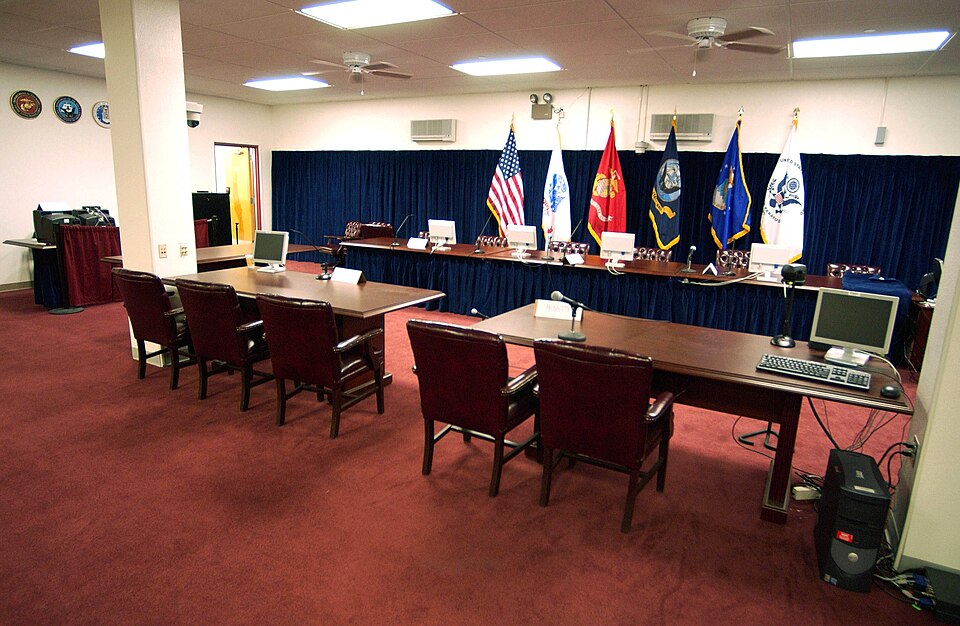
Court of International Trade Signals Skepticism of Trump’s Section 122 Global Tariffs After Supreme Court IEEPA Defeat
The U.S. Court of International Trade is hearing oral arguments over President Trump’s use of Section 122 after he imposed 10% global tariffs following the Supreme Court’s Feb. 20, 2026 IEEPA defeat; the tariffs have not been raised to 15% and are set to expire July 24, 2026 unless Congress approves an extension. Judges expressed skepticism that a large trade deficit alone qualifies as the “fundamental international payments problem” Section 122 requires, while DOJ argued the president has broad discretion and cited other indicators, and 24 state attorneys general contend the move unlawfully sidesteps the Supreme Court ruling.
📌 Key Facts
- The U.S. Court of International Trade is holding oral arguments on legal challenges to President Trump's use of Section 122 to impose global tariffs.
- Trump announced 10% global tariffs under Section 122 immediately after the Supreme Court's Feb. 20, 2026 IEEPA defeat; he has not increased them to the statute's 15% cap.
- Statutory context: Section 122 authorizes up to 15% global tariffs for 150 days to address 'fundamental international payments problems'; the current tariffs are scheduled to expire July 24, 2026 unless extended by Congress.
- The central legal question is whether trade deficits alone qualify as 'fundamental international payments problems' or a 'large and serious' balance‑of‑payments deficit under Section 122.
- Judges on the three‑judge Court of International Trade panel repeatedly expressed skepticism that a large, persistent trade deficit by itself satisfies Section 122’s statutory standard; one judge directly challenged DOJ lawyer Brett Shumate on that point.
- The Justice Department defended the tariffs by arguing Congress gave the president broad discretion to identify qualifying balance‑of‑payments problems and cited indicators the administration used (including the current account deficit and the net international investment position); earlier DOJ filings had said Section 122 had 'no obvious application' to trade deficits, reflecting a shift in position.
- The lawsuit was brought by 24 state attorneys general, who say the Section 122 action was an illegal attempt to sidestep the Supreme Court’s IEEPA ruling; challengers’ counsel Jeffrey Schwab argued the administration’s reading of Section 122 would let a president impose such tariffs 'at any point, at any moment...forever.'
📊 Relevant Data
Section 122 of the Trade Act of 1974 has not been invoked by any U.S. president prior to Donald Trump's use in 2026 to impose global tariffs, marking its first application since enactment in 1975.
Section 122 of the Trade Act of 1974 Isn't for Trade Deficits, ... — Yale Journal on Regulation
The U.S. trade deficit is primarily caused by domestic demand for imports outpacing export sales, driven by factors such as a strong dollar and low national savings rates relative to investment needs, with recent data showing the goods and services deficit averaging $61.1 billion monthly in early 2026.
Why Does the U.S. Always Run a Trade Deficit? — Liberty Street Economics (Federal Reserve Bank of New York)
Tariffs imposed since 2025 have led to job losses in U.S. manufacturing, with net employment declines in most sub-sectors between December 2023 and December 2025, disproportionately affecting industries where White workers comprise 72% of the workforce (compared to 60% of the U.S. population), male workers 70% (vs. 48% population), and noncitizens 15% (vs. 7% population).
Tariff costs impact industries with mostly White, male, and noncitizen workers — Washington Center for Equitable Growth
Recent tariffs have increased consumer prices for necessities, disproportionately burdening Black (13% of population) and Latino (19% of population) households, who spend a higher share of income on affected goods, with studies estimating an additional $700 average annual cost per U.S. household in 2026.
The Hidden Burden: How Tariffs Hurt Marginalized Communities and Lower-Income Americans — U.S. Resist News
Tariffs since 2025 have been associated with a slowdown in U.S. job growth, potentially costing 19,000 additional monthly jobs and increasing unemployment by 0.1 percentage points, with evidence of depressed employment levels due to trade policy uncertainty.
Tariffs may have cost US economy thousands of jobs monthly, Fed analysis reveals — Fox Business
📰 Source Timeline (3)
Follow how coverage of this story developed over time
- Judges on the three‑judge Court of International Trade panel repeatedly questioned whether a large, persistent trade deficit alone can qualify as a 'large and serious' balance‑of‑payments deficit under Section 122.
- One judge explicitly challenged DOJ lawyer Brett Shumate, saying, "Are you really saying that a large trade deficit alone is sufficient? I don’t think it is, and I think Congress didn’t think it is."
- DOJ attorney Brett Shumate argued that Congress gave the president broad discretion to decide what constitutes a qualifying balance‑of‑payments problem and cited additional indicators Trump relied on, including the current account deficit and the net international investment position.
- Challengers’ lawyer Jeffrey Schwab told the court the administration’s reading of Section 122 is 'very, very, very broad' and would let a president impose such tariffs 'at any point, at any moment that he wants, forever.'
- The article clarifies that the case was brought by 24 state attorneys general who argue Trump’s Section 122 move was an illegal attempt to sidestep the Supreme Court’s February ruling against his use of IEEPA for 'Liberation Day' tariffs, and that DOJ now says Trump could have invoked Section 122 earlier as an alternative legal basis.
- Confirms that the U.S. Court of International Trade is now hearing oral arguments on the Section 122 tariff challenges.
- Details that Trump imposed 10% global tariffs under Section 122 immediately after the Supreme Court’s Feb. 20, 2026 IEEPA defeat and has not yet increased them to 15%.
- Clarifies that the Section 122 tariffs are scheduled to expire on July 24, 2026, unless extended with congressional approval.
- Explains statutory context that Section 122 allows up to 15% global tariffs for 150 days to address 'fundamental international payments problems.'
- Highlights that the dispute centers on whether trade deficits qualify as 'fundamental international payments problems' under Section 122.
- Notes that Trump’s own Justice Department previously argued Section 122 had 'no obvious application' to trade deficits, while the same trade court earlier suggested Section 122 was available for that purpose.