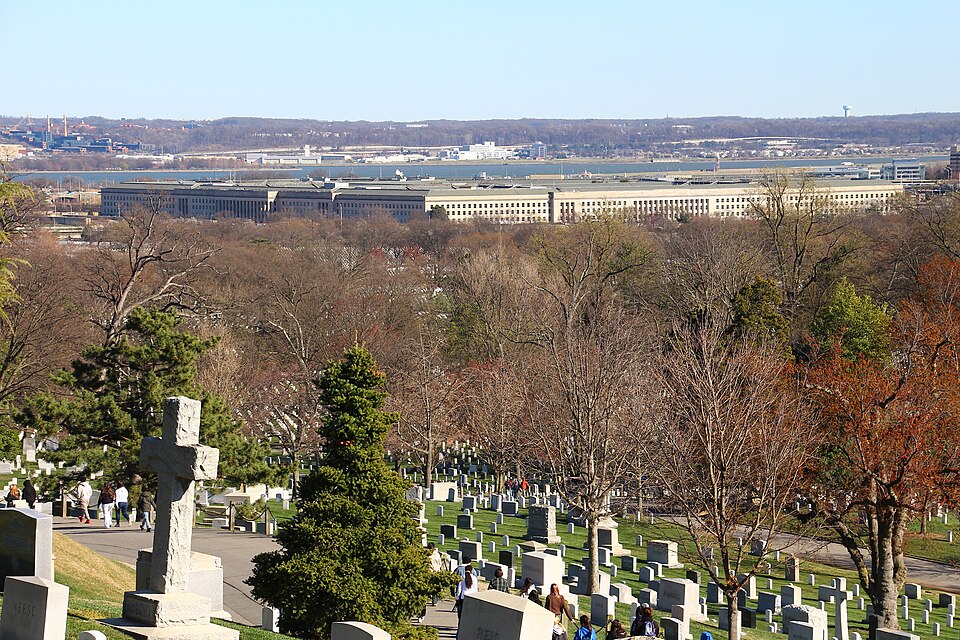
Trump Budget Seeks $1.5 Trillion Defense, 10% Cut to Nondefense Spending
The Trump budget requests a $1.5 trillion Pentagon FY2027 appropriation — the largest such request in decades — while calling for a 10% cut to nondefense discretionary spending, a reduction the White House says would come from shifting responsibilities such as Medicaid, Medicare and child care to state and local governments. That proposal departs from a long-running near‑parity between defense and domestic discretionary budgets (roughly $1 trillion each) and focuses on the relatively small discretionary slice of federal spending, since about two‑thirds of outlays are locked into mandatory programs.
📌 Key Facts
- The administration’s budget includes a $1.5 trillion Pentagon request for FY 2027 — the largest such defense request in decades.
- The White House frames the proposal as pairing that defense increase with roughly a 10% cut to nondefense discretionary spending, saying some reductions would come from 'shifting some responsibilities to state and local governments.'
- President Trump privately said, 'We’re fighting wars. We can’t take care of day care,' arguing that Medicaid, Medicare and day care responsibilities should be shifted to the states.
- By contrast, the roughly $7 trillion annual federal budget has historically kept defense and domestic discretionary spending closer to parity (about $1 trillion each), so the new request represents a sharp departure from that pattern.
- About two‑thirds of federal spending (Medicare, Medicaid, Social Security) is mandatory or effectively on autopilot, meaning the political fights over this budget will center on the smaller discretionary accounts targeted for cuts and reallocation.
📊 Relevant Data
As of December 2024, 21.4% of active-duty Army soldiers were Black or African American, compared to approximately 13.6% of the U.S. population being Black, indicating overrepresentation in the Army.
How many people are in the US military? A demographic overview — USA Facts
In 2023, Black individuals made up 18.4% of Medicaid/CHIP enrollees, compared to 13.6% of the U.S. population, while Hispanics comprised 31.5% of enrollees versus 19% of the population, showing overrepresentation in reliance on these programs.
Medicaid/CHIP enrollees share by ethnicity U.S. 2023 — Statista
In a 2023 survey, 37% of African Americans supported increasing defense spending, compared to 28% who supported cutting it back, with variations in views on military priorities across racial groups.
Two Sides to African American Views on U.S. Defense and Security Issues — Carnegie Endowment for International Peace
📰 Source Timeline (2)
Follow how coverage of this story developed over time
- Confirms via AP/PBS that the $1.5 trillion figure is specifically the Pentagon’s FY 2027 request, characterized as the largest such request in decades.
- Restates and foregrounds Trump’s private White House quote: “We’re fighting wars. We can’t take care of day care,” explicitly tying it to his argument that Medicaid, Medicare and day care should be shifted to the states.
- Provides additional structure detail: notes that historically, the roughly $7 trillion annual federal budget has kept defense and domestic discretionary spending closer to parity at about $1 trillion each, highlighting how far the new request departs from that pattern.
- Reiterates that the White House summary frames the 10% nondefense cut as being achieved by 'shifting some responsibilities to state and local governments.'
- Clarifies that about two‑thirds of federal spending (Medicare, Medicaid, Social Security) is effectively on autopilot and that political fights center on the remaining discretionary accounts Trump is targeting.