Trump FY 2027 Budget Seeks $1.5 Trillion Defense, 10% Nondefense Cut, and $152 Million to Begin Reopening Alcatraz Prison
President Trump’s FY2027 budget seeks $1.5 trillion for defense—a roughly 42% increase implemented via a two‑track plan (about $1.2 trillion through regular appropriations and $350 billion via reconciliation)—that would fund troop pay raises, new ships and munitions, and space‑based missile defense, while proposing an average 10% cut to nondefense discretionary programs by shifting responsibilities to states and omitting standard debt/deficit tables pending later release. The blueprint also details targeted domestic trims (including to NIH, refugee resettlement, Unaccompanied Alien Children programs and TSA screening), would still raise overall federal outlays by roughly $288 billion, and includes $152 million to begin reopening Alcatraz as a “state‑of‑the‑art” prison—a proposal denounced by critics such as Nancy Pelosi.
📌 Key Facts
- The Trump administration formally released its FY 2027 budget on April 3, 2026, asking for a $1.5 trillion defense topline — the Pentagon’s FY2027 request — described as the largest such request in decades and roughly a 42% increase over prior levels, with comparisons to historic pre–World War II and Reagan‑era buildups.
- The plan uses a two‑track funding approach: about $1.2 trillion through the regular appropriations process and roughly $350 billion sought via a reconciliation bill intended to bypass a Democratic filibuster, a strategy GOP leaders warned could be logistically difficult.
- Specific defense funding priorities include a 5–7% pay raise for troops, $65.8 billion for new ships and munitions replenishment related to the Iran war, and support for a proposed 'Golden Dome' space‑based missile defense system; the large military ask is being rolled out against the backdrop of the Iran war, energy concerns and ongoing Russian attacks in Ukraine.
- The budget calls for an approximately 10% cut to nondefense discretionary programs, framed by the White House as 'shifting some responsibilities to state and local governments,' while leaving most mandatory 'autopilot' programs (Medicare, Medicaid, Social Security) intact.
- Selected domestic cuts and reallocations detailed in the request include: $5 billion from the NIH, $768 million from refugee resettlement, $819 million from the Unaccompanied Alien Children program, $356 million from the Administration for Strategic Preparedness and Response, a $52 million cut tied to beginning privatization of screening at smaller airports, and simultaneous increases such as $481 million for air‑traffic control/aviation safety and $605 million for National Guard mobilizations in Washington, D.C.
- Despite the proposed 10% reductions in domestic discretionary programs, overall federal spending would still rise by roughly $288 billion under the blueprint; the plan also envisions a sharp 15% reduction in defense outlays in 2028 after the 2027 surge, with spending then frozen under $1.4 trillion and declining to about 2.6% of GDP over the longer term.
- The budget document omitted standard tables showing projected national debt, annual deficits and mandatory‑program projections (Social Security, Medicare); the Office of Management and Budget acknowledged the omission and said those figures will be published later in 2026.
- Political reactions were sharply divided: Republican defense hawks (including Sen. Lindsey Graham, Sen. Roger Wicker and Rep. Mike Rogers) praised the proposal as historic and pledged to advance it, while Democrats (led by Sen. Chuck Schumer) vowed to fight the budget; Senate Majority Leader John Thune cautioned that additional reconciliation work would be 'hard and cumbersome.'
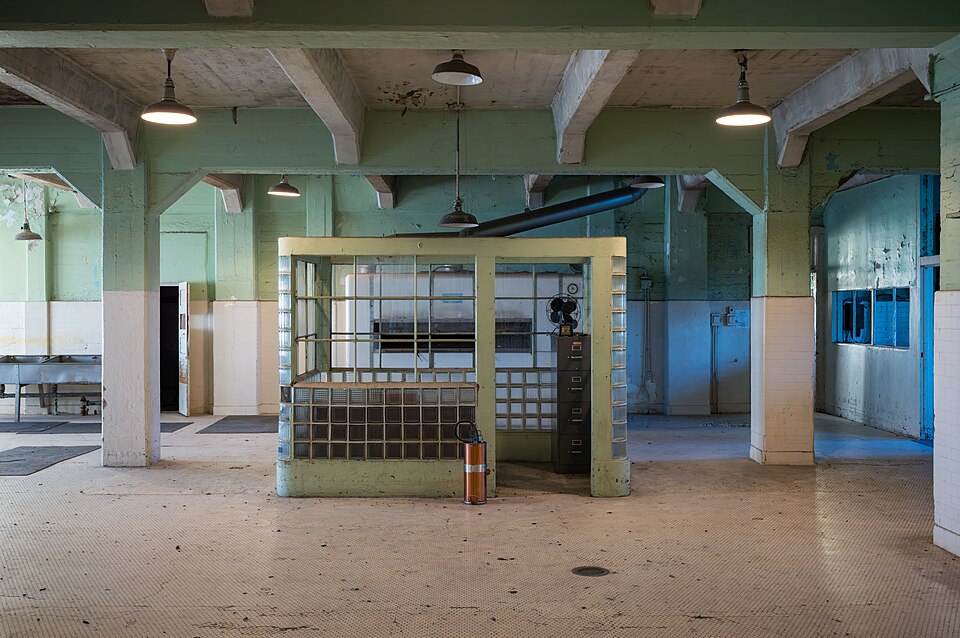
- The request includes $152 million in initial funding to begin reopening and rebuilding Alcatraz as a 'state‑of‑the‑art secure prison'; Trump has directed the Bureau of Prisons, DOJ and other agencies to explore using Alcatraz to house what he called the nation’s 'most ruthless and violent offenders.' Alcatraz is currently operated by the National Park Service as a tourist site and has been closed as a federal prison since 1963 (in part because it was far more expensive to run than other federal prisons); former House Speaker Nancy Pelosi publicly denounced the proposal as a 'stupid notion' and a 'waste of taxpayer dollars.'
📰 Source Timeline (6)
Follow how coverage of this story developed over time
- The FY 2027 Trump administration budget request includes $152 million in initial funding to begin reopening and rebuilding Alcatraz as a "state-of-the-art secure prison facility."
- Trump previously directed the Bureau of Prisons, DOJ and other agencies to explore reopening and expanding Alcatraz to hold what he calls America’s "most ruthless and violent offenders."
- Former House Speaker Nancy Pelosi publicly denounced the proposal in a post on X, calling it a "stupid notion" and "a waste of taxpayer dollars" that turns a public historic museum into a political prop.
- Alcatraz is currently operated by the National Park Service as a tourist site and has been closed as a prison since 1963, in part because it was nearly three times more expensive to run than other federal prisons.
- PBS reiterates that President Trump is asking for $1.5 trillion in defense spending for the upcoming fiscal year, consistent with the previously reported topline.
- The segment folds that request into a same‑day wrap with fresh March jobs data and Iran‑war‑related energy concerns, reinforcing that the large defense ask is being rolled out against a backdrop of war‑driven fuel spikes and public anxiety.
- Ukrainian officials are cited saying Russian airstrikes killed at least eight people in what President Zelenskyy called an 'Easter escalation,' underscoring that the U.S. budget and Iran war are unfolding alongside continued Russian attacks in Ukraine.
- Confirms the formal release timing of the FY 2027 Trump budget on Friday, April 3, 2026, with a $1.5 trillion defense topline and an approximately 42% increase over prior levels.
- Details the two‑track funding structure: about $1.2 trillion for defense through the regular appropriations process and another $350 billion sought via a budget reconciliation bill intended to bypass a Democratic filibuster.
- Reports that the budget document omits standard tables on expected national debt, annual deficit and mandatory spending for programs like Social Security and Medicare, with OMB acknowledging the omission and saying those figures will be published later in 2026.
- States that, despite 10% cuts to domestic programs and specific trims such as medical research, environmental programs and a plan to privatize TSA, overall federal spending would still rise by roughly $288 billion under the proposal.
- Quotes Republican defense hawks, including Senate Budget Chairman Lindsey Graham, Sen. Roger Wicker and Rep. Mike Rogers, praising the plan as historic and pledging to move it, while Senate Minority Leader Chuck Schumer vows Democrats will "fight this budget, tooth and nail."
- Adds that the blueprint envisions a sharp 15% reduction in defense outlays in 2028 after the war‑driven 2027 surge, with spending then frozen at under $1.4 trillion and declining as a share of GDP to around 2.6% over the longer term.
- Notes that Senate Majority Leader John Thune describes additional reconciliation work as "hard and cumbersome" after last year’s tax‑and‑spending fight, highlighting internal GOP concerns about the logistics of the two‑track approach.
- Confirms the proposed $1.5 trillion defense budget represents a 42% increase and, according to a White House summary, would approach historic pre–World War II buildup levels and exceed the Reagan-era increase.
- Details that the defense increase would fund a 5–7% pay raise for troops, $65.8 billion for new ships and munitions replenishment for the Iran war, and support development of a 'Golden Dome' space-based missile defense system.
- Spells out specific domestic cuts: $768 million from the refugee resettlement program, $819 million from the Unaccompanied Alien Children program, $5 billion from the National Institutes of Health, and $356 million from the Administration for Strategic Preparedness and Response.
- Specifies that the budget would cut $52 million from TSA by beginning privatization of screening at smaller airports while boosting air-traffic control and aviation safety spending by $481 million and funding $605 million for National Guard mobilizations in Washington, D.C.
- Includes Trump’s Easter luncheon comments explicitly arguing that the federal government should focus on 'military and war' and shift daycare, Medicaid, Medicare and similar programs to state and local governments that would 'raise their taxes' while the federal government could 'lower our taxes a little bit to them to make up for' it.
- Confirms via AP/PBS that the $1.5 trillion figure is specifically the Pentagon’s FY 2027 request, characterized as the largest such request in decades.
- Restates and foregrounds Trump’s private White House quote: “We’re fighting wars. We can’t take care of day care,” explicitly tying it to his argument that Medicaid, Medicare and day care should be shifted to the states.
- Provides additional structure detail: notes that historically, the roughly $7 trillion annual federal budget has kept defense and domestic discretionary spending closer to parity at about $1 trillion each, highlighting how far the new request departs from that pattern.
- Reiterates that the White House summary frames the 10% nondefense cut as being achieved by 'shifting some responsibilities to state and local governments.'
- Clarifies that about two‑thirds of federal spending (Medicare, Medicaid, Social Security) is effectively on autopilot and that political fights center on the remaining discretionary accounts Trump is targeting.