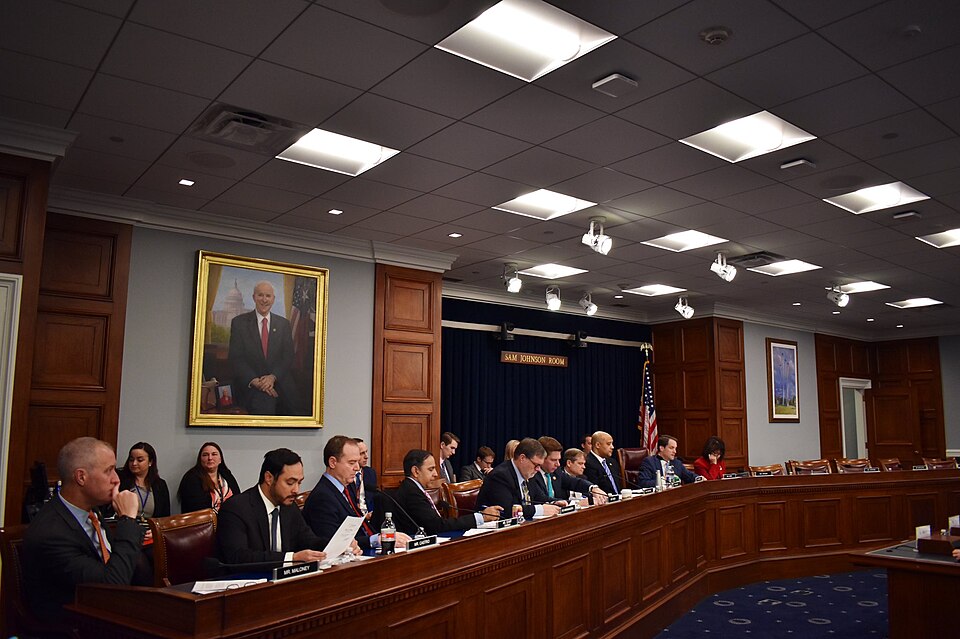
Hegseth’s First Public Iran War Testimony Tentatively Set for April 29 Amid Bipartisan Oversight Demands
CBS reports Pete Hegseth is tentatively slated to give his first public testimony on the Iran war before the House Armed Services Committee on April 29, though the date could shift. Lawmakers from both parties—after a classified briefing that members said left them with “more questions than answers”—accuse the Pentagon of being “very constrained” and “tight‑lipped” about strategy and troop movements for roughly 50,000 U.S. forces, and Democrats have formally demanded an immediate public hearing amid concerns about shifting objectives, a potential $200 billion supplemental, possible ground‑force use and related economic fallout; Speaker Mike Johnson says he is being “constantly briefed” and will ensure committee access.
📌 Key Facts
- A House Armed Services Committee hearing for Hegseth is tentatively scheduled for April 29 but could shift, according to two unnamed sources.
- After a classified briefing, Chair Mike Rogers and Ranking Member Adam Smith said the Pentagon was "very constrained" and "tight-lipped" and committee members did not receive clear answers on strategy or troop movements; Rep. Jason Crow warned there are "more questions than answers" about protection for roughly 50,000 U.S. troops and called the situation "very volatile."
- All House Armed Services Committee Democrats, led by Adam Smith, sent a Friday letter demanding an immediate public hearing, citing a "lack of transparency," shifting objectives, potential use of ground forces, and an estimated supplemental cost that could reach $200 billion.
- Speaker Mike Johnson downplayed concerns about information flow, saying he is being "constantly briefed" and will work to ensure Rogers receives needed information.
- The reporting links the prolonged conflict and lack of a clear endgame to rising U.S. gasoline prices above $4 per gallon and broader market turmoil.
📊 Relevant Data
Black households spend 43% more of their income on energy costs compared to White households, while Hispanic households spend 20% more.
Report: Low-Income Households, Communities of Color Face High 'Energy Burden' — ACEEE
Black and Latino households pay 13-18% more on average for energy per square foot of housing compared to White households.
Race, rates, and energy insecurity: exploring racial disparities in energy rates — Nature
Households in majority African American census tracts pay an average of 5.1% of their income for energy.
National study finds energy bills hit minority households the hardest — Binghamton University
In 2023, 68.8% of active-duty U.S. military members self-identified as White, while 31.2% identified as racial minorities.
Department of Defense 2022 Demographic Profile — USNI News
Black Americans are overrepresented in U.S. military service relative to their population share, particularly among men.
Black Americans are much more likely to serve the nation, in military and civilian roles — Brookings Institution
📰 Source Timeline (2)
Follow how coverage of this story developed over time
- CBS reports the April 29 House Armed Services Committee hearing is still tentative and could shift, citing two unnamed sources.
- New, on‑the‑record quotes from Chair Mike Rogers and Ranking Member Adam Smith after a classified briefing describe the Pentagon as "very constrained" and "tight-lipped" and say members did not get clear answers on strategy or troop movements.
- Rep. Jason Crow publicly warns there are "more questions than answers" regarding protection for roughly 50,000 U.S. troops in the region and calls the situation "very volatile."
- A Friday letter from all House Armed Services Committee Democrats, led by Adam Smith, formally demands an immediate public hearing, citing a "lack of transparency," shifting objectives, possible $200 billion supplemental costs, and potential ground-force use.
- Speaker Mike Johnson downplays concerns about information flow, saying he is being "constantly briefed" and will work to ensure Rogers gets what he needs.
- The article explicitly links the prolonged conflict and lack of clear endgame to rising U.S. gasoline prices above $4 per gallon and broader market turmoil.