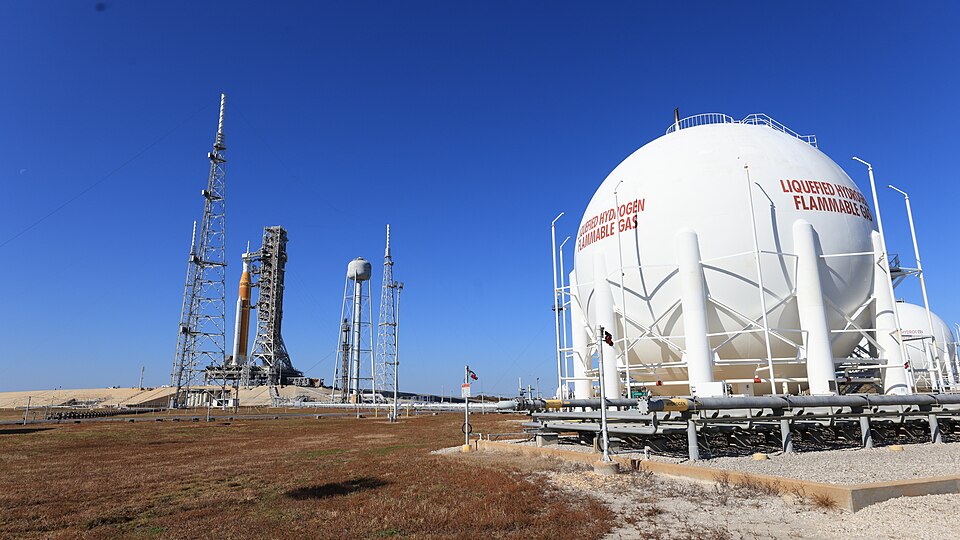
NASA Artemis II Set for April 1 Crewed Lunar Fly‑Around After Rollback Fixes and Schedule Shift for Moon Landing
NASA's Artemis II is set to lift off Wednesday, April 1, 2026, with a two‑hour window opening at 6:24 p.m. ET for a roughly 9–10‑day crewed lunar fly‑around: commander Reid Wiseman, Christina Koch, Victor Glover and Canadian Jeremy Hansen will follow a figure‑eight free‑return trajectory that will take them about 4,000–6,000 miles beyond the Moon (setting a new human distance record), with forecasters currently giving about an 80% chance of acceptable weather and multiple April launch opportunities available. The mission follows a February rollback to the Vehicle Assembly Building to fix hydrogen leak and upper‑stage pressurization problems that engineers say are resolved, and NASA has reshuffled its cadence so the first crewed Moon landing is now slated for Artemis IV in 2028 while Artemis III will focus on in‑orbit lander testing.
📌 Key Facts
- NASA is targeting liftoff for Artemis II in a two‑hour window opening Wednesday, April 1 at 6:24 p.m. ET (with a backup window Thursday and multiple launch opportunities through April 6 within a roughly six‑day primary window).
- The official countdown began March 31; cryogenic tanking/fueling started the morning of April 1 loading roughly 756,000–760,000 gallons of propellant in total (core stage about 537,000 gallons LH2 and 196,000 gallons LOX; the upper stage roughly 17,000 gallons LH2 and 5,000 gallons LOX).
- The four‑person crew is commander Reid Wiseman, Victor Glover, Christina Koch and Canadian Jeremy Hansen — marking the first lunar mission to include a woman, a person of color and a non‑U.S. citizen on a lunar fly‑around.
- Artemis II is a roughly nine‑ to ten‑day, non‑orbiting lunar fly‑around / free‑return test (a figure‑eight trajectory) that will pass several thousand miles above the Moon, send the crew farther from Earth than previous missions (reports cite ~252,799 miles at peak), then return for a Pacific splashdown around April 10 off Southern California.
- The flight is SLS’s first crewed mission and Orion’s first crewed flight (the capsule named Integrity) and is explicitly a dress‑rehearsal test with contingency plans ranging from early return to a full nine‑day lunar loop.
- NASA rolled the full stack back to the Vehicle Assembly Building in February to fix hydrogen‑leak and helium‑pressurization issues; engineers completed repairs, returned the vehicle to the pad about 1½ weeks before launch, and say the problems have been resolved with recent pretest briefings described as very clean.
- Officials and forecasters report the launch team is largely ready and technical problems are not expected to block a launch; weather officers place the chance of favorable conditions at about 80%, with high winds and clouds the main concerns.
- Agency planning and coverage frame Artemis II as the opening step in a multi‑year, roughly $20 billion Artemis build‑out; NASA has adjusted the cadence so Artemis III will focus on testing lunar‑lander operations (in LEO) and the first crewed landing is now targeted for Artemis IV in 2028.
📊 Relevant Data
In 2021, fewer than 20% of Black or African American students who earned bachelor's degrees studied STEM fields, compared to nearly 40% of Asian students.
Race and Ethnicity in Higher Education: 2024 Status Report Executive Summary — American Council on Education
In 2021, fewer than 20% of Hispanic or Latino students who earned bachelor's degrees studied STEM fields, compared to nearly 40% of Asian students.
Race and Ethnicity in Higher Education: 2024 Status Report Executive Summary — American Council on Education
Since its inception through 2025, NASA has selected 370 astronaut candidates, of which 61 were women (16.5%), compared to women comprising approximately 50% of the U.S. population.
Astronauts — NASA
NASA's 2025 astronaut class is the first in 40 years without any Black recruits, highlighting ongoing challenges in diversity recruitment.
NASA astronaut class appears to be first without Black recruits in 40 years — Mashable
📊 Analysis & Commentary (2)
"A personal, pro‑exploration commentary that connects the imminent Artemis II moon mission to feelings of cosmic perspective, generational curiosity, and the enduring cultural importance of returning humans to the moon despite program delays."
"An opinion piece taking the NASA Artemis II launch as evidence that the U.S. is serious about returning humans to lunar space — praising the mission’s symbolic and technical gains and crew diversity while warning against political hype, ongoing delays, cost pressures and the need for sober, sustainable program management."
📰 Source Timeline (17)
Follow how coverage of this story developed over time
- CBS segment focuses on the four-person Artemis II crew making final preparations to board the Orion capsule ahead of launch.
- It emphasizes that the boarding and launch are now imminent, framed as the last phase before liftoff for the mission around the Moon.
- Confirms Artemis II’s two-hour launch window opens Wednesday at 6:24 p.m. ET, with a backup window Thursday at 7:22 p.m. ET.
- Describes Artemis II explicitly as a roughly 10‑day lunar flyby ‘dress rehearsal’ comparable to Apollo 8 and 10, with three Americans and one Canadian on board.
- Clarifies that NASA has ‘rejiggered’ the schedule so Artemis III will test SpaceX and/or Blue Origin lunar landers in low Earth orbit, with the first crewed Moon landing now targeted for Artemis IV in 2028.
- Includes on‑record comment from NASA Chief Historian Brian Odom that the mission “signals a picking up where we last left off,” reflecting NASA’s own framing of Artemis II’s historical significance.
- Reiterates that the full ‘stack’ had to be rolled back to the Vehicle Assembly Building in February to fix technical issues, underlining the recent pre‑launch troubleshooting.
- NASA began loading more than 700,000 gallons of hydrogen and oxygen propellant into the SLS on April 1, 2026, hours before an evening liftoff, with live coverage starting at 12:50 p.m. EDT.
- Commander Reid Wiseman posted on X on the eve of launch, saying "It is time to fly," underscoring NASA’s go‑for‑launch posture after previous hydrogen‑leak delays.
- The mission profile is described as a non‑stopping, non‑orbiting lunar fly‑around that will take the crew about 4,000 miles beyond the Moon before a U‑turn and Pacific splashdown, setting a new human distance record.
- The article notes that Christina Koch and Victor Glover are slated to be the first woman and first Black astronaut, respectively, destined for the Moon, and that Canadian astronaut Jeremy Hansen will be the first non‑U.S. citizen to launch on a lunar mission.
- King Charles III sent a letter to Hansen calling him a "bridge between nations and generations," and NASA Administrator Jared Isaacman posted that "The next era of exploration begins" on X, reflecting international and institutional framing of the launch.
- CBS piece reiterates that Artemis II is expected to launch Wednesday evening, conditional on weather.
- It emphasizes the mission profile in plain terms: a nine-day flight looping around the Moon’s far side and returning to Earth, framed as going farther from Earth than any prior human crew.
- It focuses on current preparations and the countdown rather than technical fueling details.
- Launch team has completed the initial poll and approved beginning fueling ('tanking') of the Space Launch System rocket.
- Tanking is scheduled to start at 8:29 a.m. EDT, loading about 756,000 gallons of cryogenic propellants into SLS.
- Breakdown of propellant loads: core stage to receive roughly 537,000 gallons of liquid hydrogen at –423°F and 196,000 gallons of liquid oxygen at –297°F; the upper stage to receive about 17,000 gallons of LH2 and 5,000 gallons of LOX.
- NASA Administrator Jared Isaacman (as quoted here) calls Artemis II an "extremely challenging" test flight and says the crew will go farther and potentially faster than any humans before, framing it as the 'opening act' in a series of regular moon missions leading to a 2028 landing and eventual moon base.
- NPR specifies the Artemis II crew: NASA astronauts Reid Wiseman, Victor Glover, Christina Koch, and Canadian Space Agency astronaut Jeremy Hansen.
- Launch is targeted for as early as Wednesday, April 1 at 6:24 p.m. Eastern, with a NASA livestream scheduled to begin at 12:50 p.m. Eastern.
- NASA officials say the roughly 10‑day mission will take the crew on a figure‑eight trajectory around the moon and back, sending humans the farthest they have ever been from Earth.
- Space Force launch weather officer Mark Burger puts the chance of favorable launch conditions at about 80%, while senior NASA test director Jeff Spaulding describes the expected atmosphere in the firing room during the final 10‑second countdown.
- Engineers plan to start loading about 760,000 gallons of liquid oxygen and liquid hydrogen into the 322‑foot SLS starting around 7:34 a.m. ET Wednesday, a process expected to take roughly 5.5 hours.
- NASA officials say they are not working any significant technical problems heading into the final day of the countdown, and they are optimistic that a previously leaking quick‑disconnect fitting repaired after a February dress rehearsal will perform without leaks.
- The Artemis II crew’s detailed pre‑launch schedule is outlined: they will be awakened about two hours after fueling begins, then briefed on weather, suit up in orange pressure suits, and head to Pad 39B for a targeted 6:24 p.m. liftoff at the opening of a two‑hour launch window.
- Weather officers continue to project about an 80% chance of favorable conditions for launch, with only possible brief delays from afternoon clouds or isolated showers.
- NASA has formally begun the two‑day launch countdown on Monday, March 31, 2026, for the Artemis II mission.
- A pre‑launch news conference is scheduled for 1 p.m. EDT on March 31 as part of the countdown activities.
- Launch director Charlie Blackwell‑Thompson says the team is in "excellent, excellent shape" and managers report the rocket is doing well after repairs, with forecasters expecting cooperative weather.
- The article reiterates that hydrogen fuel leaks delayed the original February launch target and that a clogged helium pressurization line required a return to the hangar late last month, but that the vehicle returned to the pad about 1½ weeks ago.
- NASA confirms a roughly six‑day primary April launch window (first six days of April) before a stand‑down to the end of the month.
- Confirms the Artemis II mission profile as a lunar fly-around that sends the crew several thousand miles beyond the moon before a U-turn back to Earth, with no lunar orbit insertion or landing.
- Details the initial 25-hour high, lopsided Earth orbit and use of the separated upper stage as a visual docking-practice target, keeping Orion at least 10 meters away.
- Emphasizes crew composition details: Christina Koch as record-holder for longest single spaceflight by a woman and first all-female spacewalk participant; Victor Glover as first Black astronaut to live on the ISS; Jeremy Hansen as the Canadian rookie; Reid Wiseman as commander and former head of NASA’s astronaut corps.
- Notes that SLS is shorter than Saturn V but more powerful at liftoff due to strap-on boosters, and that it reuses salvaged shuttle engines and hydrogen fuel, which have been the source of repeated hydrogen leak issues.
- Adds that recent hydrogen leaks during a February fueling test and helium-flow issues forced slips from earlier launch windows into April.
- NASA conducted its L‑minus‑two‑day mission management team review Monday and formally polled 'go' to proceed toward the April 1 launch attempt.
- The countdown officially began at 4:44 p.m. EDT Monday, with a targeted liftoff time of 6:24 p.m. EDT Wednesday, April 1.
- NASA detailed the fueling plan: the SLS core stage will be loaded with 537,000 gallons of liquid hydrogen and 196,000 gallons of liquid oxygen, while the ICPS upper stage will take about 24,000 additional gallons.
- Launch Director Charlie Blackwell‑Thompson’s timeline is specified, including a 7:44 a.m. start to propellant loading and a final 30‑minute built‑in hold at T‑40 minutes before terminal count.
- NASA reaffirmed an 80% chance of favorable weather and laid out the planned trajectory: passing 4,100 miles above the lunar far side next Monday before an April 10 Pacific splashdown off Southern California.
- Article spotlights Apollo‑era engineers and staff in their 80s and 90s reacting to Artemis II, noting that no large Apollo reunion is planned and many will watch from around Kennedy Space Center.
- Identifies NASA Administrator Jared Isaacman (a 43‑year‑old billionaire who previously flew to space) as pushing to speed up Artemis from roughly one flight every three years, which he considers unacceptable.
- Reports Isaacman has added a dedicated Earth‑orbit test flight to practice docking with lunar landers before attempting a landing mission.
- Says Isaacman released a blueprint for a lunar base, including a 'battalion' of drones and rovers, projected to cost about $20 billion over the next seven years, with NASA’s Carlos Garcia‑Galan promising extensive camera coverage to build public excitement.
- Frames the near‑term geopolitical goal as beating China back to the lunar surface, with NASA aiming for a 2028 crewed landing and China targeting 2030.
- NASA officials say there are no technical issues currently threatening a Wednesday, April 1, 2026 launch attempt; the main concern is weather, with an 80% chance of favorable conditions.
- NASA explicitly confirms multiple launch opportunities through April 6 for Artemis II, not just April 1.
- Acting exploration-systems chief Lori Glaze and ground-systems manager Shawn Quinn both state that preparations are going smoothly and that the team considers itself "very, very close" and "ready."
- The mission profile is reiterated as a roughly 10‑day flight that will send the crew on a looping figure‑eight trajectory more than 230,000 miles from Earth, passing about 4,000–6,000 miles above the lunar surface before returning.
- The NPR piece highlights that Artemis II will be the first time a woman, a person of color, and a non‑American astronaut travel on a mission around the Moon.
- Confirms scheduled Artemis II launch for Wednesday, April 1, at 6:24 p.m. EDT on the Space Launch System rocket.
- Details that prior delays were caused first by hydrogen fuel leaks and later by upper‑stage propellant pressurization problems, which NASA now says are resolved.
- Reiterates that this is SLS’s first crewed flight and only its second launch overall, and the first crewed flight of the Orion deep‑space capsule, named Integrity.
- Includes new on‑camera comments from commander Reid Wiseman stressing that Artemis II is a test mission with contingency plans that could range from an early return to a full nine‑day lunar fly‑around.
- Frames Artemis II as part of a step‑by‑step $20 billion, seven‑year Artemis plan described by NASA Administrator Jared Isaacman, explicitly tying the mission to a U.S. race with China to return humans to the lunar surface and establish a permanent presence.
- NASA has set the launch countdown to begin at 4:44 p.m. ET Monday, with a targeted liftoff at 6:24 p.m. ET Wednesday, April 1, for Artemis II.
- Mission commander Reid Wiseman emphasized that, despite saying the crew and vehicle are ready, they have “not for one second” assumed the launch will go and are prepared for multiple scrub-and-try-again attempts.
- Forecasters currently predict about an 80% chance of acceptable weather, with high winds and thick clouds as the main concerns.
- Ground systems manager Shawn Quinn said the recent launch countdown pre‑test briefing was “one of the cleanest” they have ever had, with no significant open work.
- If they launch at the opening of the window, the crew’s free‑return trajectory around the moon will take them to roughly 252,799 miles from Earth, about 4,144 miles beyond the Apollo 13 distance record.
- CBS segment reiterates that the four‑astronaut Artemis II crew has arrived at Kennedy Space Center in Florida for final launch preparations.
- Confirms timing that the launch is planned for next week within the existing April 1 window.
- Provides CBS’s framing that this is a 'historic mission to return humans to deep space for the first time in over 50 years,' but adds no operational details beyond what is already known.
- CBS specifies the four-person Artemis II crew arrived Friday afternoon at Kennedy Space Center after spending two weeks quarantining in Houston.
- The segment characterizes this phase as 'the dawn of a new lunar era for NASA' and frames the mission as a major return to crewed lunar orbit.
- CBS space contributor Christian Davenport appears on 'The Takeout' to preview the mission, adding on‑air expert context though no new technical milestones are detailed in the text.