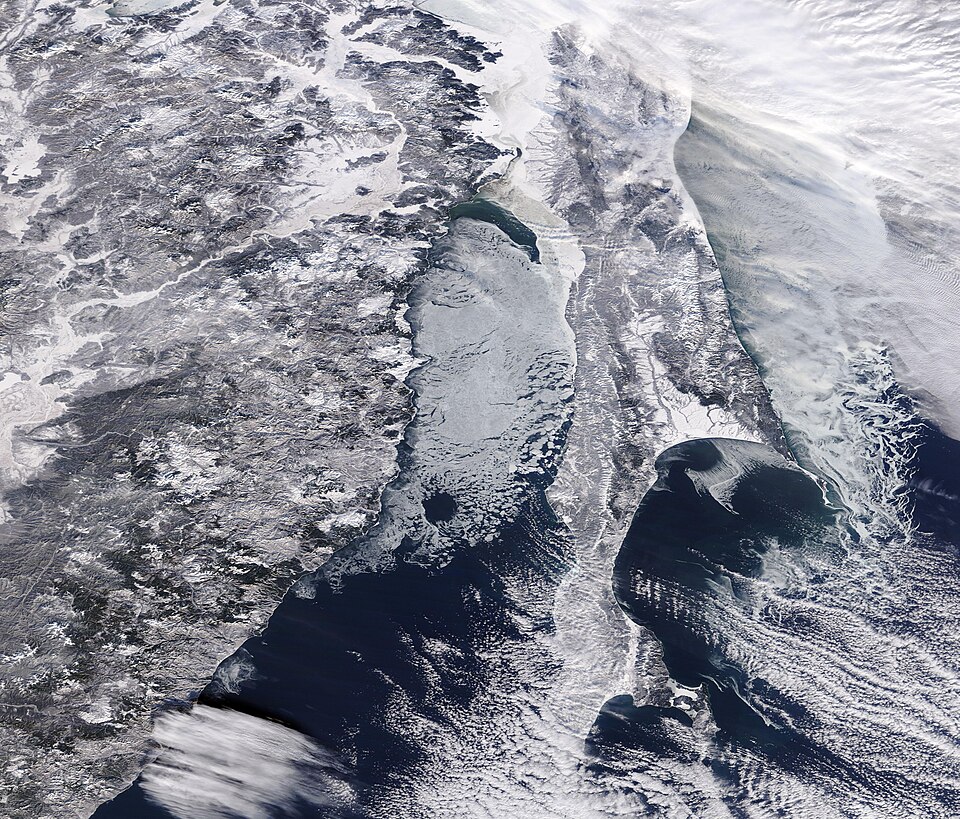
Arctic Winter Sea Ice Ties Record Low as U.S. March Heat Records Fall
Arctic sea ice reached a winter maximum of 5.52 million square miles (14.29 million km²), effectively tying last year’s record low of 5.53 million, a decline NSIDC scientist Walt Meier says reflects a steady winter downtrend rather than a sudden regime shift and gives the summer melt season a head start. The low came amid an unprecedented March heatwave that shattered records across 16 U.S. states and regions from Mexico to Australia, northern Africa, northern Europe and vast areas of Asia, even as Antarctica recorded an extreme cold benchmark of −105.5°F for March.
📌 Key Facts
- Arctic winter maximum sea ice extent was measured at 5.52 million square miles (14.29 million square kilometers).
- The National Snow and Ice Data Center (NSIDC) treats that 5.52 million sq mi extent as effectively tied with last year’s 5.53 million, making it a joint record low winter maximum.
- NSIDC scientist Walt Meier said the low winter maximum reflects a steady winter decline rather than a sudden 'regime shift,' and that a lower winter maximum gives the summer melt season a 'head start.'
- March heat records were shattered across broad regions, including 16 U.S. states as well as Mexico, Australia, northern Africa, and northern Europe.
- Asia saw 'dozens of thousands' of monthly temperature records broken in March, while Antarctica simultaneously recorded its coldest March day on record at −105.5°F.
📊 Relevant Data
Heat-related mortality rates per 100,000 population increased during 2019-2023 among Hispanic populations in the US (AAPC = 28.7%) and non-Hispanic American Indian/Alaska Native populations (AAPC = 12.5%), while decreasing among non-Hispanic White populations (AAPC = -4.1%).
Trends in Rates of Heat-Related Deaths Across Population Groups, United States, 2019–2023 — PMC (PubMed Central)
In a separate analysis, racial disparities in heat-related health effects are associated with factors such as socioeconomic status, neighborhood composition, and higher exposure to urban heat islands, which disproportionately affect Black, Latinx, and Native American individuals compared to Whites.
Racial Disparities in Climate Change-Related Health Effects in the United States — PMC (PubMed Central)
The Western Hudson Bay polar bear population has declined by nearly 50% from 1979 to 2021, with sea ice loss accounting for about 50% of the decline by reducing hunting opportunities.
Why are polar bear populations declining? — The Wildlife Society
Transit voyages on the Northern Sea Route increased to 103 in 2025, up from previous years, due to reduced sea ice extending the navigable period and enabling more shipping traffic.
Main Results of NSR Transit Navigation in 2025 — CHNL (Centre for High North Logistics)
In 2023, China produced 13.26 gigatons of CO2 emissions, the highest globally, followed by the United States with 5.02 gigatons, contributing significantly to the global warming driving Arctic sea ice decline.
CO₂ Emissions by Country 2026 — World Population Review
📰 Source Timeline (2)
Follow how coverage of this story developed over time
- Confirms the exact winter maximum sea ice extent as 5.52 million square miles (14.29 million square kilometers), and notes NSIDC treats this as effectively tied with last year’s 5.53 million square miles.
- Quotes NSIDC scientist Walt Meier explaining this is part of a steady winter decline rather than a sudden 'regime shift,' and that a lower winter maximum gives a 'head start' to the summer melt season.
- Provides additional global context: March heat records shattered not just in 16 U.S. states but also across Mexico, Australia, northern Africa, northern Europe, and 'dozens of thousands' of monthly records in Asia, while Antarctica simultaneously recorded the coldest March day on record at −105.5°F.