Iran War: U.S. B‑1 Bridge Strike Near Tehran Collapses Iran’s Tallest Span as Trump Publicly Celebrates Hit and Iranian Media Raise Higher Casualty Toll
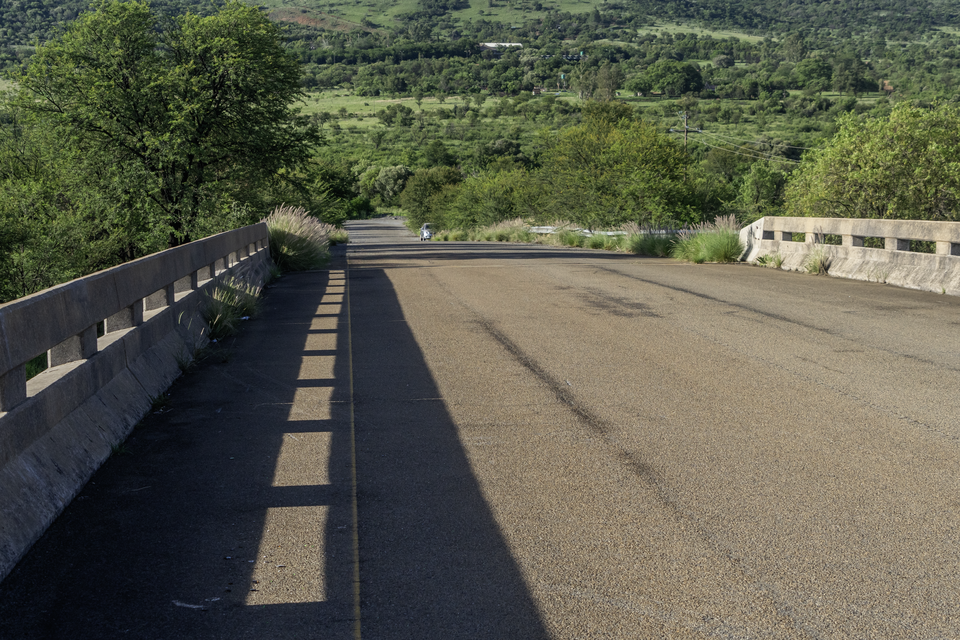
U.S. forces struck the B‑1 bridge connecting Tehran and Karaj — Iran’s tallest span — collapsing the structure in what the Pentagon and Axios described as a strike aimed at military logistics and the first acknowledged U.S. hit on major Iranian civilian infrastructure. President Trump publicly celebrated the strike on Truth Social and warned “much more to follow,” while Iranian state and semi‑official outlets reported higher casualty figures (Fars: eight dead, 95 wounded), said the bridge was hit twice, denounced the attack and threatened retaliatory strikes on allied infrastructure.
📌 Key Facts
- U.S. forces struck and collapsed the B‑1 bridge linking Tehran and the suburb of Karaj — Iran’s tallest span — marking the first acknowledged U.S. strike on major civilian infrastructure in this war; U.S. officials said the bridge was targeted for military reasons, alleging it was used to move missiles, missile parts and logistics to launch sites and to supply Iranian firing units.
- President Trump publicly celebrated the strike on Truth Social, calling it the destruction of “the biggest bridge in Iran,” warning there was “much more to follow,” and has repeatedly threatened further strikes on Iranian energy and civilian infrastructure (including electric plants, oil wells, Kharg Island and desalination facilities) even as he says the conflict could end in two to three weeks.
- Iranian state media and officials condemned the attack, issued differing casualty tallies (Fars initially reported two killed and later cited eight dead and 95 wounded), rejected U.S. claims that Tehran sought a ceasefire, said the strike is part of a pattern of attacks on civilian structures, and the IRGC threatened possible retaliatory targeting of infrastructure in countries aligned with the U.S.; Iranian authorities also signaled plans to rebuild the bridge.
- U.S. and coalition campaign metrics and casualties are contested: U.S. Central Command says more than 12,000 targets have been struck during Operation Epic Fury; U.S. officials report 13 service members killed and hundreds wounded; Iranian and regional casualty and death toll estimates vary widely across sources (from roughly 1,700 reported in some accounts to more than 3,400 in others, and some outlets citing a cumulative conflict death toll above 4,800).
- The bridge strike comes amid broader, escalatory contingency planning and deployments by the U.S. — including special operations forces, Marines and paratroopers and Pentagon 'final‑blow' options (island seizures, blockades and missions to seize enriched uranium) — even as the White House extended a narrow 10‑day pause on strikes targeting 'Energy Plant destruction' to April 6 while mediators (Pakistan, Egypt, Turkey, with China co‑sponsoring a separate five‑point plan) press for high‑level talks.
- The attack sharpens diplomatic, legal and regional risks: it heightens concerns about U.S. strikes on civilian infrastructure, provokes threats against American allies (state media and the IRGC identified potential targets in Gulf and allied countries), exacerbates frictions with European partners over basing and overflight access, and feeds domestic economic and political fallout (U.S. gasoline averages above $4/gal and Trump’s approval has slipped in multiple polls).
📊 Relevant Data
According to a March 2026 Economist/YouGov poll, 37% of White Americans support the US military action in Iran, compared to 44% who oppose it; among Black Americans, 7% support it while 60% oppose it.
What Americans think of the war in Iran — The Conversation
As of 2025, the US Marine Corps has 20% racial minority representation, implying approximately 80% White personnel, compared to other branches like the Navy at 38% minority representation; this contrasts with the US population where non-Hispanic Whites comprise about 58%.
How many people are in the US military? A demographic overview — USA Facts
In 2025, families living in majority-Black census tracts spent 5.1% of their income on energy, significantly higher than the national average of 3.2%.
Black families pay more to keep their houses warm than average American families, study shows — Phys.org
📊 Analysis & Commentary (8)
"An opinion critique arguing that President Trump’s extension of a pause on strikes and related unilateral actions exemplify a broader pattern of unchecked executive power that sidesteps institutions, risks escalation, and undermines democratic and international norms."
"The Politico Playbook piece critiques Trump’s 'dual‑track' approach of pairing public threats and military readiness with mediated pauses and diplomacy — arguing it’s driven by political calculus, creates strategic contradictions, and risks credibility and escalation while offering limited diplomatic upside."
"The Fox News opinion piece comments on the Trump administration’s Iran-war pause and operational options, arguing for a strategy that cripples Iran’s military and governing capacity—including targeting leadership, internal security and Kharg Island’s oil exports—to force behavioral change without invading or occupying Tehran."
"A hawkish Fox News opinion piece praising Trump’s Iran‑war strategy and arguing that decisively dismantling Iran’s nuclear and missile capabilities (even toppling the regime) would be a historic presidential achievement, while dismissing media and protest opposition as biased."
"A Wall Street Journal opinion piece arguing the U.S. should define clear strategic goals in the Iran war instead of fixating on reopening the Strait of Hormuz, questioning hawkish calls for ground missions and noting the complicating effects of oil‑market shocks."
"The WSJ editorial critiques President Trump’s suggestion that allies ‘get your own oil’ and leave reopening the Strait of Hormuz to others, arguing the U.S. still faces major strategic and economic costs if Hormuz remains closed and cannot simply outsource that burden."
"A Wall Street Journal editorial praises Trump’s primetime Iran speech as the administration’s best case for striking Tehran — chiefly to prevent a nuclear Iran — endorsing a decisive, finish‑the‑job approach while admitting some exaggeration about timelines."
"The piece critiques President Trump’s Iran‑era rhetoric and tactics — especially his primetime threats and calls for allies to seize the Strait of Hormuz — arguing that what is marketed as a 'Trump doctrine' is in fact improvisational spectacle that undermines alliances, increases escalation and economic risk, and lacks a coherent strategic or legal foundation."
📰 Source Timeline (44)
Follow how coverage of this story developed over time
- MS NOW cites Fars, a semiofficial Iranian news agency, reporting that the B1 bridge strike killed eight people and wounded 95.
- The article notes Trump publicly celebrated the destruction of the bridge on social media and warned that there was 'much more to follow.'
- Fox cites President Trump saying on Truth Social that Iran’s “biggest bridge” has come “tumbling down, never to be used again,” confirming destruction of the B1 bridge span.
- Iranian state TV, via Fars News, claims the B1 bridge was struck twice about an hour apart and says the first strike killed two civilians.
- Middle East outlet i24NEWS is cited saying the strike aimed to cut drone and missile supply lines to Iranian firing units targeting U.S. and Israeli forces.
- Iranian state media and Iran International report that the IRGC has identified multiple bridges in American‑allied nations — including in Kuwait, Saudi Arabia, Bahrain, Abu Dhabi and the Jordan–West Bank region — as potential retaliation targets.
- Iranian outlets report that Tehran is already considering plans to rebuild the bridge with domestic engineers and experts.
- U.S. forces bombed the B-1 bridge connecting Tehran and the suburb of Karaj on Thursday morning, marking the first acknowledged U.S. strike on major civilian infrastructure in Iran during this war.
- A U.S. defense official told Axios the bridge was targeted for military reasons, alleging it has been used to secretly move missiles and missile parts from Tehran to launch sites in western Iran and to send logistics support to Iranian forces.
- President Trump publicly celebrated the strike on Truth Social, calling it the destruction of “the biggest bridge in Iran” and warning there is “much more to follow,” while again urging Iran to “make a deal before it is too late.”
- The Iranian mission to the UN and Iran’s foreign minister characterized the strike as part of a pattern of U.S. and Israeli attacks on civilian structures, including what they called unfinished bridges, and said such attacks would not force Iran to surrender.
- NPR characterization that Trump’s messaging on the Iran war so far has been 'muddled' regarding U.S. aims and timelines, and that the war is unpopular with Americans according to polls, with gas prices rising sharply and creating political problems before the midterms.
- Additional detail that in the address Trump framed U.S. involvement in Iran as an 'investment in the future' and emphasized that it would be 'intolerable' for Iran to obtain a nuclear weapon.
- Reporting that Gulf states have not retaliated to Iranian attacks and lack a unified view on how the war should end; analysts say Gulf countries are wary because they do not know Trump’s next moves and fear being left alone against Iran.
- Clarification that the United Arab Emirates has stated it is willing to join an international coalition to open the Strait of Hormuz.
- Description that Trump glowered through Supreme Court arguments in the birthright case and left after his solicitor general finished, and that justices appeared determined to enforce strict time limits and not act as his 'lapdog.'
- Trump’s primetime address includes an explicit appeal for other countries that rely on oil shipments through the Strait of Hormuz to 'build up some delayed courage' and 'go to the strait and just take it' and 'protect it' themselves, with the U.S. offering to be 'helpful' but not to lead.
- He says the U.S. 'imports almost no oil through the Hormuz Strait and won't be taking any in the future,' framing the strait’s security as primarily the responsibility of other oil‑dependent nations.
- Trump claims 32 days of U.S.-Israeli bombing have 'essentially decimated' Iran’s military, navy, infrastructure and leadership and that 'the hard part is done,' making it 'easy' for other countries to seize or secure the strait.
- He predicts that once 'this conflict is over, the strait will open up naturally' because a surviving Iranian government will need to sell oil to rebuild, and he links that reopening to his promise that gasoline prices and stock markets will 'rapidly' normalize.
- The article reiterates that Trump intends to 'hit them extremely hard over the next two to three weeks' and 'bring them back to the Stone Ages where they belong,' explicitly tying that escalation timetable to his Hormuz and burden‑sharing argument.
- Trump’s address is explicitly framed as coming as the war nears its sixth week and he acknowledges going beyond his original five‑week war timeframe, now saying the U.S. will hit Iran “extremely hard over the next two to three weeks.”
- U.S. Central Command states it has struck over 12,300 targets during the conflict, including more than 155 vessels destroyed or damaged, plus IRGC command centers, air defenses, ballistic‑missile and anti‑ship‑missile sites, drone‑manufacturing and other weapons facilities.
- Iran continues firing ballistic missiles and drones at Gulf countries into Thursday, including a suspected drone strike on an oil warehouse near Erbil in Iraq’s Kurdistan region, while the U.S. Embassy in Baghdad issues a security alert about Iran‑backed militia attacks.
- Trump publicly asserts that Iran’s “new leaders” are “less radical and much more reasonable,” even as Iran Foreign Ministry spokesman Esmail Baghai rejects his framing, calls the conflict an “illegal war,” and says Tehran will not accept a recurring cycle of war, negotiations, and ceasefire.
- Trump uses his speech to tell countries that depend on oil transiting the Strait of Hormuz that they, not the U.S., must protect and “cherish” that passage, as the U.K. convenes a virtual summit of 35 countries (including Canada, European states, the UAE and Bahrain) on reopening the strait, with the U.S. notably not scheduled to attend.
- Trump explicitly named terminating Barack Obama’s 2015 Iran nuclear deal (the JCPOA) as one of his top achievements against Iran and said he was 'honored' and 'so proud' to rip it up.
- He tied that claim to the earlier U.S. killing of IRGC Quds Force commander Qasem Soleimani, calling him an 'evil genius' and 'the father of the roadside bomb' and listing that killing as his first major Iran action.
- Trump repeated his long‑standing attack on the Obama‑era $1.7 billion cash transfer, alleging it was taken from banks in Virginia, D.C. and Maryland and flown to Iran in 'green, green cash' to 'buy their respect and loyalty,' which he said 'didn't work.'
- He asserted that Obama’s Iran deal 'would have led to a colossal arsenal of massive nuclear weapons for Iran' and claimed that without his termination of the deal there would be 'no Middle East and no Israel right now, in my opinion.'
- The piece briefly recaps that the JCPOA traded sanctions relief for nuclear limits and inspections, noting that this rationale remains highly contested and that critics like Trump argue it empowered Tehran.
- Trump states in the address that after 32 days of Operation Epic Fury, Iran is ‘essentially really no longer a threat’ and that U.S. objectives are ‘nearing completion.’
- He claims Iran’s navy is ‘gone,’ its air force is ‘gone,’ and its missiles are ‘just about used up or beaten,’ and that the U.S. has ‘annihilated’ Iran’s defense industrial base.
- Trump says the U.S. will ‘hit them extremely hard over the next 2 to 3 weeks’ and ‘bring them back to the Stone Ages where they belong,’ while asserting that regime change was not the goal but that many of Iran’s ‘original leaders’ are dead and a ‘less radical’ leadership has emerged.
- He links recent U.S. gasoline price spikes above $4 per gallon to ‘short term’ effects of ‘deranged terror attacks’ by Iran on oil tankers and neighboring countries, insisting the price rise is temporary.
- The address was 19 minutes long and delivered from the White House in a prime-time televised slot.
- Trump claimed Iran’s missiles and drone systems have been 'dramatically curtailed' and that their weapons factories and rocket launchers are being 'blown to pieces.'
- The article notes that, despite Trump’s description of a major success, Iran continues to fire missiles in the region.
- Trump again estimated that the war should wind down within about three weeks but 'did not define a clear path out.'
- The story underscores that Trump 'oscillated' between talking up negotiations and promising to 'bring them back to the Stone Ages' over the next two to three weeks.
- Article provides more detailed quotes from the April 1 prime-time address, including Trump’s pledge to “bring them back to the stone ages where they belong” over the next two to three weeks.
- It lays out the specific three objectives Trump now says define success in Operation Epic Fury: eliminating Iran’s navy, ‘hurting’ its air force and missile program, and ‘annihilating’ its defense industrial base, and notes Trump’s claim that “we’ve done all of it.”
- The piece documents how war aims have repeatedly shifted, contrasting Trump’s latest framing with earlier goals he and Secretary of State Marco Rubio articulated (including regime change, seizing oil, reopening the Strait of Hormuz, and destroying missile capability).
- It summarizes multiple late‑March polls (AP‑NORC, Ipsos, Economist/YouGov) showing roughly 60% of Americans think U.S. involvement has gone too far and two‑thirds want to end it quickly even if goals are unmet, and that MAGA Republicans are far more supportive of the war than non‑MAGA Republicans.
- It reports that on Tuesday Trump said he had “one goal: They will have no nuclear weapon. And that goal has been attained,” further muddying the stated objectives.
- Trump said in the address that after 32 days of war Iran is 'essentially really no longer a threat' and has been 'eviscerated.'
- He claimed B-2 bomber strikes 'obliterated' Iranian nuclear sites so thoroughly that it would take months to get near the 'nuclear dust,' and threatened missile strikes if Iran tries to recover nuclear material.
- Trump asserted that Iran’s air defenses and radar have been '100% annihilated' and that the U.S. is 'unstoppable.'
- He warned that if no agreement is reached, the U.S. will 'hit each and every one of their electric generating plants very hard and probably simultaneously.'
- Trump blamed higher U.S. gasoline prices entirely on Iranian 'deranged terror attacks' on commercial shipping and neighboring countries.
- Reports that in advance of the primetime address, a White House official says Trump will tout 'progress across all of Operation Epic Fury’s stated objectives,' even though those objectives have been defined differently by Trump, Rubio, Hegseth and the Pentagon.
- New, more specific quotes showing Trump now framing his 'one goal' as ensuring Iran 'will have no nuclear weapon' and asserting 'that goal has been attained,' even though military commanders have focused on conventional capabilities rather than nuclear issues.
- Detailed chronology of how Secretary of State Marco Rubio’s publicly stated war aims have shifted between March 9 and the week of the speech, adding and softening targets such as Iran’s air force and missile‑launch capacity.
- Clarification that U.S. military leaders, including Gen. Dan Caine and Adm. Brad Cooper, have consistently avoided nuclear rhetoric and instead described three main objectives: destroying Iran’s ballistic missiles, navy and defense‑industrial base.
- New reporting on Trump’s claim that 'we have had regime change' in Iran and that 'their leaders are all gone,' contrasted with the reality that Mojtaba Khamenei, seen as more hardline than his father, is now supreme leader and there is no mass uprising.
- Additional focus on the unresolved closure of the Strait of Hormuz and the administration’s earlier failure to anticipate Iran’s weaponization of the waterway, as a major 'loose end' that undercuts a 'mission accomplished' narrative.
- A White House official tells CBS Trump will use the primetime address to restate his 'two to three weeks' timeline and to highlight what the administration claims are all pre‑operation goals already achieved, including destroying much of Iran’s navy, crippling proxy groups and 'guaranteeing' Iran can never obtain a nuclear weapon.
- CBS reports that hundreds of U.S. Special Operations forces and thousands of Marines and Army paratroopers are already in the region, giving Trump options for possible ground or amphibious operations to reopen the Strait of Hormuz, hit Kharg Island, or seize enriched‑uranium stockpiles.
- Trump tells Reuters he 'doesn’t care' about Iran’s highly enriched uranium stored in deep underground tunnels, saying it is 'so far underground' and that the U.S. will 'always be watching it by satellite,' despite the administration framing prevention of an Iranian nuclear weapon as a central war aim.
- Trump says he is 'absolutely' considering withdrawing the U.S. from NATO in response to European allies’ refusal to send warships to help reopen the Strait of Hormuz, and plans to air that grievance in the speech.
- The article ties the war directly to domestic economic pain: the average U.S. gasoline price has topped $4 per gallon for the first time in nearly four years, diesel has 'soared,' and broader consumer prices are expected to rise, with a CBS poll showing 60% of Americans disapprove of taking military action in Iran.
- Confirms Trump will address the nation at 9 p.m. ET Wednesday specifically about U.S. operations in Iran after one month of combat under Operation Epic Fury.
- Reports Trump told reporters Tuesday he expects the Iran mission to end in ‘two to three weeks,’ repeating and time‑stamping that prediction.
- Quotes a new Truth Social post in which Trump claims Iran ‘asked for a ceasefire’ and threatens to ‘blast Iran into oblivion… back to the Stone Ages’ until the Strait of Hormuz is ‘open, free, and clear.’
- Adds on‑the‑record denial from Iran’s Foreign Ministry spokesman Esmail Baghaei calling Trump’s ceasefire claim ‘false and baseless.’
- Details that Trump told multiple outlets he is ‘strongly considering’ pulling the U.S. out of NATO over what he views as insufficient allied support in the Iran war, citing a Daily Telegraph interview.
- Notes concrete allied pushback: Spain has closed its airspace to U.S. aircraft tied to strikes and France has imposed limits on some overflights carrying military supplies.
- Provides updated U.S. operational metrics: since Feb. 28 U.S. forces have struck more than 12,000 targets inside Iran and damaged or destroyed 155 naval ships, according to Central Command.
- Updates U.S. casualty figures to 13 service members killed and 350 injured in the Iran operations.
- Reports additional troop deployments: thousands of paratroopers from the 82nd Airborne and a task force of 2,500 Marines from the USS Tripoli have entered the CENTCOM theater, and the carrier USS George H.W. Bush has deployed to join USS Abraham Lincoln.
- Fox News national poll conducted March 20–23 finds Trump at 41% approval and 59% disapproval, a –18 net, down from –14 in early March as Iran strikes began.
- A CNN poll conducted March 26–30 reports Trump at 35% approval and 64% disapproval, with other recent surveys (Reuters/Ipsos, AP/NORC, Quinnipiac) placing his approval in the upper 30s and disapproval in the upper 50s to low 60s.
- Average U.S. gasoline prices have risen above $4 per gallon, according to AAA and GasBuddy, and Republican pollster Daron Shaw says support is eroding particularly among non‑MAGA Republicans who had previously backed Trump.
- The piece explicitly ties Trump’s declining approval on the economy and overall job performance to the Iran war, higher fuel prices, and public dissatisfaction with the cost of living as the 2026 midterms approach.
- Confirms the address is set for 9 p.m. ET on April 1, 2026 and frames it as his first formal address since the war began, emphasizing the timing as a 'critical moment.'
- Reports that hours before the speech Trump posted that Iran’s president had asked the U.S. for a ceasefire and that he would only agree once the Strait of Hormuz is open, adding the quote that the U.S. is 'blasting Iran into oblivion or, as they say, back to the Stone Ages!!!'.
- Conveys Iran’s immediate rebuttal via its foreign minister on state television, calling Trump’s ceasefire claim 'false and baseless.'
- Details Trump’s recent rhetorical swings: threatening attacks on civilian infrastructure that would violate the Geneva Conventions, then declaring the war largely won and predicting U.S. withdrawal in 'two to three weeks' beyond the original 4–6 week timeline.
- Adds economic specifics: Iran has sharply curtailed traffic through the Strait of Hormuz, contributing to U.S. gasoline now averaging more than $4 per gallon and pushing up fertilizer prices that are hurting farmers.
- Notes Trump’s public wobbling over whether the U.S. will take responsibility for reopening Hormuz, including his remark that other countries seeking oil or gas can 'fend for themselves' and that 'we have nothing to do with that.'
- Reports that Trump’s approval rating has fallen to first‑term lows in New York Times and RealClearPolitics averages amid the war, and that some stated war objectives (e.g., degrading Iran’s navy and missile production) appear at least partially achieved while the nuclear goal remains murky.
- Quotes Trump’s assertion that 'They will have no nuclear weapon, and that goal has been attained,' followed by his suggestion that another president may have to revisit the issue in the future.
- CBS piece reiterates that Trump has scheduled a primetime address on the Iran war for Wednesday evening.
- It characterizes the conflict as being in its fifth week at the time of the report.
- It quotes Trump as saying the U.S. will be done with the war 'very soon' and that the U.S. will 'leave very soon,' without specifying the 'two to three weeks' timeframe mentioned in other coverage.
- NPR reiterates that Trump is scheduled to address the nation at 9 p.m. ET, but adds Liasson’s analysis that his shift on securing the Strait of Hormuz marks a 'significant reversal' and appears aimed at finding a way out of the conflict.
- Liasson reports Trump is now saying the U.S. can exit the war 'without even needing to negotiate,' suggesting he views his objectives as sufficiently met or malleable.
- Horsley adds that OECD expects the Iran war to push U.S. inflation above 4%, and that employers will likely pull back on hiring further because of uncertainty about energy prices and consumer spending.
- The White House has now formally scheduled the Iran war primetime address for Wednesday at 9 p.m. ET and calls it an 'important update on Iran.'
- This will be President Trump’s first primetime address since the Iran war began on Feb. 28.
- Trump reiterated to reporters that he expects U.S. forces in Iran to withdraw in 'two or three weeks.'
- U.S. gasoline prices have reached a national average of $4 per gallon, the highest level since 2022, with oil prices briefly falling after Trump’s withdrawal comments.
- Updated casualty figures: more than 4,800 people killed in the conflict, including over 3,400 in Iran (per Human Rights Activists News Agency), more than 1,200 deaths in Lebanon (per its health ministry), and 13 U.S. service members killed with hundreds more wounded.
- Trump will deliver a televised address to the nation on the Iran war at 9 p.m. Eastern on Wednesday, April 1, described by the White House as providing “an important update.”
- Trump publicly said Tuesday that the conflict would be “over in two to three weeks,” promised the U.S. would be “leaving very soon,” and asserted that U.S. forces would have “nothing to do with” securing the Strait of Hormuz going forward, telling other countries they will have to “fend for themselves.”
- Secretary of State Marco Rubio explicitly outlined what he says were the administration’s core objectives in Iran — destroying Iran’s air force and navy, severely diminishing its missile capability, and destroying its factories — and declared the main goal of preventing Iran from being able to build a nuclear weapon had been achieved.
- Rubio’s latest comments omitted regime change from the list of objectives, even though the administration had previously touted regime change and Trump recently claimed it had already been achieved despite Iran remaining a hardline theocracy.
- The article updates battlefield conditions on day 33 of the war: IDF claims of 230 targets hit in Tehran and a widening invasion into Lebanon; Iranian and proxy strikes on U.S.-used bases in the Gulf injuring up to 20 U.S. service members in Saudi Arabia; continued Houthi missile attacks on Israel; Iranian missile and drone strikes hitting Kuwait International Airport, a Kuwaiti tanker off Dubai, and a QatarEnergies‑leased tanker.
- New casualty figures since the war began: 13 U.S. service members killed and Iran reporting more than 1,700 people killed in Iran.
- Trump tells Fox News the U.S. will "finish attacking" Iran and "leave" within "maybe two weeks, maybe a couple days longer" while saying a deal is also possible before then.
- He asserts "one goal" of the war was to ensure Iran "will have no nuclear weapon" and claims that goal "has been attained."
- Trump boasts that U.S. and allied operations have allegedly left Iran with "no navy," "no military," "no air force," "no telecommunications," "no anti‑aircraft systems," and "no leaders," saying "that’s why we have regime change. We have nice new leaders."
- The piece notes AAA’s national regular‑gas average has risen to $4.064 per gallon as of April 1 and confirms a nationally televised Iran address is set for Wednesday at 9 p.m. ET.
- Axios reports that while Trump publicly talks about winding down attacks and shifting security burdens to allies, in private he is simultaneously weighing scenarios that include leaving the Strait of Hormuz closed and Iran only partially degraded.
- Advisers describe deep uncertainty over whether Trump will follow through on a rapid exit or launch a 'final blow' bombardment before pulling back.
- Gulf leaders, particularly in Saudi Arabia and the UAE, are described as sounding 'like Mark Levin' in private, pressing Trump not to leave Iran 'battered but emboldened.'
- Rubio publicly reinforces Trump’s assertion that the Iran war could wrap up in 'a few more weeks,' saying 'we can see the finish line' even though it is not immediate.
- He adds that Tehran is being more cooperative in private talks than in its public defiance, indicating a behind‑the‑scenes diplomatic track proceeding alongside military operations.
- His warning that the U.S. will revisit NATO’s value after the war dovetails with Trump’s 'fend for themselves' message to allies and suggests this conflict may be used as a benchmark to judge alliance performance.
- Karoline Leavitt announced Trump will give a prime‑time Iran update Wednesday at 9 p.m. ET, indicating the White House sees a near‑term decision point.
- Trump now pegs his expected end of the war at ‘two weeks, maybe three,’ tying that to his view that the U.S. has mostly achieved its goal of degrading Iran’s military.
- CBS confirms hundreds of U.S. Special Operations Forces, Marines and Army paratroopers are already deployed in the Middle East, and that Pentagon options include ground operations and a mission to seize Iran’s highly enriched uranium stockpile.
- Trump’s Monday Truth Social post spells out that, absent a deal and reopening of Hormuz, he is prepared to order strikes to ‘completely obliterate’ Iranian power plants, oil wells, Kharg Island, and possibly desalination plants.
- Trump told reporters the U.S. military would likely be done attacking Iran in 'two to three weeks' and that the U.S. 'will not have anything to do with' what happens in the Strait of Hormuz after that point.
- He said securing the strait is 'not for us' and told allies to 'go get your own oil,' explicitly telling other countries they will have to 'fend for themselves' and 'start learning how to fight for yourself.'
- The article notes average U.S. gasoline prices have now passed $4 per gallon, with Brent crude around $107 a barrel—more than a 45% jump since the war began Feb. 28—tying those moves directly to Iran’s closure of Hormuz and attacks on energy infrastructure.
- Trump publicly singled out France for restricting U.S. overflights and highlighted Spain and Italy’s refusals to allow U.S. war‑related use of their airspace and bases, underscoring growing friction with European allies over the Iran war.
- Adds Trump’s PBS‑aired assertion that the war with Iran will likely continue for another two to three weeks, a more specific time horizon than in the earlier CBS interview.
- Reiterates his 'go get your own oil' message toward allies in the context of a worsening gasoline price spike for U.S. consumers.
- Emphasizes that, despite calls for allies to do more, the U.S. is still bearing the brunt of trying to manage the Strait of Hormuz problem.
- China is now publicly co-sponsoring a five-point peace initiative with Pakistan that includes reopening the Strait of Hormuz and restoring safe passage for commercial shipping.
- The initiative was unveiled after a meeting between Chinese Foreign Minister Wang Yi and Pakistani Foreign Minister Ishaq Dar in Beijing, framing reopening Hormuz as part of a broader ceasefire and infrastructure-protection package.
- Trump, asked directly about the Pakistani–Chinese plan, declined to address details but said 'the negotiations with Iran are going well,' signaling he is not publicly opposing the Chinese–Pakistani diplomatic track even as he has previously urged allies to 'go to the Strait, and just TAKE IT.'
- CBS frames Trump’s latest remarks as him 'doubling down on harsh words' toward U.S. allies over their role in reopening the Strait of Hormuz.
- The segment specifies that the exchange occurred in an interview with CBS correspondent Weijia Jiang, with additional context provided by CBS correspondent Natalie Brand.
- Trump again states on camera that the U.S. is not withdrawing 'quite yet' from the war with Iran while urging allies to be 'more helpful' in reopening the Strait.
- In a Tuesday phone interview with CBS News, Trump said he is not ready ‘quite yet’ to abandon U.S. efforts to force Iran to reopen the Strait of Hormuz, despite earlier Truth Social posts telling allies to ‘go to the Strait, and just TAKE IT.’
- Trump repeated that other countries, including the U.K., have failed to send sufficient military assets and said that ‘at some point’ he will expect them to ‘come in and take care of it,’ but for now U.S. forces will remain engaged.
- He asserted there is ‘no real threat’ or ‘substantial threat’ in the Strait because Iran has been ‘decimated,’ even as Iranian strikes on ships and Gulf infrastructure continue.
- Trump claimed the U.S.–Israeli campaign has achieved ‘total regime change’ in Iran, saying ‘these are different people than anyone has ever heard of before’ and calling the new leadership more reasonable.
- On Iran’s nuclear program, Trump declined to say whether removing Iran’s enriched‑uranium stockpile is necessary to declare victory, calling the stockpile ‘so deeply buried’ and ‘pretty safe’ after last June’s U.S.–Israeli bombings of nuclear facilities.
- He said he believes the war is ‘two weeks ahead of schedule’ relative to his initial four‑to‑six‑week timeline, even though the conflict is already in week five.
- Trump used two Truth Social posts on March 31, 2026 to attack European allies, telling the U.K. and other countries that they will have to 'go to the Strait, and just TAKE IT' and 'go get your own oil.'
- He singled out the U.K. for refusing to participate in what he called the 'decapitation of Iran' and urged those countries to buy oil from the U.S. and 'build up some delayed courage.'
- In a second post minutes later, Trump blasted France for denying overflight for U.S. planes carrying ammunition to Israel, writing that France has been 'VERY UNHELPFUL' and that the U.S. 'will REMEMBER!!!'.
- Axios reports that Spain has refused use of its airspace, Italy denied landing at one of its bases for U.S. planes bound for the Middle East, while the U.K. is allowing use of some air bases for strikes in Iran and France is open to leading a postwar Strait of Hormuz task force.
- At a recent G7 meeting in France, Secretary of State Rubio told allies the U.S. does not need G7 help to reopen the Strait militarily but wants them for a follow-on maritime presence to signal Iran does not control the chokepoint.
- NPR documents Trump’s public Truth Social posts telling European allies to 'get your own oil' and to 'go to the Strait, and just TAKE IT,' marking a contrast with prior private signals that he might accept an unreopened Strait as long as Iran’s navy and missiles are degraded.
- He now publicly asserts that 'Iran has been, essentially, decimated' and frames the 'hard part' of the war as done, using that claim to argue that Europe should shoulder the burden of reopening the Strait and securing oil supplies.
- He explicitly raises the prospect of destroying Iranian electric plants, oil wells, and 'possibly all desalinization plants' if Tehran does not comply, suggesting a potential shift from a limited military campaign to systemic infrastructure targeting.
- Administration officials tell the WSJ that Trump has told aides he is willing to end the U.S. military campaign against Iran even if the Strait of Hormuz remains largely closed.
- Internal assessments now conclude that a full-scale mission to 'pry open' the chokepoint would push the conflict past Trump’s preferred four‑to‑six‑week timeline.
- Trump’s revised objective is described as degrading Iran’s navy and missile stocks, then winding down hostilities while trying to use diplomatic pressure to get Tehran to resume normal shipping, and, failing that, to push European and Gulf allies to take the lead on any future reopen‑the‑strait operation.
- Details that Kharg Island houses the terminal through which nearly all of Iran’s oil exports pass and that its destruction would not only cripple Iran’s current regime but also undermine any future government’s revenue base.
- Clarifies that Trump’s mid‑March strikes ‘obliterated’ Kharg’s military assets but deliberately spared its oil infrastructure, and that he warned he could reconsider that restraint if Iran continues disrupting Strait of Hormuz traffic.
- Explains that a U.S. seizure or occupation of Kharg would leave American troops in a fixed position just 33 km (21 miles) from Iran’s coast, highly exposed to Iranian drones and missiles.
- Adds strategic context on other Iranian‑held islands near the strait — Abu Musa and the Greater and Lesser Tunb (disputed with the UAE) and Qeshm Island with its desalination plant — and notes Iran’s claim that the U.S. struck that plant on March 8.
- CBS reports that in a fresh public statement, President Trump said the U.S. would 'obliterate' Iran's energy supplies if a peace deal is not reached soon.
- Republican Sen. Lindsey Graham, responding to Trump’s remarks, said 'the necessity for military action is weeks not months,' suggesting a compressed timeline if diplomacy fails.
- The segment frames these comments explicitly against a backdrop of the world 'awaiting peace,' emphasizing that the threat is being issued in parallel with ongoing negotiations rather than as a one‑off outburst.
- Confirms that U.S. special operations units (Navy SEALs and Army Rangers) are now physically deployed in the region, not just on paper options lists.
- Specifies three potential mission profiles: opening the Strait of Hormuz, taking oil from Kharg Island, and seizing Iran’s enriched‑uranium stockpile.
- Adds fresh timing and language from Trump’s Monday Truth Social post reiterating and sharpening his threat to attack Iran’s 'Electric Generating Plants, Oil Wells and Kharg Island (and possibly all desalinization plants!)' if the Strait is not reopened 'shortly.'
- Trump posted on social media that if a deal with Iran is not reached 'shortly' and the Strait of Hormuz is not immediately reopened, the U.S. will expand its offensive to 'completely obliterating' Iranian power plants, oil wells, Kharg Island, and possibly desalination plants that supply drinking water.
- In a new Financial Times interview, Trump said his preference would be to 'take the oil in Iran,' explicitly tying this to potentially seizing Kharg Island and saying, 'Maybe we take Kharg Island, maybe we don't.'
- Iran launched new attacks hitting a key water and electrical plant in Kuwait and an oil refinery in Israel, while Israel and the U.S. conducted a new wave of strikes on Iran the same day.
- Iranian Foreign Ministry spokesman Esmail Baghaei publicly acknowledged Tehran has received a 15‑point proposal from the Trump administration but reiterated there have been no direct talks, while Iran’s parliament speaker Qalibaf denounced Pakistan-hosted talks as cover to deploy more U.S. troops and repeated threats to 'set on fire' any U.S. ground forces.
- The article underscores that this is the second time in Trump’s second term that the U.S. has launched attacks on Iran during high‑level diplomatic talks, referencing the Feb. 28 strikes that started the current war.
- Reports that multiple sources expect an Iranian counter‑proposal to the U.S. 15‑point framework to arrive Friday.
- Names Rubio, Vance, Witkoff and Kushner as Trump’s core negotiating team and describes Rubio’s claim of 'concrete progress' evidenced by more energy moving through the Strait of Hormuz.
- Quotes the White House framing talks as 'sensitive diplomatic discussions' while stressing that Operation Epic Fury 'continues unabated.'
- Confirms again that the pause on "Energy Plant destruction" strikes is at Iran’s request and extends for roughly an additional 10 days beyond the initial deadline.
- Reinforces Trump’s characterization that the Iranian side wants a peace deal, consistent with the narrative that the pause is tied to ongoing mediator‑led talks.
- PBS specifies that earlier in the week Trump publicly set "Friday" as the deadline for Iran to reopen the Strait of Hormuz or face renewed attacks on energy infrastructure.
- The piece clarifies that the extension decision came late Thursday after a Cabinet meeting that included a war update, providing timing and process for the move.
- It reiterates that the new deadline is April 6, explicitly framed as an extension of that earlier Friday cutoff.
- Confirmation that Trump’s extension language on Truth Social characterizes the move as 'as per Iranian Government request' and explicitly references a 'period of Energy Plant destruction' being paused.
- Additional direct quote from Trump that 'we have other targets we want to hit before we leave. We're hitting them on a daily basis,' which underscores that only some categories of strikes are paused.
- Public acknowledgment from envoy Steve Witkoff at a Cabinet meeting that a 15‑point proposal has been delivered to Iran through intermediaries, without details.
- Trump’s original five‑day pause on strikes against Iranian energy facilities, which was set to expire Saturday, has now been extended by 10 days.
- The new deadline for a decision on bombing Iran’s energy infrastructure is Monday, April 6, 2026, at 8 p.m. Eastern Time, according to Trump’s Truth Social post.
- White House envoy Steve Witkoff publicly framed the extension around active mediation by Pakistan, Egypt and Turkey and a U.S. 15‑point peace framework, suggesting diplomacy is the main reason the Pentagon’s ‘final blow’ plans are on hold.
- A source familiar with the mediation emphasizes that the key short‑term goal for mediators is simply to secure agreement from Iran’s leadership to a high‑level meeting with the U.S., which Tehran has so far not granted.
- The Fox article confirms via direct Trump quote that the extended deadline is specifically for a pause in 'Energy Plant destruction' rather than for all military operations against Iran.
- It emphasizes Trump’s public claim that negotiations are 'going very well' and that the pause is at 'Iranian Government request,' a framing absent from some earlier coverage focused more on U.S. and mediator roles.
- The story reiterates that this is a 10‑day extension from a previously announced five‑day deadline, aligning that earlier generic 'five‑day' window with a precise new end date and time.
- Axios reports the Pentagon has developed four main 'final blow' options: invading or blockading Kharg Island; invading Larak Island; seizing Abu Musa and two nearby islands claimed by both Iran and the UAE; and blocking or seizing Iranian oil-export ships east of the Strait of Hormuz.
- The U.S. military has also prepared plans for ground operations deep inside Iran to secure highly enriched uranium at nuclear facilities, with a large-scale airstrike option as an alternative.
- White House press secretary Karoline Leavitt escalated rhetoric, saying Trump 'doesn't bluff' and is ready to 'unleash hell' and strike 'harder than ever before' if no deal is reached.
- Iranian parliament speaker Mohammad Bagher Ghalibaf posted that Iranian intelligence believes enemies are preparing an operation to occupy one of Iran's islands and threatened unlimited attacks on the 'vital infrastructure' of a regional country if that happens.
- Axios details that, beyond previously reported movements, additional fighter squadrons, another Marine expeditionary unit, and the command element plus an infantry brigade of the 82nd Airborne Division are being sent to the region as part of these contingency plans.